

Best Binary Bots for Trading in Kenya
Discover how to pick the top binary bot for trading success in Kenya 📊. Learn key features, risks, and tips to trade smarter with reliable automation 🤖.
Edited By
Amelia Collins
Binary bots have become quite the buzzword in the trading community lately, especially among those looking to dip their toes into automated binary options trading. It's tempting to believe in a tool that promises easy wins and no losses—but let's get real for a moment.
This article aims to clarify what binary bots really are, how they operate, and why the idea of a 'no-loss' bot is, frankly, a bit of a fairy tale. We’ll break down the technology behind these bots, shed light on the risks involved, and discuss practical strategies for risk management.

For traders in Kenya and beyond, this insight is more than just helpful—it's essential to avoid falling into traps that can cost more than just money. Whether you're an analyst, a broker, or simply someone curious about automated trading, understanding the finer points of binary bots helps you make smarter choices in a market that’s always ready to catch the unwary off-guard.
Let’s get into it, starting from the basics and moving toward the realities you need to face when considering automated binary options trading.
Binary bots play a fascinating role in the world of binary options trading, especially for those looking to automate their strategies. Understanding what they are and how they function is key to evaluating their potential benefits and pitfalls. For traders in Kenya and beyond, the importance lies in distinguishing between handy tools and hype.
Binary options are a simplified form of financial trading where traders predict the price direction of an asset within a set timeframe. Instead of buying the asset, you basically bet if the price will go up or down. If your prediction is right, you earn a fixed profit; if not, you lose your initial stake. This "all-or-nothing" setup makes binary options straightforward but inherently risky.
Trades are typically placed through an online platform where you choose the asset, expiry time, and investment amount. Once a trade is active, you wait until expiration to see if your prediction matches the asset’s price movement. Settlement is automated – profits or losses are credited to your account shortly after the trade closes, often within minutes.
Popular platforms like IQ Option, Olymp Trade, and Binomo dominate the binary options space. These platforms have user-friendly interfaces suitable for beginners and advanced tools for experienced traders. Knowing your platform’s features is crucial because reliable execution, real-time data, and transparent terms affect your chances of success.
Binary trading bots aim to automate the decision-making process, saving traders time and effort. Instead of manually placing each trade, a bot can scan markets, apply predefined strategies, and execute trades instantly. This helps reduce emotional influences and keeps trading consistent.
Bots work by using algorithms based on technical indicators, price patterns, or historical data to identify potential trade signals. When conditions match the programmed rules, the bot opens or closes trades automatically. For example, it might execute a call option when a moving average crossover occurs.
There are custom-coded bots tailored to specific strategies, ready-made commercial bots sold online, and platform-integrated bots. Some focus on trend-following, others on mean reversion or breakout patterns. While some bots operate on complex machine learning, most rely on simpler, systematic rules.
Knowing how these bots work can help traders avoid blindly trusting promises and make informed decisions about integrating automation into their trading routines.
By grasping these basics, traders better appreciate both the opportunities and challenges that binary bots introduce. It’s not just about letting a bot do the work, but understanding its design and limits to avoid costly mistakes.
No-loss binary bots attract attention largely because they promise something every trader dreams of: trading without risking money. It's an idea that sounds too good to be true, but the appeal is undeniable. Understanding why traders are drawn to these solutions is essential to grasp the broader landscape of binary options trading.
Traders often face the harsh reality that losses are part of the game. So, a tool claiming to eliminate this downside is naturally appealing. The allure isn't just about avoiding loss; it's about the hope of constant gains without the sweat and worry that come with manual trading.
The convenience of automated profit-making follows closely behind. Busy professionals, or those new to trading, are often tempted by bots that promise steady returns with minimal effort. The idea that software can analyze markets and execute trades faster and smarter than humans sounds like a shortcut to financial success. This automated nature can seem to remove emotional pitfalls from trading, which is a significant draw.
However, beneath these desires lie psychological factors that make no-loss bots popular. Many traders fall victim to confirmation bias and wishful thinking, clinging to the hope that such a perfect system exists. When faced with a stressful financial environment or past losses, the lure of a guaranteed win can overshadow critical thinking.
Desire to avoid losing capital: Loss aversion is a powerful motivator. Many traders enter the market hoping to grow their capital but fear setbacks that eat into their savings. This fear pushes them toward solutions like no-loss bots, which promise to shield the base capital. For example, a Kenyan trader struggling with the ups and downs of forex may find a no-loss bot's promise comforting, despite the market's inherent risks.
Attraction to automated profit-making: Automation appeals because it reduces hands-on involvement. Imagine a busy Nairobi-based consultant who can't monitor trades all day but wants exposure to market opportunities. A no-loss bot suggests a hands-off approach with consistent gains, fitting nicely into a hectic lifestyle. The perceived benefit is time-saving and stress reduction, even if it’s often unrealistic.
Psychological factors behind no-loss claims: People tend to focus on optimistic outcomes, especially when under pressure. Traders might ignore red flags because accepting loss is tough emotionally. This leads to overconfidence in magic bullet solutions and misplaced trust in marketing claims.
Typical promises from bot providers: Providers often guarantee 90% or higher success rates, meaning nearly all trades result in profit. They may offer "risk-free" trials, "money-back" offers, or boast of proprietary algorithms that can "beat the markets every time." These promises tap directly into traders’ desires for safety and steady income.
Common advertising techniques: Advertisements use testimonials showing big wins and testimonials from supposed users praising the bots. Pushy sales tactics like "limited time offers" or "join now before it’s too late" create urgency. There's a frequent use of flashy graphics and vague technical language meant to impress or overwhelm.
How to spot unrealistic claims: Be wary when promises sound too perfect — like guaranteed profits or no risk at all. If the marketing doesn't explain how the bot works or avoids discussing downsides, that’s a red flag. Also, if providers pressure you to invest quickly or ask for large upfront fees without transparency, proceed with caution.
Remember, markets are unpredictable, and no system can guarantee profits without risk. Staying skeptical and seeking evidence before investing is key.
In short, the appeal of no-loss binary bots lies in human hopes and fears around money — the wish for easy profits without pain. Recognizing this helps traders to stay grounded and make wiser decisions.
Thinking a binary bot can guarantee zero losses is like betting the sun won't rise tomorrow—it's just not grounded in reality. Binary options trading inherently carries risk due to market fluctuations, so any tool claiming no-loss outcomes is overselling. Understanding why such bots can't deliver helps traders avoid costly traps and fosters smarter decision-making.
The core takeaway here is simple: no system is perfect. The forces driving market prices are complex and ever-changing; thus, automated bots face serious challenges. Delving deeper into these challenges sheds light on the limits of so-called no-loss bots, enabling traders in Kenya and beyond to approach these tools with healthy skepticism and caution.
Market movements aren't scripted events — they behave like a wild beast, unpredictable and often irrational. Prices swing because of countless variables: economic reports, company earnings, global incidents, or sudden changes in investor sentiment. For example, a surprise interest rate cut by the US Federal Reserve can send currencies into a tailspin within minutes.
This unpredictability means even the smartest binary bot can't accurately forecast every price shift. A bot programmed to spot patterns may fail when the market throws a curveball. For traders, the lesson is to accept some losses as part of trading and not be swayed by promises of flawless prediction.

Beyond usual market chatter, external events like political upheavals, natural disasters, or regulatory announcements can flip markets on their heads. Suppose unrest breaks out in an oil-producing region; commodity prices might soar unexpectedly, derailing any prediction model based purely on technical indicators.
Such factors are hard to factor into algorithmic bots reliably because they don’t follow regular patterns. Traders relying solely on bots risk being blindsided by sudden shocks, underlining why a no-loss claim ignores these uncontrollable realities.
Algorithms aren’t seers — they work on past data and statistical models to guess future movements. While some bots use machine learning to adapt, even these tools stumble when conditions change dramatically or historical patterns don’t repeat.
Consider that a bot trained on data from a steadily rising market might fail suddenly during a crash, leading to big losses. Hence, traders should see algorithmic predictions as one of many signals, not a foolproof answer.
Bots are software, and software isn’t flawless. Bugs or coding errors can cause wrong trades, missed signals, or crashes at crucial moments. For example, a bot might misread incorrect price feeds or stall due to memory leaks, resulting in losing trades.
Regular updates and debugging are must-dos, but even then, nothing guarantees a bot always behaves perfectly. Traders must monitor bot performance, not treat it as a set-and-forget solution.
Most binary bots base their logic on past market movements, assuming similar conditions will repeat. Yet, markets are dynamic, influenced by ever-changing global finance and geopolitics.
This dependence creates blind spots. If a bot hasn’t encountered a certain market pattern before, it may react poorly or with hesitation. To reduce risk, traders can combine bot signals with current market research and manual judgement.
In binary trading, timing is king. Even a slight delay—the lag between signal generation and trade execution—can turn a winning trade into a loser. Bots can suffer latency due to internet connection quality, platform response times, or server delays.
For example, if a bot signals to buy an asset at a certain price, but the market moves before the order executes, the trade might close at a loss. This technical hurdle makes guaranteed no-loss bots unrealistic because they can't fully control these real-world factors.
At the end of the day, the markets have too many moving parts for any bot to offer a no-risk guarantee. Successful traders know that risk is a constant companion, and the best bots simply help manage—not eliminate—that risk.
Recognizing scams in the world of binary bots is no walk in the park, especially when they promise the moon with "no-loss" guarantees. However, understanding what typical scam tactics look like can save you from wiping out your hard-earned cash. It's vital to spot these warning signs early because once you've handed over money or sensitive info, reversing the damage can be near impossible.
Binary trading, especially with automated tools, is surrounded by a haze of complexity that scammers exploit. They often dress their schemes with professional-looking websites and flashy testimonials, but the devil is in the details. Missing or vague information about how exactly their bot functions, or impossible guarantees, usually means you're looking at a classic bait-and-switch.
No software can predict the market with 100% accuracy—anyone claiming guaranteed profits is waving a big red flag. Real trading involves ups and downs, and the market's unpredictable nature means profits are never assured. Be wary if an offer insists you’ll only win, with phrases like "zero risk" or "stress-free earnings." This is often just marketing jargon designed to lure you into a trap.
Scammers try to rush your decisions because they know the moment you pause, doubts creep in. If you’re faced with warnings like "limited spots," "offer expires tonight," or a sudden push to add more funds, it’s a sign they want to trap you before you think twice. Take your time, verify details, and never let anyone push you into a quick financial commitment.
Legitimate bot providers are upfront about how their systems work, including risks involved and average outcomes. On the other hand, a shady operator dodges questions, hides user terms, or refuses to provide clear contact info. If it’s a struggle to get straightforward answers or technical details about the bot’s strategy, consider it a major warning sign.
Before trusting any binary bot, dig deep into the company behind it. Check how long they’ve been in business and whether their business registrations or licenses are valid according to local Kenyan financial laws. Established providers like Pocket Option or IQ Option, which offer some automation features, tend to be safer than obscure newcomers you find on shady forums.
Feedback from fellow traders can reveal the truth behind a bot’s performance and reliability. Look for reviews that mention real account withdrawals, customer support responsiveness, and any red flags others encountered. Be cautious with overly positive reviews that read like advertisements—they might be fake or paid endorsements.
Most reputable platforms let you try bots on demo accounts without risking real money. Take advantage of these test runs to see how the bot handles trades in live-like conditions. This step helps you evaluate performance, understand potential losses, and avoid committing money prematurely.
Avoiding scams isn’t just about protecting money; it’s about keeping your hard-earned confidence intact. In the high-stakes binary options world, staying alert and performing due diligence can save you from financial heartbreak.
Taking these precautions seriously can help traders in Kenya and elsewhere navigate binary bot offers more safely, minimizing the risk of falling victim to enticing yet fraudulent promises.
Risk management is the bedrock of any sensible trading strategy, especially when it comes to binary options where the outcomes are all or nothing. Without effective risk control, even the most promising trades can quickly turn sour. This section focuses on why managing risk isn’t just important, but essential for anyone using binary bots or trading manually. It explores practical techniques to help traders avoid blowing through their accounts and keep losses within limits they can handle.
One of the toughest lessons in trading is coming to terms with the fact that losses are part of the game. No robot or system can guarantee a winning streak every time. Expecting to never lose sets traders up for frustration and risky behavior, like doubling down on losing trades. Instead, embracing the possibility of losses helps maintain a clear head during trading. For example, if you consistently treat each trade as a 50/50 chance, you'll be less likely to chase losses wildly and more likely to stick to your plan.
Knowing that some trades will fail can also make it easier to follow stop-loss rules or exit strategies without hesitation. This mindset is crucial when using automated bots that may execute multiple trades quickly — you need to be okay with some losses to keep long-term profits sustainable.
Understanding personal risk tolerance is key for setting up your trading strategy effectively. Are you comfortable with losing 1% of your capital in a day, or would that impact you emotionally and financially? This varies widely from trader to trader. Someone with a smaller account might want to limit their risk per trade to 0.5%, while a more seasoned trader might accept a higher threshold.
A practical approach is to start small and observe how losses affect your decision-making and emotions. For example, if losing $10 on a trade makes you nervous, then your risk per trade should be adjusted lower. Calculating risk tolerance upfront prevents emotional decisions that often lead to bigger losses and helps you pick a bot or manual strategy that matches your comfort level.
Stop-loss orders are tools designed to limit your downside by automatically closing a trade once it hits a certain loss threshold. Although more common in forex or stock trading, some binary platforms and bots allow you to set similar parameters. If your bot or platform supports it, set a stop-loss based on your risk tolerance—say 2% of your account balance.
In practice, if you start with KES 50,000, a 2% stop-loss means you’d close out positions losing more than KES 1,000. This avoids letting one bad streak wipe out your funds. Even if your tool doesn’t support automatic stops, set mental stop-loss limits and stick to them as hard rules. The trick is to be disciplined and not move the goalposts in hopes a losing trade will turn around.
Deciding how much to put on each trade is another critical risk control. Overcommitting on one trade can quickly drain your account if things go wrong. A common strategy is the 1-2% rule: risk only 1-2% of your total capital on a single trade. With an account of KES 100,000, each trade should be roughly KES 1,000 to KES 2,000.
This approach lets traders absorb losses without wiping their accounts and keeps stress levels manageable. For example, if you lose five trades in a row risking 2%, you’re down about 10%, still leaving room to recover. Increasing investment size based on prior wins or chasing losses by throwing in bigger amounts are gambling, not trading.
Practical risk management isn’t about avoiding losses altogether but controlling losses so they don't end your trading career prematurely.
By setting realistic expectations and applying solid money management techniques like stop-losses and sensible trade sizing, traders, whether using bots or manual methods, can navigate binary options much more safely. These strategies do not remove risks but help keep trades within boundaries you can handle emotionally and financially.
When trading binary options in Kenya, understanding the legal and regulatory environment is not just a formality but a necessity. This knowledge helps traders avoid falling into traps set by unscrupulous platforms and ensures compliance with the country's financial laws. Kenya's financial regulators keep a close eye on digital trading platforms to protect investors and maintain the integrity of the market.
Kenya's Capital Markets Authority (CMA) and Central Bank have issued warnings concerning unlicensed binary options trading. While there is no outright ban on binary options, the regulators demand that platforms operating in Kenya meet stringent licensing requirements. This protects traders from fraudulent schemes and ensures platforms adhere to rules on transparency and fair trading. For instance, CMA requires financial service providers to demonstrate adequate safeguards before allowing them to operate, which means unauthorized platforms are operating outside the law.
This regulatory stance means traders should verify if a binary options broker or bot is authorized before investing. Failure to do so can lead to losing money to scams or legal complications. Traders in Kenya gain practical reassurance knowing their transactions are overseen by a governing body.
Using unregulated platforms is like walking on thin ice without knowing how thick it is. These platforms often lack transparency, and their operations can be shady—ranging from withholding withdrawals to sudden account freezes. Their algorithms may not be tested or trustworthy, increasing the risk of heavy financial loss.
Moreover, unregulated operators seldom offer any recourse once a dispute arises. Since they work outside Kenyan law, it's tough for victims to claim compensation or even get straightforward answers. This reinforces the importance of sticking to platforms listed or approved by regulatory bodies like the CMA.
Remember, a platform's legitimacy can save you from financial heartache and legal headaches.
If you encounter suspicious offers or suspect you’ve been targeted by a scam binary bot, reporting quickly can prevent others from falling victim. In Kenya, victims should report issues to the Capital Markets Authority, which actively investigates financial fraud related to trading activities.
Beyond CMA, the Consumer Federation of Kenya is another resource for complaints related to financial services. These institutions facilitate investigations, advice, and sometimes even legal steps against fraudulent operators. Acting fast by submitting detailed complaints including screenshots, transaction IDs, and communication records increases the odds of a successful resolution.
Education is your best shield against scams and poor decisions in trading. Kenyan traders can access numerous tools, courses, and seminars offered by the CMA and other financial literacy programs. These resources cover the basics of binary options trading, how bots work, and tips to spot fraud.
For example, the CMA regularly publishes updated guides and runs workshops to empower traders with knowledge on market risks and regulatory compliance. Additionally, independent organizations like the Nairobi Securities Exchange offer educational content tailored to local traders’ realities.
Understanding these resources is vital because informed traders are less likely to fall prey to flashy promises of no-loss bots. Always seek out reputable sources before considering investments in binary options or using automated trading tools.
How you engage with Kenya's regulatory framework and consumer protections can significantly influence your trading safety and success. Keeping informed and alert to your rights as a trader helps turn the odds in your favor, protecting your hard-earned money from avoidable pitfalls.
For traders in Kenya, exploring alternatives to binary bots is more than just a cautious move—it's about finding reliability and control in a market where scams and losses can be all too common. With the reality that no-loss bots are a myth, Kenyan traders benefit by learning manual strategies and trustworthy automated tools that emphasize risk management and informed decision-making.
Technical analysis is a cornerstone for manual traders. Instead of relying on automated bots, traders study price charts, patterns, and market indicators to predict short-term movements. Common tools like moving averages, RSI (Relative Strength Index), and Fibonacci retracements offer tangible signals to help decide when to enter or exit trades. For example, a trader noticing an oversold RSI below 30 might anticipate a price bounce, suggesting a potential buy.
This hands-on approach allows traders to adapt quickly to changing market conditions — a flexibility automated bots often lack. Understanding these concepts equips Kenyan traders with skills to read market moods and avoid blind trust in automated promises.
Beyond strategies and indicators, discipline is the backbone of successful trading. Setting and sticking to rules around trade size, risk tolerance, and stop-loss levels helps keep emotions in check, preventing impulsive decisions during market swings. For instance, a trader might decide never to risk more than 2% of their capital on a single trade and commits to closing a losing position once it hits this pre-set limit.
Regularly reviewing trades, journaling outcomes, and learning from mistakes foster continuous improvement. Developing these habits helps Kenyan traders build resilience and avoid chasing unrealistic profits that no-loss bots might falsely promise.
While many automated tools can mislead, some platforms offer genuinely verified features that assist traders without guaranteeing unrealistic results. Platforms like MetaTrader 4 (MT4) and MetaTrader 5 (MT5) support Expert Advisors (EAs)—automated scripts that execute trades based on pre-defined strategies. These tools come with backtesting capabilities, allowing users to test strategies on historical data before live trading.
Kenyan traders should seek out platforms regulated by recognized bodies such as the Capital Markets Authority (CMA) in Kenya or internationally accredited firms. These platforms often provide transparency around how the automation works and allow users to customize risk settings.
Automated tools perform best when paired with human judgment. Blindly trusting a bot to trade independently can lead to overlooked market news or sudden events that algorithms may not factor in. Experienced traders often use bots as assistants—setting them to execute routine trades or monitor trends—while staying actively involved to override or adjust settings when necessary.
For example, a trader might configure a bot to open positions only during high liquidity hours but step in personally during volatile political events in Kenya, when unpredictable price moves occur. This blend minimizes risks and ensures the trading process stays responsive to the real market environment.
No single approach fits all, but combining manual expertise with trusted automation offers Kenyan traders a balanced path. Avoid the lure of no-loss bots and focus instead on tools and habits that empower informed, controlled trading decisions.
Discover how to pick the top binary bot for trading success in Kenya 📊. Learn key features, risks, and tips to trade smarter with reliable automation 🤖.

Explore how binary bots function in trading, their pros and cons, plus legal and ethical tips to help Kenyan traders stay safe and informed ⚖️🤖📉
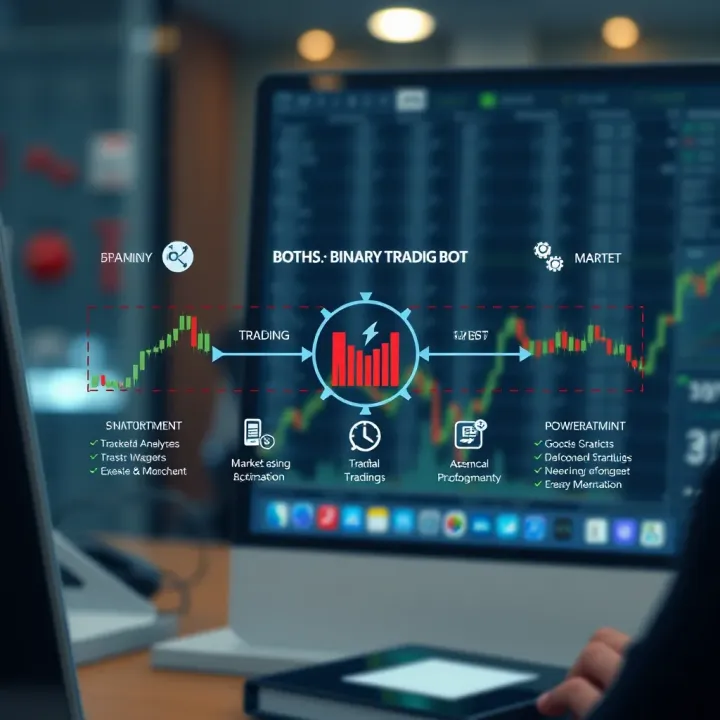
Discover effective strategies for using binary bots in trading 🤖📈 Learn how to improve decisions, manage risks, and optimize binary options trading.
Learn how binary bots automate trading in binary options 📊. Discover their workings, pros, cons, risks, and legal tips for safe use in Kenya 🇰🇪.
Based on 11 reviews