

Forex Trading Basics for Beginners in Kenya
📈 Learn forex trading basics in Kenya! Understand key players, essential tools, trading types, and strategies to trade confidently and manage risks.
Edited By
Isabella Morgan
Forex trading has become quite popular in Kenya, especially among those looking to diversify income streams or try their hand at global markets. Unlike investing in stocks or bonds, forex involves buying and selling currencies. The forex market operates 24 hours a day, five days a week, offering flexibility that suits busy schedules.
Starting forex trading can feel overwhelming, but understanding its basics is the first step. Traders in Kenya often use platforms that support M-Pesa payments, making deposits and withdrawals easier without the hassle of traditional banking.

Here’s what you need to know at the outset:
Currency Pairs: Trading always involves two currencies, such as USD/KES or EUR/USD. You speculate whether the first currency (base) will strengthen or weaken against the second (quote).
Leverage: Forex brokers often offer leverage up to 1:100 or more, meaning you can control a larger position with a smaller deposit. While leverage can boost profits, it also increases risk.
Volatility: Currency prices change rapidly due to geopolitical events, economic data, or market sentiment. This volatility means opportunities and risks happen side by side.
Start small to limit exposure; many beginners lose money trying to chase quick gains without proper understanding.
The Kenyan forex trading scene also has unique elements. For example, many use M-Pesa to fund accounts directly, avoiding delays associated with bank transfers. However, traders should be cautious about unlicensed brokers promising unrealistic returns.
Before placing your first trade, make sure you have the following in place:
A reliable trading platform with local payment support.
Basic knowledge of how forex works and key terms.
A clear plan for risk management, such as setting stop losses.
With these basics, you’ll be ready to explore trading strategies and build your skills. Keep in mind that forex trading is not a get-rich-quick scheme. It demands patience, practice, and discipline, much like any other form of investment or business.
Understanding these fundamentals will help you approach the forex market confidently and avoid common pitfalls.
Grasping the basics of forex trading lays a strong foundation for any trader, especially beginners. It helps you understand where the market operates, who takes part, and the fundamental mechanics of trading currencies. This knowledge lessens risks and builds the confidence needed to make informed decisions in a fast-moving market.
The forex market is the world's biggest financial marketplace, with a daily turnover exceeding $6 trillion. It deals exclusively with buying and selling currencies. Unlike stock markets that operate from physical locations, forex markets run electronically across global banks, brokers, and traders 24 hours a day.
Major currency pairs like USD/KES (US Dollar/Kenyan Shilling) and EUR/USD (Euro/US Dollar) are crucial because they represent the most traded relationships and offer solid liquidity. For example, USD/KES trading is essential for Kenyan importers and exporters managing currency risks.
Participants in the market include central banks, commercial banks, hedge funds, corporations, and retail traders. Each plays a distinct role. Central banks, like the Central Bank of Kenya, influence national currency policies, while retail traders engage in speculative trades, aiming to profit from price fluctuations.
Forex trading always involves currency pairs. The exchange rate shows how much of the second currency (quote currency) you need to buy one unit of the first (base currency). For example, if USD/KES is 110, it means KS10 is needed to buy one US dollar. This dynamic lets traders speculate on currencies rising or falling against each other.
When trading, you can buy (go long) if you believe the base currency will strengthen, or sell (go short) if you expect it to weaken. For instance, if a trader thinks the US dollar will gain strength against the Kenyan shilling, they buy the USD/KES pair.
Profits or losses come from the difference between your entry and exit prices. If you bought USD/KES at 110 and sold at 112, you gain from the 2-shilling difference per unit traded. But if it drops to 108 before selling, you incur a loss. It's vital to manage these risks carefully.
The forex market never truly sleeps. It operates across four main sessions: Sydney, Tokyo, London, and New York. These sessions overlap, creating periods of intense activity when liquidity and volatility often increase.
For Kenyan traders, the most active times occur during the London and New York sessions, roughly from 10 am to 6 pm East Africa Time (EAT). Trading during these hours provides better price movement and tighter spreads, making it easier to enter and exit trades effectively.
Knowing when the market is most active allows you to plan trades better and avoid low-liquidity times that could lead to slippage or unexpected price jumps.
Understanding these fundamentals gives you a clear picture of the forex market’s workings, preparing you better to navigate its risks and opportunities.
Starting your forex trading journey right can save you headaches down the road. This stage involves some critical choices—from picking a reliable broker to setting up your trading platform. These steps ensure you operate safely and efficiently, especially within the Kenyan market context.
Choosing a broker licensed under the Capital Markets Authority (CMA) Kenya is key. CMA oversight means the broker follows local laws designed to protect you, such as safeguarding client funds and fair dealing practices. For example, brokers registered with CMA must keep client money in segregated accounts, reducing the risk of misuse.
Look for brokers offering transparent pricing, responsive customer support, and various trading instruments. Also, ensure the broker provides easy deposit and withdrawal options compatible with Kenyan payment methods like M-Pesa. These features help keep your trading experience smooth and accessible.
Costs matter in forex trading because thicker spreads or high commissions eat into your profits. The spread is the difference between buying and selling price of a currency pair. For instance, a broker offering a 1.5 pip spread on EUR/USD is usually cheaper than one charging 3 pips. Always compare spreads, commissions, and any hidden fees before settling on a broker to keep trading profitable.
Most brokers offer different accounts: standard, mini, or micro, varying by minimum deposit and trading volume. As a beginner in Kenya, starting with a micro account requiring as little as KSh 5,000 to KSh 10,000 can help you manage risks while learning. Pick an account type that matches your budget and trading goals.
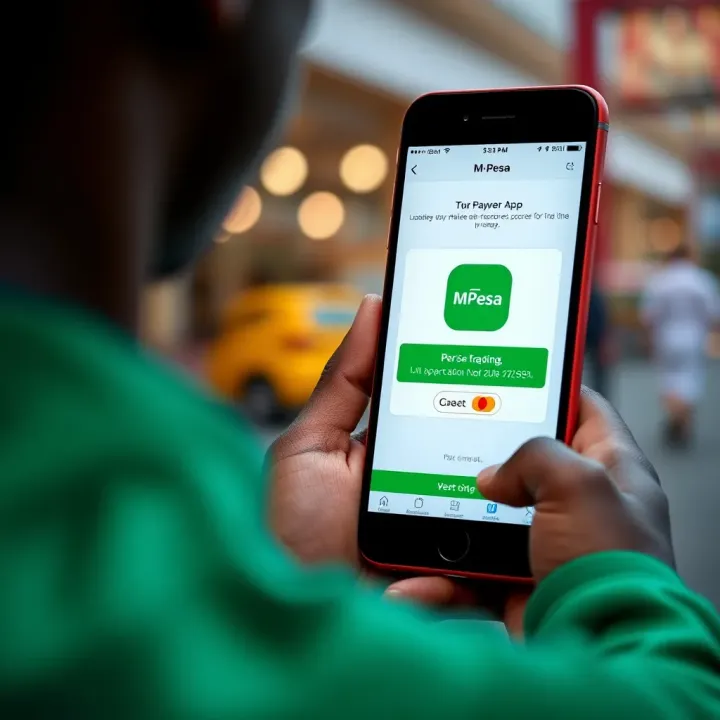
Kenyan traders benefit from brokers that accept funding via M-Pesa or bank transfers—fast, convenient methods widely used in Kenya. For example, you can fund your trading account directly from your Safaricom M-Pesa wallet at any time, avoiding lengthy bank formalities.
Verification involves submitting identification documents like a national ID or passport plus proof of residence. This process is mandatory to comply with anti-money laundering rules. Completing verification early allows uninterrupted trading and smooth withdrawal of your profits.
MetaTrader 4 (MT4) and MetaTrader 5 (MT5) are among the most popular platforms in Kenya. They provide user-friendly interfaces, multi-timeframe charting, and automated trading options. Many brokers support these platforms, making them a safe bet for beginners.
Learning to place orders, set stop-loss and take-profit levels, and read charts on your platform is essential. MT4/5 allow you to customise your workspace easily. For instance, you can monitor several currency pairs simultaneously or set alerts for price movements.
Before risking real money, use a demo account to test your trading skills. This feature simulates live market conditions without financial risk. It lets you experiment with strategies and get familiar with your chosen platform, so you trade confidently when you switch to a live account.
Getting these first steps right will build a strong foundation for your forex trading journey. Choose your broker carefully, fund your account through trusted Kenyan channels, and master your trading platform for better chances of success.
Mastering essential forex trading concepts and tools is key to making informed decisions and managing risks effectively. Understanding these basics helps you navigate the market's complexities and increases your chances of success.
Leverage allows traders to control a larger position than their actual deposit by borrowing funds from the broker. For example, with a leverage of 1:100, depositing KSh 10,000 means you can trade up to KSh 1,000,000 worth of currency. This magnifies both potential profits and losses, making it a powerful but double-edged sword.
High leverage increases your exposure to the market but also raises the risk of losing more than your initial deposit. Many beginners jump into high leverage to chase big gains but end up wiping their accounts quickly. It’s prudent to use leverage carefully, adjusting it to your risk tolerance and experience.
Margin is the amount of money you need to keep in your account to open or maintain a leveraged position. If your losses eat into your margin beyond a certain point, your broker may issue a margin call, requiring you to add funds or close positions. Managing exposure means monitoring your margin closely and avoiding overtrading to prevent such calls.
Technical analysis involves studying price charts to predict future market movements based on past data. Common chart types include candlestick, line, and bar charts, visible over various timeframes, from minutes to months. For Kenyan traders, shorter timeframes like 15-minutes or hourly charts suit active trading, while daily or weekly charts fit longer-term strategies.
Common indicators such as Moving Averages, Relative Strength Index (RSI), and Bollinger Bands help detect trends, momentum, and possible reversal points. These tools assist traders in timing entry and exit points with more confidence.
Trendlines highlight the direction of price movement, while support and resistance levels mark price zones where buying or selling pressure may increase. For instance, if the USD/KES pair approaches a historical resistance level, traders might anticipate a price drop or breakout, influencing their decisions.
Economic news and data releases, such as GDP growth, inflation rates, and employment figures, impact currency values. A strong GDP report from the US, for example, can boost the US dollar against other currencies. Kenyan traders should keep an eye on local economic indicators, especially the Central Bank of Kenya’s (CBK) announcements.
Central bank decisions on interest rates or monetary policy directly affect forex markets. Higher interest rates tend to attract foreign investment, strengthening the currency. Hence, if CBK raises rates, the Kenyan shilling may appreciate, affecting forex pairs involving KES.
Tracking both Kenyan and global events is essential. Political news, trade agreements, or crises can cause sudden market shifts. For instance, election season in Kenya might bring volatility in the KES exchange rate. Staying updated via reliable news sources helps traders react appropriately.
Solid understanding of leverage, technical and fundamental analysis equips you with essential tools to trade forex smartly and manage risks tailored to Kenyan market realities.
This foundational knowledge combined with practical application helps you build confidence and discipline in your trading journey.
Building a trading plan is essential for forex traders who want to approach the market with discipline and clear direction. Without a plan, trading decisions tend to be haphazard, often leading to unnecessary losses. A well-crafted plan helps you set clear goals, manage risks effectively, and develop strategies tailored to your individual situation. This can make the difference between consistent success and unpredictable outcomes.
Defining profit targets and risk tolerance starts with understanding how much return you expect and how much loss you can comfortably bear. For instance, a beginner might aim for a modest 5% profit monthly while accepting a maximum loss of 2%. This helps keep trading sensible and prevents chasing unrealistic gains that can lead to reckless choices.
Time commitment for trading matters too. Forex trading demands not only money but also time. If you're juggling a full-time job in Nairobi, you might prefer trading during market hours that align with your off-work hours, such as the London or New York sessions. Recognising your available time helps you avoid overtrading, which can sap both your capital and energy.
Tracking your performance keeps you honest. Maintaining a trading journal where you note your trades, reasons, outcomes, and feelings allows you to see what works and what doesn't. For example, if you notice more losses during certain economic announcements, you can adjust or avoid trading then. This feedback loop sharpens your skills and builds confidence.
Using stop-loss and take-profit orders protects your capital by automatically closing trades when they reach predetermined levels. A stop-loss might close a losing trade after a 1% drop, capping losses before they pile up. Take-profit locks in gains once a set target is hit, preventing greed from eroding profits. Kenyan traders using platforms like MetaTrader 4 can easily set these to safeguard investments.
Position sizing and capital allocation ensure you don't put too much of your money in one trade. For example, risking just 1–2% of your total trading capital per position helps avoid wiping out your account in a few bad trades. This approach balances opportunities with preservation.
Avoiding common risk mistakes means steering clear of trading based on impulse or hearsay. Overleveraging, ignoring stop-loss, and chasing losses are typical traps. Consistent traders stick to their plan and respect the limits they set, reducing emotional decision-making.
Examples of simple strategies for beginners include trend following or breakout trading. For a Kenyan new trader, watching a currency pair like USD/KES break a clear resistance level can signal an entry point. These straightforward approaches reduce confusion and help build experience.
Backtesting and adapting strategies involves reviewing past market data to see how a strategy would have performed. This can take place on demo accounts or specialised software. If a strategy shows consistent losses, adjusting parameters or switching to another method is wise before risking real money.
Keeping emotions in check is critical. Fear and greed often lead traders to irrational actions such as premature exits or overtrading. Sticking to your plan, taking breaks, and treating losses as part of the learning curve help maintain a calm and focused mindset.
A solid forex trading plan is not just about rules but about building habits that foster steady growth in your trading journey.
By applying these elements, you set yourself up for a disciplined approach that balances ambition with caution — vital in the volatile world of forex trading.
When you start trading forex, practical tips can save you from costly mistakes. Beginners often rush into trading without solid preparation or understanding, which leads to frustration or losses. This section aims to highlight common pitfalls and offer actionable advice to help you build steady trading skills. Whether it's managing your emotions or spotting unreliable brokers, knowing these basics will strengthen your approach and reduce unnecessary risks.
Trading with real money can be stressful, especially when you’re still learning the ropes. Demo accounts let you practise without risking your own KSh. For example, you can test how currency pairs like USD/KES move during Nairobi business hours without worrying about losses. This hands-on experience helps you understand platform features, order types, and how prices fluctuate in real time.
Most importantly, demo trading teaches you to follow your trading plan and discipline. It’s easy to be reckless with pretend money, but the skills and patience you build will carry over when you switch to live trading.
Shifting from demo to live accounts requires mental preparation. Many traders find it challenging because real money adds emotional pressure. To manage this, start with small trades and low leverage. For instance, if you have KSh 10,000, you might risk only KSh 500 per trade initially.
Also, keep a trading journal to review your decisions. This habit lets you spot errors, whether emotional or technical. Gradually increase your trading size only when you consistently follow your strategy and control risks.
Not all brokers are trustworthy, especially in Kenya’s fast-growing forex scene. Watch out for brokers without clear regulation or a physical office. If a broker promises unrealistic returns, like doubling your money in a week, that’s a huge warning sign.
Poor customer support, delayed withdrawals, or confusing fees are other red flags. Always check if the broker is licensed by Kenya’s Capital Markets Authority (CMA) or an equivalent regulator.
To safeguard your trading capital, only use regulated brokers who keep client funds in segregated accounts. This separation means your money is safe even if the broker faces financial trouble.
Use secure payment methods like M-Pesa or bank transfers, which provide transaction records. Avoid brokers asking for cash deposits or untraceable payments. And never share your login credentials or personal details with anyone.
Protecting your funds is your responsibility. Careful broker selection and secure transactions go a long way.
Forex markets respond quickly to global and local news. Following trusted local news outlets like Business Daily Kenya helps you track economic data releases affecting the Kenyan shilling.
International sources like Bloomberg or Reuters also provide crucial info on central bank decisions or geopolitical events. Combine these with Kenyan economic reports for a full picture.
Continuous learning sharpens your trading skills. Online courses from platforms like Coursera or local fintech hubs offer structured lessons tailored to new traders. Many Kenyan traders also join WhatsApp groups or community forums where they share insights and tips.
Engaging with these communities gives you access to collective wisdom and direct support, which can be especially valuable when the market moves fast or you face tough decisions.
By keeping these practical tips in mind and avoiding common errors, you’ll build a solid groundwork for forex trading. This foundation is vital whether you want to trade part-time or eventually make forex your main income source.
📈 Learn forex trading basics in Kenya! Understand key players, essential tools, trading types, and strategies to trade confidently and manage risks.

📱 Discover how to use forex trading apps in Kenya with this practical guide. Learn key features, risk management, and tips for beginners to trade smart and safe! 🇰🇪

🌍 New to binary forex trading in Kenya? Learn key strategies, risk tips, and how to pick a trusted broker for smarter trading decisions today! 💹

Explore how Kenyan traders can choose reliable forex brokers with our detailed guide covering types, regulations, and crucial factors 🤑📊🇰🇪
Based on 13 reviews