

Best Forex Trading Books for Kenyan Traders
📚 Discover the top books for forex trading tailored for Kenyan traders! Learn strategies, market psychology & risk management to boost your skills today.
Edited By
Liam Foster
Forex trading in Kenya has grown steadily over the years, driven by increased internet access, mobile money platforms like M-Pesa, and greater interest in international markets. Yet, succeeding in forex requires more than just signing up on a trading platform like HotForex or FXTM. Kenyan traders need practical techniques that fit the local market context and the inherent volatility of forex.
The forex market is open 24 hours, which means timing and strategy play a big role. Kenyan traders often face challenges such as unexpected currency fluctuations due to local economic reports, Central Bank of Kenya (CBK) policy changes, or regional political developments. This article takes you through fundamental and technical strategies, with a focus on managing risks specific to Kenya’s trading environment.

Understanding your market means paying attention to factors like Kenya’s inflation rates, interest rate decisions by CBK, and even external influences like USD or Euro strength, as many Kenyan forex pairs involve these currencies.
Besides macroeconomic events, forex trading success rests on mastering chart patterns, indicators, and order types. For instance, recognising support and resistance levels on the USD/KES pair helps traders identify entry and exit points. Many Kenyan traders overlook the importance of clear money management rules, which tend to cause losses quickly if ignored.
In this context, effective forex trading means:
Emphasising risk management through stop-loss orders and position sizing
Using technical tools like moving averages and RSI (Relative Strength Index) with local market awareness
Keeping an eye on fundamental data such as Kenya’s GDP releases or trade balances
Leveraging online resources and local broker support for market insights
By approaching forex trading with these grounded techniques, Kenyan traders can better navigate market swings and protect their capital. The following sections will cover each aspect in detail with real-life examples related to the Kenyan market.
Grasping the basics of forex trading is fundamental before diving into complex strategies or market analysis. In Kenya's growing forex community, many traders start without a solid understanding, which often leads to losses rather than gains. Getting the foundations right helps traders make informed decisions, manage risks better, and navigate the volatile forex market with more confidence.
Forex trading is the buying and selling of currencies against one another. Traders aim to profit from changes in exchange rates between two currencies. For example, if you expect the US dollar (USD) to strengthen against the Kenyan shilling (KES), you might buy USD/KES. Later, if the dollar indeed gains strength and you sell, the difference between your buy and sell price turns into profit. Unlike buying shares in a company, forex trading is highly liquid and available 24 hours most days, making it accessible for various trading styles.
The forex market operates through a global network of banks, brokers, and financial institutions. It’s a decentralised market, meaning there’s no single central exchange. Instead, trading happens over-the-counter (OTC) via electronic platforms. In Kenya, popular platforms like MetaTrader and local brokers enable traders to join this network. The continuous nature of the market means currency prices can change anytime based on supply and demand, economic news, geopolitical events, and central bank actions. For instance, if the US Federal Reserve raises interest rates, it usually boosts the USD’s value, impacting forex pairs with the dollar.
Currency pairs are the foundation of forex trading and are grouped into majors, minors, and exotic pairs. Major pairs involve the most traded currencies globally, such as EUR/USD, USD/JPY, and GBP/USD. These pairs generally offer better liquidity and tighter spreads, making them popular with Kenyan traders.
Minor pairs exclude the US dollar but still involve strong economies, for example, EUR/GBP or AUD/NZD. Exotic pairs combine a major currency like the USD with emerging market currencies such as USD/KES or USD/ZAR. Trading USD/KES directly might not be widely available on international platforms, so Kenyan traders often trade USD against other majors and then convert via M-Pesa or local banks.
Understanding these fundamentals equips Kenyan traders with the necessary tools to approach the forex market strategically and avoid common pitfalls.
Having a clear grasp of what forex trading is, how the market functions, and which currency pairs matter is the stepping stone to developing practical trading techniques suitable for Kenya’s unique market environment.
Kenyan traders, just like their counterparts elsewhere, benefit greatly from proven forex trading strategies tailored to the local market environment. Selecting the right approach helps manage risks while seizing realistic profit opportunities. The techniques suit various trading styles—whether you're a part-time trader in Nairobi or actively engaged from Mombasa. Understanding these strategies equips you to navigate the forex market with more confidence and precision.
Trend following is a straightforward approach that involves riding the market's current direction. In forex, currencies often move in clear trends influenced by economic factors like interest rate changes or political stability. Kenyan traders might, for example, notice the KSh/USD pair gaining strength following CBK (Central Bank of Kenya) policy announcements. The idea is to enter trades aligning with such trends and exit before reversals begin. Tools like moving averages help identify and confirm the trend’s direction. While this method is not a quick win strategy, it favours patience and discipline for steady gains.
Breakout trading focuses on currencies breaking through significant support or resistance levels. In the Kenyan context, this could mean spotting the moment the KSh strengthens or weakens past a threshold due to new trade agreements within the East African Community (EAC). Breakouts can signal the start of strong moves, so timely entry is vital. However, false breakouts are common, so using indicators like volume or RSI (Relative Strength Index) can help confirm the validity before placing a trade.
Range trading works best when currency prices move sideways without clear direction. Kenyan traders can identify these periods during stable economic outlooks when neither domestic nor foreign news triggers volatility. By buying near support levels and selling near resistance, this strategy aims for multiple small profits. Risk management is critical here: sudden breakouts might hit stop losses. Unlike trend following, range trading requires quicker decisions but less exposure to long-term market swings.
Scalping involves making numerous quick trades to capture small profits within short time frames, often minutes. This suits traders with fast reflexes and access to reliable internet and trading platforms—common in Kenya's urban areas like Nairobi or Kisumu. Using tools like one-minute charts and tight stop losses, scalpers exploit minor price moves. While the gains per trade are small, cumulative profits can be significant. Scalping demands strict discipline as losses can add up quickly without proper control.
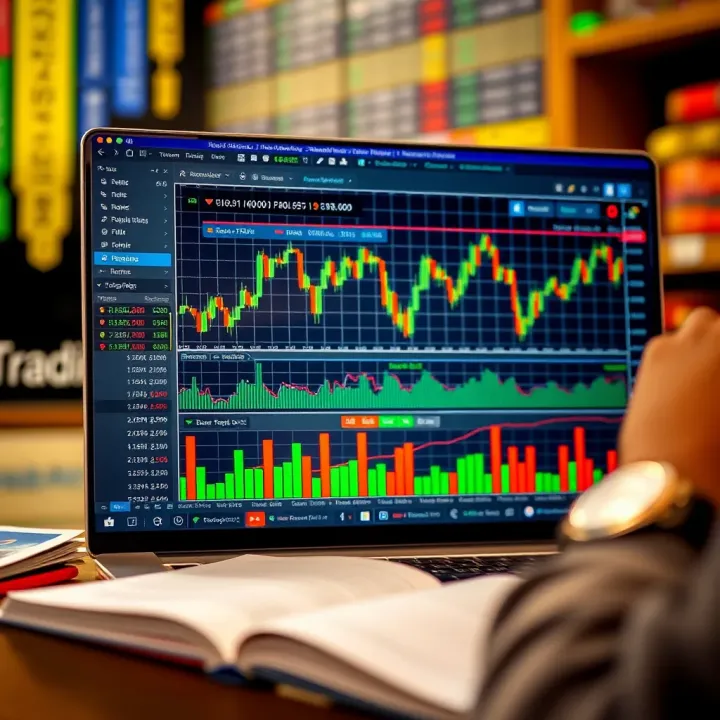
Choosing the right strategy depends on your trading style, risk tolerance, and market conditions. Kenyan traders often blend these methods to adapt to evolving forex market realities.
These popular strategies provide a good starting point, but success hinges on careful practice and continuous learning. Whether you start with trend following or scalping, always back your trades with analysis and risk management.
Technical analysis plays a major role in forex trading, especially for Kenyan traders who rely on price movements to make smart decisions. By studying past price data with charts and indicators, traders can spot trends and potential reversals that help them decide when to enter or exit trades. This approach is practical since it reflects real-time market behaviour and does not depend on economic news alone, which can sometimes be unpredictable.
Forex charts are the backbone of technical analysis. They visually display currency price movements over different periods—from minutes to months. For example, a Kenyan trader looking at the USD/KES pair might use a daily chart to understand broader trends and a 15-minute chart to time their trades more precisely. Reading charts involves noticing patterns like support and resistance levels, which indicate where prices often bounce back or stall. Mastering these charts helps a trader anticipate price moves, improving the chances of profitable trades.
Moving averages smooth out price data to show the overall direction more clearly. On a forex chart, a simple moving average (SMA) calculates the average price over a set number of days. When the price moves above the moving average, it signals an upward trend; below it suggests a downward trend. Kenyan traders often use a 50-day and 200-day moving average crossover as a clear entry or exit signal. This tool is simple but effective in filtering out the noise of small price changes.
RSI measures how fast and how much prices have changed, showing whether a currency pair is overbought or oversold. It ranges from 0 to 100, where above 70 typically means overbought conditions and below 30 means oversold. For instance, if the EUR/USD shows an RSI of 75, a Kenyan trader might prepare for a possible price drop soon. RSI helps in timing trades by indicating when the market may be due for a correction.
MACD tracks momentum by comparing two moving averages of different lengths (usually 12-day and 26-day). The indicator generates buy or sell signals when these averages cross. It also includes a signal line that confirms these moves. A Kenyan trader could use MACD to catch early trend shifts, which is especially useful in volatile forex pairs. It’s a reliable indicator for both trend-following and timing reversals.
No single indicator can guarantee success. Combining tools like moving averages, RSI, and MACD can increase accuracy by confirming signals from multiple angles. For example, if the RSI shows an oversold currency and the MACD line crosses above the signal line while the price is above a moving average, it might be a strong buy signal. Kenyan traders benefit from this approach since it reduces false entries, helping protect capital and improve overall trading results.
Using a blend of technical tools with consistent chart reading makes trading clearer and helps Kenyan forex traders make informed decisions, rather than guessing or relying on luck.
Fundamental analysis is key to understanding the bigger picture behind currency movements. By studying economic indicators, political events, and central bank actions, traders gain insight beyond the numbers on a chart. This approach equips Kenyan traders to anticipate shifts tied to economic health and policy changes, which often have lasting impacts on forex prices.
Inflation shows how much prices increase over time, impacting a currency’s buying power. For Kenyan traders, rising inflation in a country can weaken its currency because it erodes purchasing value. For example, if Kenya's inflation rate spikes unexpectedly, the Kenyan shilling might lose value against the US dollar. Monitoring inflation reports, such as the Consumer Price Index (CPI), can help traders decide whether to buy or sell a currency.
Interest rates set by central banks influence forex markets since they affect returns on investments in that currency. Higher interest rates tend to attract foreign capital, strengthening the currency. When the Central Bank of Kenya (CBK) raises its benchmark rate, it often leads to shilling appreciation as investors seek better yields. Conversely, rate cuts might prompt depreciation. Traders should watch CBK meetings and statements closely to catch early signals.
GDP measures the total economic output of a country and indicates its growth health. Strong GDP growth usually supports a strong currency, as it suggests a robust economy attracting investment. For instance, when the Kenyan economy shows steady GDP growth amid regional challenges, the forex market may respond positively to the shilling. Keeping tabs on quarterly GDP releases helps traders assess long-term currency trends.
Political stability and regional events can sway market confidence and currency values. For example, election periods in Kenya may create volatility due to uncertainties about policy direction. Similarly, tensions in neighbouring countries or the East African region can affect cross-border trade outlooks and capital flows, influencing the shilling. Traders benefit by staying informed on political developments, including government policies and regional integration efforts within the East African Community (EAC).
Political risks often cause sudden currency moves; prudent traders keep alert and adjust their strategies accordingly.
Central banks, including the CBK, the US Federal Reserve, and the European Central Bank, influence forex markets through monetary policy decisions. Kenyan traders should focus on how CBK’s policies affect liquidity and inflation domestically. At the same time, decisions by major central banks shape global currency dynamics, impacting the shilling’s performance against currencies like the dollar or euro.
For example, a rate hike by the Federal Reserve can strengthen the dollar, putting pressure on emerging currencies including the shilling. Understanding these linkages allows Kenyan traders to navigate risks from overseas policy shifts. Keeping an eye on CBK announcements, the Fed’s Federal Open Market Committee (FOMC) meetings, and ECB policy statements is crucial.
Integrating fundamental analysis into your forex trading means watching key economic indicators and political shifts, combined with central bank moves, to make better-informed trading decisions adapted to both local and global factors.
Risk management and psychological discipline stand as the backbone of successful forex trading. In Kenya's dynamic market, where unexpected moves and local economic shifts happen frequently, managing risks carefully can mean the difference between protecting your capital and losing it all. Traders who ignore these elements often face steep losses, even if they have solid technical or fundamental strategies.
Setting clear stop loss and take profit levels helps you control how much you're willing to lose or gain on a trade. A stop loss automatically exits a trade if the price moves against you beyond a certain point. For example, if you buy USD/KES at 110 and set a stop loss at 108, the trade closes when it falls to 108, preventing further losses. Similarly, a take profit locks in gains when the price hits your target. Properly using these tools saves you from emotional decisions when the market swings unexpectedly. Many Kenyan traders use a risk-to-reward ratio of 1:2, risking KSh 1,000 to potentially gain KSh 2,000.
Leverage lets you control larger trade sizes with a smaller amount of capital. However, without careful control, leverage can amplify losses as much as profits. In Kenya, brokers often offer leverage up to 1:100, but traders should start smaller. For instance, using 1:10 leverage on a KSh 50,000 deposit limits your exposure better and preserves capital during market dips. Position sizing refers to how much of your account balance you risk on one trade. It’s wise to risk only 1-2% per trade. If your account has KSh 100,000, risking more than KSh 2,000 on a single trade increases chances of wiping out your account quickly.
Emotion can quickly cloud judgement in forex trading. Greed, fear, and impatience often lead to rash decisions such as chasing losses or avoiding necessary stop outs. Kenyan traders frequently mention losing focus after a bad trade and doubling down to recover losses, which usually worsens the situation. To handle this, maintain a trading routine with clear rules, write a trading journal to reflect on decisions, and take breaks if feelings run high. Remember, successful forex trading requires a calm mind that sticks to the plan regardless of market noise.
Protecting your investment is as much about managing your mindset as it is about analysing the market. Risk management tools and psychological discipline work hand in hand to keep you in the game longer.
Understanding and practising these risk management and mental discipline techniques can improve your consistency and help you navigate Kenya's forex market confidently. They ensure that you don’t just chase short-term wins but build lasting trading skills over time.
Traders in Kenya must tailor their forex trading strategies to the local market environment to achieve better results. While global forex principles still apply, understanding Kenya-specific factors such as payment methods, regulatory frameworks, and available platforms can make all the difference. Adapting ensures smoother transactions, compliance with laws, and quicker access to funds, boosting confidence and efficiency.
Several international and local brokers provide platforms suited to Kenyan traders, but picking the right one involves more than just looking at spreads and leverage. Popular platforms like MetaTrader 4, MetaTrader 5, and cTrader remain widely used, yet access depends on local regulations and payment options. Kenyan traders should prioritise brokers that are regulated by reputable bodies such as the Capital Markets Authority (CMA) Kenya or have strong reputations in the region.
Locally hosted servers or data centres can improve execution speed and reduce latency, which is important for strategies like scalping or day trading. Platforms offering Swahili language support or Kenya-focused customer service add practical value by simplifying communication. For instance, brokers that allow deposit and withdrawal via M-Pesa ease the funding process without foreign bank hassles.
M-Pesa dominates Kenya's payment landscape, and its integration into forex trading platforms is a game-changer for Kenyan traders. Depositing funds using M-Pesa is fast and convenient, eliminating the need for cumbersome international bank transfers that may take days and incur high charges.
Besides M-Pesa, other local payment systems like Airtel Money or bank transfers through Kenyan banks such as Equity Bank or KCB also facilitate efficient fund management. When choosing brokers, verify that they support these local payment systems both for deposits and withdrawals to avoid delays or even lost money.
To illustrate, a trader funding their account via M-Pesa can start trading within minutes, allowing them to seize timely market movements and react swiftly to global or local economic news.
Forex trading in Kenya falls under the oversight of the Capital Markets Authority (CMA) and the Kenya Revenue Authority (KRA). Traders should register properly, usually by obtaining a Personal Identification Number (PIN) from KRA and ensuring their brokers are licensed or recognised by CMA.
Tax-wise, profits realised from forex trading are subject to income tax and must be declared in annual returns. Kenyan tax law treats forex gains as taxable income; thus, keeping meticulous records of trades, deposits, withdrawals, and profits is vital to avoid unnecessary penalties.
Furthermore, traders should be aware of the Anti-Money Laundering (AML) and Combating the Financing of Terrorism (CFT) regulations that brokers and banks must follow. These laws mean that verification processes, including Know Your Customer (KYC) checks, are standard and required, which adds layers of security but might slow initial account setup.
Being conversant with Kenya’s trading regulations and using payment methods familiar locally bridges the gap between theory and practice, leading to a more reliable and efficient forex trading experience tailored to Kenyan realities.
Adapting your forex technique is not just about fine-tuning trades but also about working smoothly within Kenya’s unique technological, legal, and financial systems, giving you a practical edge in the market.
📚 Discover the top books for forex trading tailored for Kenyan traders! Learn strategies, market psychology & risk management to boost your skills today.

Explore top forex trading apps for Kenyan traders 📱 Learn how to pick the right app, secure your trades, and start trading forex effectively on mobile platforms!

📚 Discover top forex trading books for Kenyan investors! Learn market basics, strategies, risk control, and psychology to boost your trading skills effectively.

🤖 Explore how Forex trading bots work, their pros, cons, and must-know tips for Kenyan traders aiming to automate smart trades in the FX market.
Based on 7 reviews