

Top Forex Trading Books for Kenyan Traders
📚 Discover the best forex trading books tailored for Kenyan traders. Learn how to pick resources that match your style and boost your market skills! 🇰🇪
Edited By
Emily Foster
Forex trading involves buying and selling currencies to make a profit from fluctuations in exchange rates. For Kenyan traders, understanding this market is key because forex is the largest financial market globally, with daily volumes exceeding $6 trillion. Unlike stocks, forex trading runs 24 hours a day, five days a week, allowing flexibility for various schedules.
The forex market operates through currency pairs, where one currency is exchanged for another, such as USD/KES (US Dollar/Kenyan Shilling). Traders aim to buy low and sell high or sell high and buy low, depending on market trends. Because of currency volatility, trading requires solid knowledge of fundamentals and risk management.

Kenyan traders can access forex markets via brokers regulated locally and internationally. Using platforms like MetaTrader 4 or 5, they can analyse charts, indicators, and news to inform trading decisions. Staying updated on economic releases from Kenya, the US, China, and Europe is important because they directly influence currency movements.
Successful forex trading balances technical analysis – using chart patterns and indicators – with fundamental analysis of economic data and geopolitical events.
Risk management is essential. The Kenyan Shilling can be volatile, so using stop-loss orders and starting with small trade sizes helps preserve capital. Many tutorials available in PDF format provide step-by-step guidance on setting up accounts, placing orders, and interpreting market signals. These resources are designed to suit Kenyan conditions, such as accessing local brokers and considering transaction costs like spread and commission.
By consulting practical forex trading PDF guides, Kenyan traders can take advantage of:
Tools for analysing price action and market sentiment
Strategies tailored for volatile currency pairs including USD/KES and EUR/USD
Clear explanations of leverage, margin, and risk
Tips for integrating mobile money platforms like M-Pesa in funding trading accounts
In summary, forex trading presents both opportunities and risks for Kenyan investors. Learning through accessible, localised tutorial PDFs helps you build confidence, avoid common pitfalls, and develop a disciplined approach to the forex market.
Understanding the fundamentals of forex trading sets a strong foundation for anyone eager to navigate this complex market. For Kenyan traders, having a clear grasp of core elements like currency pairs, market hours, and common forex terms is crucial to making informed decisions and managing risks effectively.
Currency pairs and exchange rates form the backbone of forex trading. In the forex market, currencies are traded in pairs; for example, the US dollar against the euro (USD/EUR). The price you see is the exchange rate showing how much of one currency you need to buy a unit of the other. This makes understanding currency pairs practical for Kenyan traders, especially when dealing with the US dollar or euro, which often influence the strengths of the Kenyan shilling (KES).
The forex market operates around the clock during weekdays, thanks to its global nature. This means market hours and participants span different time zones, including the London, New York, Tokyo, and Sydney trading sessions. For Kenyan traders, the overlap of London and New York sessions (usually afternoon to late evening EAT) tends to be the most active and liquid, offering better trade opportunities. Knowing when the market is busiest can help you avoid trading during low activity periods that generally have less predictable price movements.
What sets forex apart from other markets is its sheer scale and liquidity. Unlike the Nairobi Securities Exchange (NSE) where shares trade during fixed hours, forex is open 24/5, involving a mix of central banks, commercial banks, hedge funds, corporations, and individual traders. Another key difference lies in leverage—forex allows for higher leverage, meaning Kenyan traders can control large positions with relatively small capital, but this also raises the stakes for losses.
Understanding terms like pip, lot size, spread, and leverage can prevent costly mistakes. A pip is the smallest price movement in a currency pair, usually 0.0001 for most pairs, so a move from 1.3500 to 1.3501 is one pip. Lot size refers to the volume of the trade; standard lots equal 100,000 units of the base currency, but many brokers offer mini or micro lots suitable for Kenyan traders with smaller capital. The spread is the difference between the buying and selling price—lower spreads mean cheaper trades. Leverage lets you trade larger amounts by borrowing from your broker, but should be used carefully to avoid wiping out your account.
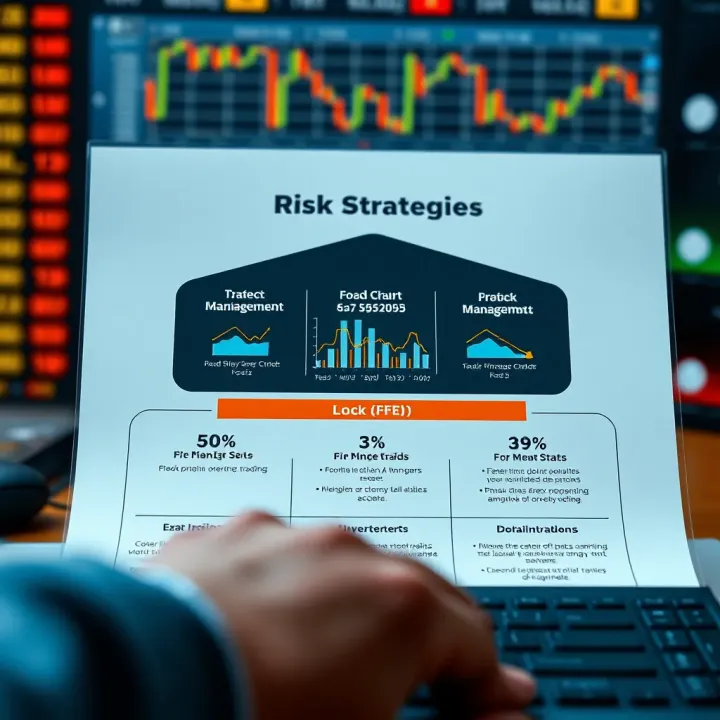
The terms bid, ask, and margin are also important. The bid price is what buyers pay, while the ask price is what sellers want. The margin is the amount of money you need to open a position, different from the total trade size because of leverage. Kenyan traders should monitor their margin closely to avoid margin calls, which happen when the market moves against your position and your broker requires more funds to maintain the trade.
Mastery of these basics improves your ability to plan trades and manage risk wisely. It’s the first step to becoming a confident forex trader in Kenya.
By starting with these essentials, you’re better equipped to understand more complex strategies and how to use tutorial PDFs effectively, building experience block by block. This knowledge also helps you spot opportunities and avoid common pitfalls that often catch beginners off guard.
To trade forex smartly, understanding key concepts and proven strategies is essential. This section shines light on the analysis methods and practical strategies that Kenyan traders commonly use to navigate currency markets. Mastery of these ideas not only helps avoid costly mistakes but also improves your chances of spotting good opportunities.
Using charts and indicators: Technical analysis relies on historical price data shown in charts to predict future movements. Traders use tools like moving averages, RSI (Relative Strength Index), and MACD (Moving Average Convergence Divergence) to identify trends and potential turning points. For instance, a Kenyan trader observing USD/KES might spot a rising trend on a daily chart backed by strong volume, deciding to buy before a price surge. Charts simplify complex data, enabling quicker decisions without waiting for news.
Economic news and its impact on currencies: Fundamental analysis focuses on economic events, policies, and indicators that influence currency values. News like changes in Kenya's inflation rate, Central Bank of Kenya interest rate adjustments, or trade balance figures can cause sudden price volatility. For example, a surprising hike in the Kenyan Central Bank rate usually strengthens the shilling as investors seek higher returns. Keeping an eye on scheduled economic reports and understanding their likely impact helps traders prepare for upcoming market swings.
Trend following and breakout strategies: A basic but effective approach is to follow prevailing trends—buy when the currency pair is rising, and sell when it’s falling. Breakout strategies focus on times when price moves beyond established support or resistance levels, signalling strong momentum. Suppose EUR/USD has been stuck near a resistance level for days; a breakout past this point might present a buying chance. Kenyan traders often use these strategies because they suit volatile markets and manageable risk.
Using stop-loss and take-profit orders: Managing where to exit a trade is as vital as entering it. Stop-loss orders automatically close a position to prevent larger losses if the market goes against you, while take-profit orders lock in gains once a target price is reached. For example, if a trader buys GBP/USD at 1.3100, they might set a stop-loss at 1.3050 to limit downside and a take-profit at 1.3200 to cash in when the price rises. Proper use of these orders keeps emotions out of trading and helps protect capital.
Applying these concepts and strategies thoughtfully can mark the difference between reactive guessing and deliberate, informed trading in the Kenyan forex market.
With a foundation in both analysis methods and beginner-friendly strategies, Kenyan traders can approach forex with more confidence and better planning.
Managing risk is the backbone of any successful forex trading journey, especially in a fast-moving market like forex. Kenyan traders, whether experienced or just starting, must understand that forex can be volatile, and without managing risk, losses can pile up quickly. Being cautious and strategic about risk helps you protect your capital and keep a steady course.
Avoiding excessive losses is key to staying in the game. Imagine a trader who puts KSh 50,000 on a single trade without any limit on potential losses. If the market moves against them sharply, that entire amount might vanish in hours, leaving them with nothing. Limiting losses by using stop-loss orders or deciding beforehand how much you’re willing to lose on a trade can prevent such blowouts. For example, you might choose to risk only 2% of your trading capital on any one trade, which means if you have KSh 100,000, your maximum loss per trade is KSh 2,000. This way, even several bad trades won’t wipe you out.
Setting realistic profit targets goes hand in hand with controlling losses. It’s tempting to dream of huge returns quickly, but chasing unrealistic profits often leads to taking unnecessary risks. A good target reflects the current market conditions and your trading strategy. For instance, if a currency pair usually moves a maximum of 50 pips a day, setting a target of 200 pips is overly optimistic. Instead, aiming for 20 to 30 pips profit per trade can be more achievable and keep your expectations grounded.
Position sizing and leverage control are critical tools for risk management. Leverage lets you control a larger position than your deposit, but it can amplify both gains and losses. Many brokers offer leverage up to 1:500, but using such high leverage without control is like driving at full speed on a dirt road – risky and often reckless. Instead, Kenyan traders should practise moderate leverage, say 1:10 or 1:20, to keep risks manageable. Position sizing ensures you don’t commit too much on any single trade; calculating your position based on the percentage of your capital you're willing to risk is smart and practical.
Using forex demo accounts effectively offers a safe space to practice risk management. In these virtual accounts, you trade with fake money but real-time market conditions. This lets you try different risk strategies without the fear of losing your KSh. You can test how stop-loss levels or position sizes would have performed without financial risk. For instance, if you notice that a strategy you tested drains your demo account quickly, it's a clear signal to adjust your approach before risking real money.
Good risk management protects your capital over time, allowing you to learn and adapt rather than suffer quick, heavy losses.
By focusing on controlled losses, achievable targets, sensible leverage, and practising on demo accounts, Kenyan traders can build strong habits that improve their chances in the forex market. Acting wisely on risk is what separates steady traders from those who most often lose their money fast.
Accessing reliable forex trading tutorial PDFs is a smart way for Kenyan traders to build their knowledge without committing large sums of money. These guides serve as handy references that explain key trading concepts, market mechanics, and practical strategies in a clear format you can revisit anytime. They are especially useful when starting out or when you want to refresh your understanding of complex topics like risk management or technical analysis.
Using these PDFs effectively means more than just reading them once. It involves actively applying what you learn, practising with demo accounts, and comparing different materials to build a broad perspective. This approach helps avoid confusion from conflicting advice and boosts your confidence to navigate Kenya’s forex environment.
Trusted platforms offering forex guides often include well-known global sites like BabyPips, Investopedia, and brokerages with a strong presence in Kenya such as HotForex or FXPesa. These platforms usually update their content regularly to reflect market changes and regulations. PDF tutorials from reputable brokers also often include localised examples or insights relevant to East African traders, which adds practical value.
Besides global sites, local financial education platforms, investment clubs, and certain university finance departments have started compiling forex learning materials in PDF format. These cater to Kenyan market specifics like currency pair volatility between KES/USD or regulatory notes from the Capital Markets Authority (CMA).
For Kenyan traders seeking focused support, local courses and seminars often come alongside downloadable PDFs that summarise training points. These might be offered by jua kali forex trainers, organised investment groups in Nairobi, or fintech hubs offering workshops on trading basics. The advantage here is direct engagement with industry professionals who understand local challenges such as varying internet speeds or payment gateways like M-Pesa.
Moreover, some Kenyan banks provide educational materials to promote financial literacy, including forex trading basics and risk warnings. These resources help ensure traders know the regulatory environment and the importance of working with licensed brokers.
How to study and practice from PDFs effectively involves treating the material as part textbook, part workbook. Take notes, highlight key terms, and outline your questions as you read. Then, practise the strategies in a demo account to see how concepts like stop-loss or leverage behave in real conditions. For example, you could follow a breakout strategy laid out in the PDF using the EUR/USD-KES pair during your practice.
Combining PDFs with practical trading experience is essential because theory only goes so far without real exposure. Open a small live trading account after practising on a demo platform to test your progress. This helps solidify your learning and teaches you to manage emotional factors, which PDFs alone can’t simulate. Observing how news events in Kenya or the EAC region affect currency rates will also deepen your understanding beyond what static PDFs offer.
Successful forex trading depends on continuous learning and practice. Use tutorial PDFs as your base, but don’t shy away from getting hands-on experience and seeking local insights to sharpen your skills.
By approaching forex tutorial PDFs with this balanced method, Kenyan traders can develop a solid foundation and gradually build the confidence needed to trade competently in the often volatile forex market.
📚 Discover the best forex trading books tailored for Kenyan traders. Learn how to pick resources that match your style and boost your market skills! 🇰🇪
📱 Discover the best forex trading apps for Kenyan traders! Learn how they work, find trusted providers, spot key features, stay secure, and trade smarter today.

🔍 Learn the best times for forex trading in Kenya 🇰🇪! Explore global sessions, peak volatility, and smart timing strategies to boost your trading success 📈.

Explore top forex trading platforms for Kenyan traders ⭐ Compare features, ensure security 🔒 and boost your trading efficiency with this practical guide!
Based on 13 reviews