

Best Forex Trading Books for Kenyan Traders
📚 Discover the top books for forex trading tailored for Kenyan traders! Learn strategies, market psychology & risk management to boost your skills today.
Edited By
Isabella Green
Forex trading means buying one currency and selling another at the same time, aiming to profit from changes in their exchange rates. Unlike shares that trade in stock markets, forex operates 24 hours a day, five days a week, making it a fast-moving market with plenty of opportunities.
In Kenya, forex has become popular thanks to easy access through brokers online and payment options like M-Pesa, which make funding accounts straightforward. Kenyan traders often deal with major currency pairs involving the US dollar (USD), Euro (EUR), and the British pound (GBP), as these dominate global trade and commerce.
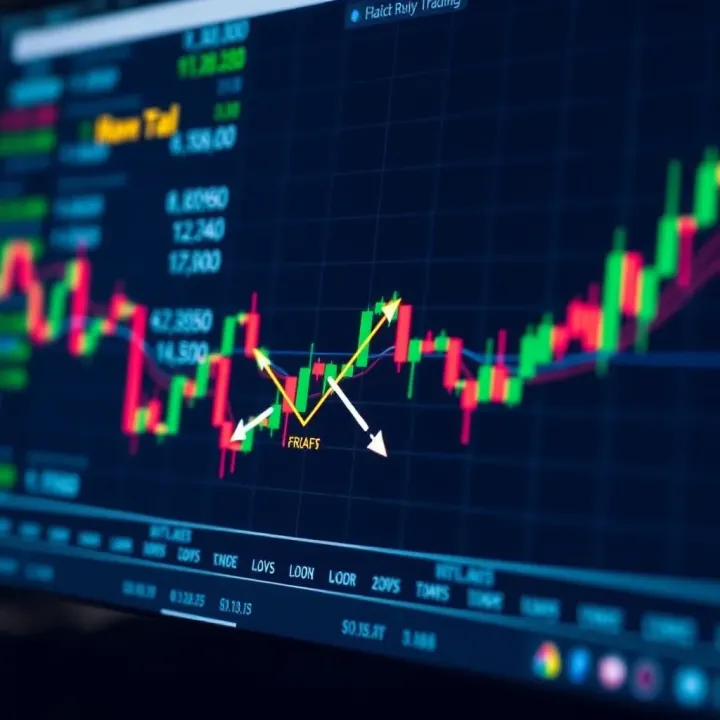
Understanding the currency pair is fundamental. For instance, USD/KES represents the value of one US dollar against the Kenyan shilling. If the exchange rate moves from 110 to 111, it means the shilling has weakened, costing more to buy one dollar. Traders buy the pair if they believe the dollar will strengthen or sell it if they think it will fall.
Forex trading is about spotting opportunities in fluctuating currency prices, managing risks smartly, and making trades decisions based on reliable information.
Key trading concepts every Kenyan trader should grasp include:
Leverage: Brokers offer leverage upto 1:100 or more, allowing traders to open positions bigger than their account balance. While this multiplies potential gains, it also increases losses – careful management is essential.
Pips: The smallest price move in forex, usually the fourth decimal place, is critical for measuring profits or losses.
Spread: The difference between the buy and sell price that brokers charge as their fee.
To start trading, you need a good broker registered with the Capital Markets Authority (CMA) or recognised internationally, a funded trading account (sometimes funded conveniently via M-Pesa), and a reliable trading platform like MetaTrader 4 or 5.
Successful forex trading in Kenya depends on continuous education, disciplined risk control, and staying updated on global economic events – especially those related to the US, EU, and China, as these affect currency values heavily.
This guide will walk you through all these elements in detail, helping you trade forex with confidence while understanding the risks and returns involved.
Getting a solid grasp of the basics is the stepping stone for anyone looking to trade forex effectively. This foundation helps you understand how currency markets operate and what factors influence changes in currency values. For Kenyan traders, this knowledge is useful in making informed decisions, especially when using local tools like M-Pesa for funding.
Forex trading means buying one currency while simultaneously selling another. The purpose is to profit from fluctuations in exchange rates. For example, if a trader believes the US dollar will strengthen against the Kenyan shilling, they can buy USD/KES. If the exchange rate rises, they can sell back at a profit. This makes forex a dynamic market where money can move quickly.
Unlike stock trading where you buy shares of companies, forex trading is purely about currencies. It's a 24-hour global market that connects banks, businesses, governments, and retail traders.
Forex markets differ from others like stocks or commodities mainly in liquidity and trading hours. Forex is the world’s largest market with daily trading volumes exceeding $6 trillion. This means trades can be executed swiftly with minimal price gaps.
Also, forex trading runs round the clock from Monday morning in Asia to Friday evening in New York, unlike stocks that follow specific exchange hours. For Kenyan traders, this flexibility means you can trade before or after work or even during matatu trips.
Currencies are quoted in pairs because you are exchanging one for another. The first currency in a pair is the base currency, while the second is the quote currency. For instance, in EUR/USD, the euro is the base, and the US dollar is the quote.
If EUR/USD quotes at 1.2000, it means one euro buys 1.20 US dollars. If the price moves to 1.2050, the euro has strengthened against the dollar, so you can sell euros for more dollars.
There are major, minor, and exotic pairs. Majors include pairs like USD/EUR, USD/JPY, and USD/GBP, which see high liquidity. Minors exclude the US dollar but involve other big currencies, for example EUR/GBP. Exotic pairs combine a major currency with one from an emerging market — say USD/KES.
Exotic pairs often have wider spreads and can be more volatile, making them riskier yet sometimes more rewarding for traders.
Understanding terms like pip, spread, leverage, and lot is critical. A pip is the smallest price movement, usually the fourth decimal in most pairs (0.0001). For example, if USD/KES moves from 110.2000 to 110.2100, that's a one-pip movement.
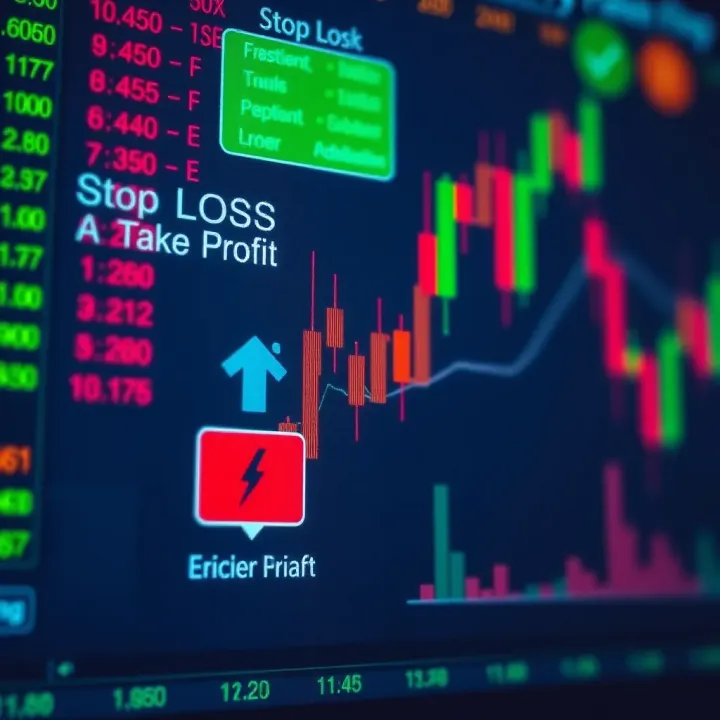
The spread is the difference between the bid (selling) and ask (buying) price. Brokers make money through spreads, so tighter spreads reduce trading costs.
Leverage lets you control a large position with a small deposit. For instance, a 1:100 leverage means you can trade KSh 1,000,000 with KSh 10,000. While leverage can boost profits, it equally increases losses if the market goes against you.
A lot is a standardised trade size. A standard lot usually means 100,000 units of the base currency, but mini and micro lots exist for smaller accounts.
Bid and ask prices are essential concepts too. The bid is the price your broker will pay to buy a currency from you, and the ask is the price at which you can buy from the broker. The difference reflects the spread.
Knowing the difference between bid and ask helps you understand trading costs upfront, which is crucial for managing risk closely.
Understanding the mechanics behind forex trading is essential for Kenyan traders aiming to navigate the market effectively. This section breaks down how trades are executed, what drives currency prices, and how different trading sessions influence market behaviour.
Market orders and limit orders are the two main ways to enter trades. A market order means you buy or sell a currency pair immediately at the current market price. For example, if a trader in Nairobi wants to buy EUR/USD at the going rate, placing a market order ensures the trade happens instantly, but the exact price might vary slightly due to fast market movements. On the other hand, a limit order lets you specify a price at which you want to buy or sell. If the market reaches that price, your order is executed. This helps traders control entry points, especially when expecting the market to move favourably.
Brokers and trading platforms play a critical role in forex. Brokers act as intermediaries between you and the wider forex market. In Kenya, popular brokers offer platforms like MetaTrader 4 (MT4) or MetaTrader 5 (MT5), which provide the tools to place orders, track prices, and analyse market trends. Choosing a broker that’s regulated by the Capital Markets Authority (CMA) ensures your funds and trades are safeguarded. The platform should be user-friendly and support seamless deposits via M-Pesa or bank transfer, making trading convenient for Kenyan users.
Economic indicators and geopolitics heavily influence currency values. Reports like Kenya’s GDP growth rate or inflation figures can cause the Kenyan Shilling to strengthen or weaken. Similarly, global events—such as trade tensions between the US and China or political unrest in major markets—impact currencies worldwide. Being aware of these factors helps traders anticipate price swings and plan their positions more wisely.
Central banks wield considerable power over forex prices through interest rate decisions. When the Central Bank of Kenya raises or lowers the base rate, it affects how attractive the shilling is to investors. Higher rates tend to attract foreign capital, boosting the currency's value, while lower rates might do the opposite. Traders often monitor announcements from central banks like the US Federal Reserve or the European Central Bank because their policies ripple across the market.
Forex markets operate 24 hours a day across different time zones, opening with the Sydney session, followed by Tokyo, London, and New York. This means that Kenyan traders must understand when each market is active to find the best trading opportunities. For instance, the London session is known for high activity and liquidity, coinciding with Kenyan business hours, which can be advantageous.
Volatility often spikes during overlapping sessions, such as when both the London and New York markets are open simultaneously. These overlaps create more trading volume, leading to sharper price changes. For example, a Kenyan trader watching EUR/USD during these times may see quicker price movements, which could mean bigger profits or losses. Being aware of these periods helps you time trades better and manage risk effectively.
Forex trading isn’t just about buying and selling; knowing how and when the market moves helps Kenyans trade smarter and protects their hard-earned capital.
Forex trading offers opportunities, but it carries significant risks that traders must understand and manage well. Without proper risk management, losses can quickly wipe out your trading capital. In the Kenyan context, where many traders rely on modest sums and leverage, being cautious is vital.
Market volatility is the unpredictable fluctuation in currency prices driven by economic data releases, political events, or global crises. For example, a sudden change in Kenya’s inflation figures or an unexpected Central Bank policy might cause sharp swings in the Kenyan shilling (KES) against the US dollar. Such volatility can lead to quick profits but also steep losses if trades go against you. The forex market is open nearly 24/7, so unmonitored volatility overnight may catch traders off-guard.
Leverage-related dangers come from using borrowed money to increase trade size. While leverage magnifies profits, it also magnifies losses. Suppose you have KSh 10,000 and trade with 50:1 leverage; you control KSh 500,000 worth of currency. A small adverse move in the currency pair could deplete your entire initial capital within minutes. Many novice traders in Kenya get tempted to use high leverage without fully appreciating the risks. Managing leverage wisely prevents losing more than you can afford.
Broker and platform risks include the possibility of dealing with unregulated or unscrupulous brokers. Some brokers may delay withdrawals, manipulate prices, or offer poor trade execution. For Kenyan traders, it's crucial to choose brokers regulated by recognised authorities, such as the Capital Markets Authority (CMA). Platform downtime or technical glitches during critical trades can also cost money, so using robust, reliable trading platforms is essential.
Use of stop-loss orders means setting a predetermined price at which your trade will automatically close to limit losses. This tool is practical because it removes emotional decision-making and caps how much you might lose on a single trade. For instance, if you buy EUR/USD at 1.1000, a stop-loss at 1.0950 means you’ll lose only 50 pips if the market moves against you. Kenyan traders should incorporate stop-losses in every trade to safeguard capital, especially in volatile markets.
Position sizing and diversification involve controlling how much of your capital you risk per trade and spreading your investments across different currency pairs. Rather than risking a large portion of your KSh 20,000 in one trade, consider limiting risk to 1-2% per position. Also, trading a mix of pairs like USD/KES, EUR/USD, and GBP/USD helps shield from sudden shocks affecting one currency. Diversification reduces the impact of any single loss on your total portfolio.
Choosing regulated brokers protects your funds and ensures fair trading practices. The Capital Markets Authority (CMA) in Kenya licences brokers adhering to strict rules. Working with CMA-regulated brokers means your deposits are held in segregated accounts and that there is transparency in pricing and execution. Avoid brokers promising guaranteed profits or unusually high returns; credibility matters most.
Managing risk is not about avoiding loss altogether but controlling it so you can stay in the game longer. Practical steps like using stop-loss orders, choosing the right broker, and sensible leverage keep your trading sustainable and boost your chances for consistent profits.
Traders in Kenya can gain more from the forex market by recognising these risks and applying solid risk management strategies from the start. Treat your trading capital like a business—protect it carefully, and let profits grow gradually and steadily.
Getting started with forex trading in Kenya involves a series of practical steps that focus on selecting the right partners and tools suited to the local market. This section breaks down those key starting points to help you take part confidently and responsibly.
Selecting a reliable forex broker is the very first step. Choose brokers regulated by Kenya's Capital Markets Authority (CMA) or by recognised international bodies such as the Financial Conduct Authority (FCA) or Australian Securities and Investments Commission (ASIC). Reliability here means transparent operations, fair trading conditions, and swift withdrawal options. For example, brokers like XM and HotForex, popular among Kenyan traders, offer local payment options and customer support.
Verification and funding methods including M-Pesa are essential considerations. Kenyan traders benefit greatly from brokers supporting M-Pesa for funding accounts because it is fast, widely accessible, and low-cost compared to traditional bank transfers. Account verification typically requires personal identification documents, proof of residence, and sometimes a source of funds statement. Once verified, you can top up your trading account using M-Pesa paybill or transfer services, which means you don’t need a formal bank account, broadening access for many.
Popular trading platforms and apps like MetaTrader 4 (MT4), MetaTrader 5 (MT5), and cTrader dominate the Kenyan forex scene. These platforms offer easy access to currency pairs, real-time charts, and a range of tools for technical analysis. Their mobile apps work well even on modest smartphones, which fits Kenya's mobile-first internet landscape.
Educational resources and demo accounts are indispensable when starting out. Many brokers provide free demo accounts to practise trading without risking real money. Besides this hands-on experience, Kenyans can tap into courses offered by local training centres or digital platforms like the CMA Investor Academy, which provides tailored materials for understanding forex basics and market behaviour.
Local forex communities and support play a big role in trader development. Forums, WhatsApp groups, and Facebook pages allow for sharing trade insights, discussing market trends, and getting advice from more experienced traders. Some Nairobi-based meet-ups and online webinars offer opportunities to network and learn in a setting that understands Kenyan market barriers and opportunities.
Starting forex trading in Kenya is more accessible than many think, especially when you use trusted brokers, local payment options like M-Pesa, and engage with community resources tailored for traders here.
This practical approach ensures you’re not just diving into forex but doing so with the right backing and tools to grow sustainably.
Navigating the forex market safely requires a clear understanding of regulations in Kenya. Rules set by local authorities help protect traders from fraud and malpractice while ensuring a transparent trading environment. Knowing these regulations is especially important given the rise of unregulated brokers targeting Kenyan traders with promises that often turn out too good to be true.
The Capital Markets Authority (CMA) is the key regulator for forex trading in Kenya. It oversees all licensed brokers operating within the country, ensuring they meet strict standards for transparency, financial stability, and client protection. For a forex broker to legally offer services in Kenya, the CMA requires them to obtain a licence demonstrating compliance with these rules.
Having a CMA licence means the broker follows local laws designed to protect investors. For example, licensed brokers must keep clients' funds in segregated accounts, separate from their own operating capital. This reduces the risk of losing traders’ money if the broker runs into financial trouble.
Checking if a broker is regulated by the CMA is straightforward and vital. Traders can visit the CMA's official website to find a list of all authorised brokers. Verifying the broker’s licence status before opening an account can save you from scams and unreliable firms. Kenyan traders should avoid brokers claiming to operate locally but lacking CMA approval, as these are often unregulated and pose a higher risk.
Forex scams remain a challenge in Kenya, so recognising red flags early helps protect your money. Promises of guaranteed profits or high returns with little risk are a major warning sign. Similarly, brokers pushing aggressive tactics to make you deposit more money quickly or refusing to provide clear information about fees and risk management should raise concern.
If you ever suspect fraud, reporting it promptly is crucial. The CMA is the primary body for lodging complaints against brokers or other market players. Additionally, you can seek help from consumer protection agencies or law enforcement when necessary. Acting early can prevent losses and help authorities track down unscrupulous operators. Always keep records of your communications and transactions with the broker as evidence.
Staying informed about forex regulations and spotting scams protects your investments. Always confirm your broker’s credentials and stay cautious with any offers that sound too good to be true.
By understanding the role of the CMA, knowing how to verify broker licences, and recognising signs of fraud, Kenyan traders can navigate forex trading more confidently and safely.
📚 Discover the top books for forex trading tailored for Kenyan traders! Learn strategies, market psychology & risk management to boost your skills today.
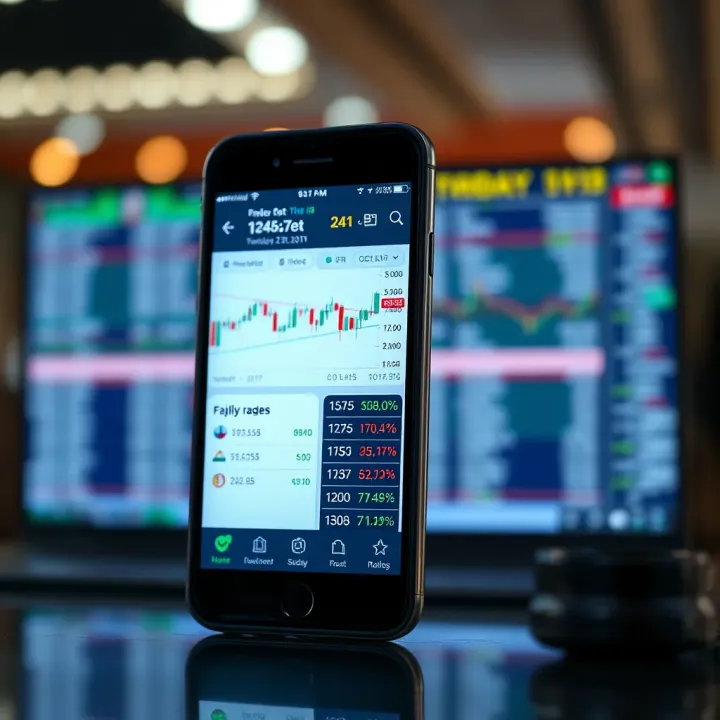
Explore top forex trading apps for Kenyan traders 📱 Learn how to pick the right app, secure your trades, and start trading forex effectively on mobile platforms!

📚 Discover top forex trading books for Kenyan investors! Learn market basics, strategies, risk control, and psychology to boost your trading skills effectively.

📊 Explore how binary trading platforms work and discover key tips for Kenyan traders. Learn about risks, regulations, and making smart choices in Kenya's market. 🇰🇪
Based on 13 reviews