

Top Forex Trading Books for Kenyan Traders
📚 Discover the best forex trading books tailored for Kenyan traders. Learn how to pick resources that match your style and boost your market skills! 🇰🇪
Edited By
Emma Collins
Forex trading means buying one currency while selling another at the same time, aiming to benefit from changes in exchange rates. For Kenyan traders, this activity offers a chance to grow their capital by taking advantage of global market movements. Unlike the stock market, forex operates 24 hours a day during weekdays, driven by currencies from major economies like the US dollar, euro, British pound, and Japanese yen.
The forex market responds to a variety of factors including economic indicators, political events, and central bank actions. For example, a decision by the Central Bank of Kenya (CBK) to raise interest rates can strengthen the Kenyan shilling (KSh) against other currencies. Traders watch such signals closely to decide when to enter or exit trades.
Several players influence the forex market:
Banks and financial institutions: They take large positions to manage their currency needs.
Governments and central banks: They intervene to stabilise their currencies.
Retail traders: Individual investors who use trading platforms to speculate on currency movements.
Even as a retail trader in Kenya, you can compete because technology platforms have lowered entry barriers.
You can trade major currency pairs like USD/KES, EUR/USD or GBP/USD through online brokers. These platforms often provide tools such as charts, indicators, and demo accounts to practise before risking real money. Commonly used platforms include MetaTrader 4 (MT4) and MetaTrader 5 (MT5).
Start small and test strategies using demo accounts – this helps build confidence without risking your capital.
Since forex involves leverage, which means you can control large positions with relatively small deposits, losses can also multiply quickly. Effective traders set stop-loss orders to limit potential losses and avoid emotional decision-making.
In short, forex trading in Kenya is accessible, but knowing market drivers, choosing the right platform, and managing risks are essential first steps before you trade with your hard-earned KSh.
Grasping how the forex market operates is vital for anyone aiming to succeed in currency trading. For Kenyan traders, this understanding helps navigate the market’s unique features, avoiding common pitfalls and recognising practical opportunities. Forex trading isn't just about buying and selling currency; it reflects global economic shifts that can impact your investments directly.
Forex trading means exchanging one currency for another with the hope that the value changes in your favour. For example, if you believe the US dollar will strengthen against the Kenyan shilling, you might buy USD/KES expecting to sell it later at a higher rate. This activity occurs 24 hours a day since currencies are traded worldwide, providing continuous chances to trade.
Currencies are always traded in pairs, like EUR/USD or USD/KES. The first currency (base) is what you buy or sell relative to the second (quote). If the EUR/USD rate moves from 1.1000 to 1.1100, the euro has gained value against the US dollar. For a Kenyan trader, focusing on pairs including KES or major ones like USD, EUR, and GBP can provide better insight into stable and volatile movements.
The forex market is active across global financial hubs: from Sydney to Tokyo, London, and New York. This means you can trade anytime, but liquidity and volatility differ by session. Nairobi’s trading window overlaps with London and New York sessions during certain hours, which is when you'll see more market activity and tighter spreads. Understanding these hours helps you plan your trades when market conditions suit your strategy.
Data like inflation rates, GDP growth, and employment figures affect currency values. For instance, Kenya’s inflation rate reported by the Kenya National Bureau of Statistics can cause the shilling to fluctuate. Traders use these indicators to predict central bank moves like interest rate changes, which directly influence currency demand.
Political stability or unrest can sway investor confidence. Changes in government policy, elections, or diplomatic relations impact currencies significantly. Take Kenya’s general elections: past instances have shown increased volatility before and shortly after the event. Being aware of such political timelines lets traders manage risk accordingly.
Sentiment represents the collective attitude of traders toward a currency. It’s shaped by news, rumours, and global events. For example, during a global economic slowdown, traders might prefer the US dollar for safety. Monitoring market sentiment through news and technical analysis tools helps Kenyan traders anticipate price movements that aren't always explained by fundamentals alone.
Successful forex trading in Kenya revolves around understanding these market basics and external influences. It equips you to make informed decisions rather than chasing unpredictable swings.
This foundation sets you up for deeper learning on trading strategies, risk management, and the specifics of the Kenyan trading environment.
Understanding who takes part in forex trading helps clarify the market’s diverse nature and shows you where your trades fit in. Every participant plays a distinct role, affecting liquidity, price movements, and trading opportunities.
Central banks and governments are the big players influencing currency values. In Kenya, for example, the Central Bank of Kenya (CBK) can intervene by buying or selling foreign currency reserves to stabilise the shilling or control inflation. These actions can sharply swing exchange rates, affecting all traders. Knowing central bank policies or government economic plans can give you clues about currency trends to watch.
Commercial banks and financial institutions handle the lion's share of forex transactions daily. These banks, both local and international, execute trades for clients like corporations, hedge funds, and other banks. Their large-scale trades add depth to the market’s liquidity, enabling smoother and faster trade executions. For Kenyan traders, understanding how these banks operate, plus the influence of major players like Standard Chartered Bank or KCB Group, helps in timing trades or reading market liquidity.
Retail traders, including individuals from Kenya and worldwide, have grown steadily due to easier internet access and user-friendly platforms. Kenyan retail traders often participate with relatively smaller capital but make up a substantial portion of trade volume. Their decisions tend to react quickly to market news and sentiment, sometimes amplifying trends or causing short-term volatility. This group provides an opportunity for everyday Kenyans to engage directly in forex trading without needing huge starting funds.
Accessing the market from Kenya is straightforward thanks to internet connectivity and mobile technology. Kenyan traders commonly use mobile phones or laptops to connect to platforms during market hours. However, they also face challenges like limited local broker options or slower internet in some areas. Despite that, the rise of online forex brokers offering KSh-denominated accounts and M-Pesa payment integrations has made the market more accessible than ever.
Popular trading platforms in Kenya include MetaTrader 4 (MT4), MetaTrader 5 (MT5), and more localised software that supports mobile trading. These platforms offer charts, indicators, and order execution tools tailored to both beginners and advanced traders. Choosing a platform that supports secure deposits, fast withdrawals, and offers Kiswahili support can make a big difference for Kenyan users.
Typical trading behaviours among Kenyan traders often involve cautious capital deployment with strong focus on risk management. Many start small, studying patterns and using demo accounts before trading live. Weekend webinars, WhatsApp groups, and local forums provide spaces where traders exchange strategies and update each other on market developments. This collaborative approach reflects Kenyan culture and helps improve trading skills over time.
Knowing who’s at the table sharpens your edge in forex trading. Kenyan traders stand not only as market participants but also as a community learning and adapting together in this fast-moving market.
Understanding how forex trades are executed is key for anyone stepping into the forex market, especially Kenyan traders. Execution determines how and when your orders are processed, which directly influences your profits or losses. Without a clear grasp of execution methods, it’s easy to get caught off-guard by market price fluctuations or platform limitations.
Every forex trade revolves around placing a buy (long) or sell (short) order. If you expect a currency to strengthen against another, you place a buy order on that currency pair. Conversely, if you predict it will weaken, you place a sell order. For example, if you believe the US dollar will rise against the Kenyan shilling (USD/KES), you buy USD/KES. The reverse also applies if you think the shilling will strengthen.
Leverage allows you to control a bigger position than your actual capital by borrowing funds from the broker. For instance, a 1:100 leverage means with KS0,000 you can control a trade worth KS,000,000. Margin is the collateral you put up to open and maintain that position. While leverage can increase your potential profit, it also magnifies losses, so Kenyan traders should use it carefully and avoid overextending themselves.
Pip stands for "percentage in point" and is the smallest price move in a currency pair, often the fourth decimal place. Understanding pip value helps calculate profits or losses. Lot size refers to the amount of currency units in a trade: a standard lot is 100,000 units, but smaller options like mini lots (10,000 units) and micro lots (1,000 units) are common. For example, trading 0.1 lots (a mini lot) in USD/KES means you’re dealing with 10,000 US dollars, which suits smaller capital.
Kenyan traders often use platforms like MetaTrader 4 (MT4) and MetaTrader 5 (MT5), known for reliability and user-friendly interfaces. Brokers such as HotForex, XM, and Exness support these platforms. Some also offer proprietary apps tailored for mobile trading, considering that many Kenyan traders prefer smartphones for market access.
Placing a trade typically involves selecting your currency pair, deciding whether to buy or sell, setting the lot size, and confirming the order. Platforms allow you to set stop-loss and take-profit levels to manage risk automatically. For instance, after deciding to buy EUR/USD, you choose your position size and place the order with a stop-loss at a certain pip level to limit potential losses.
A good trading platform must be stable and quick with trade execution. Other features to consider include an intuitive interface, real-time charts, technical analysis tools, and support for mobile trading. For Kenyan users, platforms offering M-Pesa integration for deposits and withdrawals add convenience. Also, look for demo accounts for practice before risking real money.
Quick trade execution, combined with smart use of leverage and proper risk management tools on a reliable platform, helps Kenyan traders navigate the market better and avoid costly mistakes.
By mastering how trades are executed, you set a solid foundation for your forex trading activities, reducing surprises and improving your chances of success.
In forex trading, managing risks properly can be the difference between growing your account steadily and losing it all in a blink. The forex market moves fast, and prices can swing sharply due to unexpected news or shifts in market mood. For Kenyan traders, understanding the types of risks involved and applying practical ways to protect capital helps build a solid trading foundation. Let's look at common risks first.
Market volatility means how much the price of a currency pair moves within a short time. In Kenya, this can be seen during major economic events like Central Bank of Kenya (CBK) policy announcements or global shocks such as oil price changes. For example, the KSh/USD rate might jump suddenly when CBK changes interest rates, impacting forex positions drastically.
Volatility creates profit chances but also raises the chance of losing money quickly. Traders not prepared for such swings may see their stops hit often, or worse, face unexpected losses when market gaps appear between sessions.
Leverage allows a trader to control a large forex position with relatively small capital. While this can amplify profits, it also magnifies losses. For instance, using 100:1 leverage means that a 1% adverse move wipes out your entire invested amount.
Many Kenyan traders are drawn to leverage because it seems to offer quick gains. However, excessive leverage without proper risk control leads to rapid losses. This risk is even higher in volatile markets where prices can move swiftly against your position.
Counterparty risk refers to the chance the broker or financial institution fails to meet their obligations. In Kenya, this risk is real when trading with unregulated brokers or those without transparent operations.
A broker may delay withdrawals, freeze accounts, or even disappear with clients’ funds. Choosing brokers regulated by the Capital Markets Authority (CMA) Kenya reduces this risk, as they have oversight requirements and must maintain certain financial standards.
A stop-loss order is an instruction you place to automatically close a trade at a specified price to limit losses. For example, if you buy EUR/USD at 1.1500, you might set a stop-loss at 1.1450 to cap your loss to 50 pips.
Using stop-loss orders helps Kenyan traders avoid emotional decisions and prevents losing more than they planned. It’s a basic but effective tool to manage the downside in unpredictable markets.
Position sizing means choosing how much to trade based on your total capital and the risk you can endure per trade. Suppose you have KSh 100,000 and decide you won’t risk more than 2% per trade—that’s KSh 2,000.
A proper position size prevents overexposure and keeps you in the game longer. Many Kenyan traders jump into large positions thinking they can recover quickly, only to face heavy losses that wipe out months of profits.
Demo accounts provide a risk-free environment to practise trading with virtual funds. Kenyan beginners should use demo accounts offered by platforms like MetaTrader or Binance Futures before risking real money.
Demo trading helps build skills, understand market behaviour, and test strategies without financial pressure. This practice can prevent costly mistakes when transitioning to live trading.
Managing risk isn’t about avoiding losses completely but controlling them so you stay in the market and learn to trade smarter over time. Kenyan traders who build risk management into their routine will have a better chance at long-term success in forex trading.
Starting forex trading in Kenya requires careful thought about certain key factors that can affect your trading experience and success. These considerations range from choosing a regulated broker to understanding all the costs involved and practical steps Kenyan traders can take to protect their capital and grow their skills.
CMA Kenya's role: The Capital Markets Authority (CMA) in Kenya regulates forex activities to ensure fair and transparent trading. Traders should prioritise brokers licensed by CMA because these companies follow rules intended to protect investors against fraud and malpractice. For example, a CMA-regulated broker must segregate client funds and submit regular financial reports, which adds a layer of security when you deposit your hard-earned KSh.
Choosing regulated brokers: Trading with brokers licensed by recognised authorities, especially CMA, reduces the risk of scams and exploitative practices. A regulated broker has to meet minimum standards on capital, reporting, and conduct. Kenyan traders should confirm broker credentials, usually visible on official websites or trading platform disclosures, before opening accounts. For instance, some brokers operating in Kenya might claim to offer great spreads but lack CMA approval, which should be a red flag.
Spreads and commissions: When placing forex trades, the difference between buy and sell prices, known as the spread, is a direct cost to traders. Some brokers charge commissions on top of spreads, increasing costs. Kenyan traders must compare these fees carefully as they eat into potential profits. For example, a spread of 1 pip on EUR/USD might seem small but can add up quickly with high-frequency trading.
Overnight fees and swaps: Forex positions held past market close may attract overnight fees or swaps, reflecting the difference in interest rates between the currencies. These costs vary across brokers and currency pairs and can incur significant charges if a trader holds positions long-term. Kenyan traders should check the broker's swap rates to avoid surprises, especially if their strategy involves holding trades for several days.
Starting with small capital: It’s wise for Kenyan traders to begin forex trading with small amounts of money. Starting small helps manage risks and builds experience without risking large losses. For instance, opening an account with KSh 10,000 allows a beginner to learn market movements and practise strategies safely.
Continuous learning and staying updated: Forex markets shift daily due to global economic and political news. Staying informed through reliable sources like financial news feeds, Kenyan business papers, and market analysis helps traders make better decisions. Regular learning can also include online courses or webinars organised by institutions like CMA or leading banks.
Accessing local forex trading communities: Joining Kenyan forex groups, forums, or WhatsApp communities offers peer support and shared knowledge. These local groups often discuss market trends relevant to Kenya, share broker reviews, and provide mentorship opportunities. For example, Nairobi has active forex meetups where traders swap strategies and lessons learned.
Taking these considerations seriously can help Kenyan traders avoid common pitfalls and build a strong foundation in forex trading. Starting regulated, understanding all costs, and keeping actively engaged with the community and education are practical steps toward healthier trading.
📚 Discover the best forex trading books tailored for Kenyan traders. Learn how to pick resources that match your style and boost your market skills! 🇰🇪
📱 Discover the best forex trading apps for Kenyan traders! Learn how they work, find trusted providers, spot key features, stay secure, and trade smarter today.
🔍 Learn the best times for forex trading in Kenya 🇰🇪! Explore global sessions, peak volatility, and smart timing strategies to boost your trading success 📈.
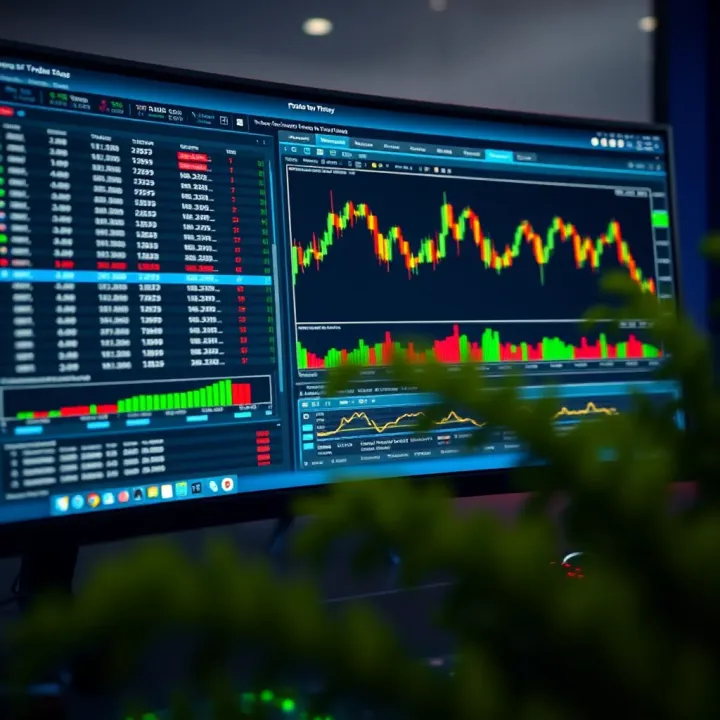
Explore top forex trading platforms for Kenyan traders ⭐ Compare features, ensure security 🔒 and boost your trading efficiency with this practical guide!
Based on 15 reviews