

Forex Trading Brokers in Kenya: A Practical Guide
Explore how Kenyan traders can choose reliable forex brokers with our detailed guide covering types, regulations, and crucial factors 🤑📊🇰🇪
Edited By
Daniel Price
Forex trading attracts many Kenyans eager to grow their income beyond traditional jobs. However, the market's fast pace and volatility demand more than luck to succeed. Understanding forex trading basics and applying practical strategies helps traders avoid common pitfalls and make informed decisions.
Kenyan traders should prioritise choosing brokers regulated by credible authorities such as the Capital Markets Authority (CMA) of Kenya or international bodies. This reduces the risk of scams and ensures smoother transactions, including local deposit and withdrawal methods like M-Pesa.
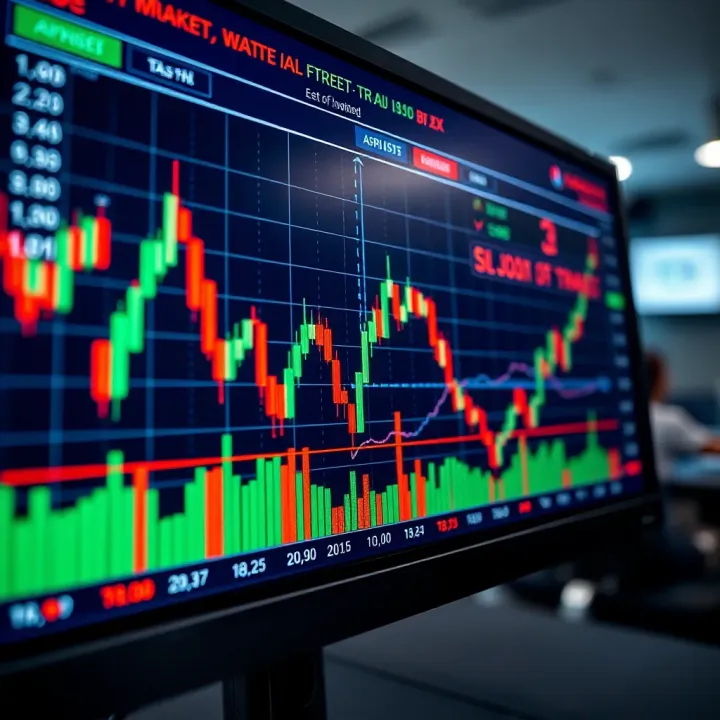
Risk management is fundamental. Many traders jump in without defining the maximum loss they can tolerate, leading to devastating portfolio hits. Setting stop-loss orders and limiting a single trade’s risk to a small percentage of their account balance (commonly 1–2%) helps safeguard capital. For example, if you have KSh 100,000 in your trading account, risking KSh 1,000–2,000 per trade can prevent rapid depletion.
A clear trading plan is essential. This includes entry and exit rules, position sizing, and timeframes. Relying on a single indicator or gut feeling leads most Kenyan traders astray. Using a combination of tools like moving averages, RSI (Relative Strength Index), and candlestick patterns, tailored to your trading style, improves accuracy.
Maintaining discipline cannot be overstated. Forex markets in Nairobi, Mombasa or Kisumu are open 24 hours, and it’s tempting to overtrade. Setting limits on daily trades and sticking to your plan reduces emotional decisions. Kenyan traders dealing with fluctuating local currencies often benefit from practicing with demo accounts offered by brokers to hone skills before risking real money.
Success in forex trading comes from preparation, patience and managing emotions—not chasing quick wins or tips from unverified sources.
Continuous learning also matters. Follow updates from trusted Kenyan financial news outlets and engage with local trading communities. Trading forex in Kenya ties closely to both global currency trends and local economic factors like inflation and monetary policies from the Central Bank of Kenya.
With these foundations, Kenyan traders can approach forex markets more confidently and sustainably, turning opportunities into steady income growth.
Grasping the basics of forex trading is key for anyone serious about venturing into the currency market, especially in Kenya where more people are turning to this as a side hustle or income source. By understanding how the forex market works, traders can make informed decisions rather than relying on guesswork or hearsay.
Forex trading involves buying and selling currencies with the goal of making a profit from changes in exchange rates. The foreign exchange market is the largest financial market globally, operating 24 hours and handling trillions of dollars daily. Unlike the Nairobi Securities Exchange where shares trade during set hours, forex runs continuously across different time zones.
For Kenyan traders, the forex market offers flexibility; you can trade after business hours or early mornings, fitting forex activities around your daily schedule or other work. This means forex trading is accessible beyond Nairobi’s busy working hours, useful for those balancing multiple jobs or hustles.
In forex, you deal mainly with currency pairs. These pairs represent one currency exchanged for another. The main pairs include EUR/USD (Euro/US Dollar), GBP/USD (British Pound/US Dollar), and USD/JPY (US Dollar/Japanese Yen). For Kenyan traders, the USD/KES (US Dollar/Kenyan Shilling) pair is of special interest because of direct impact on imports, exports, and remittances.
Knowing which pairs are most active can guide you in choosing when and what to trade. Major pairs usually have tighter spreads and more liquidity, meaning trades execute faster and at predictable prices. For instance, trading USD/KES might require awareness of central bank policies and forex reserves that affect the shilling’s value.
Forex markets operate in sessions: Asian, European, and American. Each session represents peak trading hours in major financial centres. Kenyan traders should note that the London session opens around 10 am EAT and overlaps with New York’s afternoon session, often when volatility peaks.
Trading during active sessions offers better price movements and opportunities. However, knowing these times helps avoid periods with little activity, which can cause slippage or sudden price jumps. For example, late-night trading in Kenya might coincide with the Asian session, which can be less active for USD/KES but suitable for other pairs like USD/JPY.
Understanding the language of forex trading sharpens your trading skills and reduces mistakes.
A pip is the smallest movement in a currency pair’s price, typically 0.0001 for most pairs. Lots refer to the size of trades; a standard lot is 100,000 units of currency, but many brokers offer mini or micro lots, which are smaller and more affordable for beginners.
Leverage allows you to control larger positions with a smaller amount of money—your margin. For example, with 1:100 leverage, KSh 10,000 lets you trade a position worth KS,000,000. While leverage can boost profits, it also increases risks, especially if the market moves against you.
The bid price is what buyers are willing to pay for a currency, while the ask price is what sellers want. The spread is the difference between these two and represents a trading cost.

Lower spreads mean cheaper trades. For Kenyan traders, brokers offering narrow spreads on popular pairs like USD/KES or EUR/USD can save a lot of money over time.
Currency quotes show one currency’s value against another, often in pairs like USD/KES 110.75, which means 1 US dollar costs 110.75 Kenyan shillings. Quotes come as direct (domestic currency first) or indirect (foreign currency first), and understanding this helps in quickly assessing trade opportunities and potential profits.
Knowing these basics gives Kenyan traders a solid foundation to approach forex trading with confidence instead of just hoping for luck.
By focusing on practical knowledge and how it ties directly to your trading decisions, you’re better prepared to navigate the forex market’s ups and downs successfully.
Picking the right forex broker is a key step to succeeding in forex trading in Kenya. A good broker acts like your trusted partner, providing safe access to the markets, smooth trading platforms, and reliable payment methods. Kenyan traders should focus on brokers who are transparent, well-regulated, and offer services tailored for local needs such as M-Pesa integration and swift withdrawals.
Kenya's Capital Markets Authority (CMA) regulates forex brokers to protect investors against fraud and unfair practices. Choosing a CMA-licensed broker ensures your trades follow local laws and that the broker meets specific standards for financial stability and conduct. For example, a CMA-approved broker must hold client funds separately from the company’s own money, reducing risks of misuse.
Broker reputation in Kenya goes beyond just licensing. Many scams target new traders, so it pays to check reviews, ask fellow traders on forums, or consult trusted financial sites. A broker with a history of prompt payments, transparent fee structures, and good customer support is likely safer. For instance, local traders often prefer brokers known to process withdrawals quickly and resolve issues without hassle.
Protecting your funds and personal information is crucial. The right broker uses encryption and secure servers to keep your data safe. Also, confirm if the broker offers insurance or compensation schemes for client losses in case of company failure. This extra layer of security can save you from losing funds unexpectedly.
Popular forex trading platforms accessible in Kenya include MetaTrader 4 (MT4), MetaTrader 5 (MT5), and cTrader. These platforms offer user-friendly interfaces, powerful charting tools, and mobile apps, helping traders execute orders quickly and analyse trends on the go. For example, many Kenyan traders rely on MT4 due to its customisable indicators and low-resource use.
Funding your trading account should be straightforward and affordable. Brokers that accept M-Pesa and direct bank transfers eliminate the complexity of foreign payment gateways common with international brokers. Using M-Pesa allows instant deposits with minimal fees and familiarity for Kenyan traders who already use mobile money daily.
When it comes to withdrawing profits, security and speed matter most. Choose brokers that confirm withdrawal requests promptly and transfer money into your local bank or M-Pesa account without unnecessary delays. Transparent policies help avoid surprises like hidden withdrawal fees or minimum payout thresholds that may lock your profits unnecessarily.
Always prioritise brokers offering strong regulation, secure platforms, and convenient payment options. Doing so builds a safe foundation for your forex trading journey in Kenya.
Managing risks well is fundamental for any forex trader, especially in Kenya where market swings can be sharp due to global and local factors. Good risk management helps you protect your capital against unexpected losses while steadily building gains. This section covers practical ways to handle risk, including setting stop-loss and take-profit points, managing leverage carefully, and avoiding putting all your funds into one trade.
Stop-loss and take-profit orders act like guardrails for your trades. A stop-loss order tells your broker to close a position if the price moves against you beyond a set level, limiting your losses. In contrast, a take-profit order locks in your profits once the price hits a target. For example, if you buy USD/KES at 110, setting a stop-loss at 108 prevents you from losing more than 2 shillings per unit, while a take-profit at 112 allows you to secure gains automatically.
These tools prevent emotional decisions during volatile markets. When fear or greed cloud judgment, traders may hold losing positions hoping for a reversal or exit winners too soon. Setting these levels beforehand helps maintain discipline and consistent profits.
Forex markets move fast, and emotions such as panic or excitement can lead to poor choices. Fear might make you close trades too early, missing out on gains, while overconfidence might push you to risk more than you should. Emotional trading often results in chasing losses or doubling down impulsively, which can deplete your capital quickly.
Keeping a cool head helps you stick to your strategy and risk limits. Instead of reacting to every price tick, successful traders rely on technical and fundamental analysis combined with sound money management to make decisions.
Leverage lets you control a large position with a small deposit, magnifying profits — but it also scales losses just as much. High leverage can wipe out your trading account in minutes if the market turns against you. Many new traders make the mistake of using maximum leverage, thinking it will bring quick gains, only to suffer heavy losses.
For Kenyan traders starting out, using low leverage (like 1:10 or 1:20) is safer. This level balances potential profits with manageable risk. For instance, with KSh 10,000 in your account, 1:10 leverage means you control a KSh 100,000 position, which is easier to monitor without risking your entire balance.
Putting all your investment in one currency pair increases risk. If that pair moves sharply against you, the losses can be severe. Spreading your trades across different pairs or asset classes cushions you from sudden moves in any one market.
Also, balance trade size and frequency. Avoid opening many large trades that overextend your margin and make managing stops difficult. For example, it’s better to make two medium-sized trades than five large ones that drain your margin. That way, you keep flexibility to adjust or exit as market conditions change.
Effective risk management isn’t about avoiding losses entirely but controlling them so you can trade another day. By using stop-loss and take-profit orders, managing leverage carefully, and diversifying your trades, you create a safer trading environment and improve your chances of long-term success.
Mastering forex trading involves more than just luck or random guesswork. You need techniques that have stood the test of time and market ups and downs. Applying proven forex trading techniques helps sharpen your decision-making and improves your chances of making consistent profits. In Kenya, where the trading environment includes unique local factors such as fluctuating currencies like the Kenyan Shilling (KES) and regional economic events, adopting these strategies matters even more.
Technical analysis focuses on reading the market through charts, trends, and indicators. By studying past price movements, you can anticipate future directions. This method suits traders who prefer data and patterns over news headlines. For instance, a trader might watch a currency pair's candlestick patterns or trendlines to spot support and resistance levels — points where prices often reverse or pause. In Kenya, with volatile forex pairs like USD/KES, spotting these charts’ signals can help you enter or exit trades at better moments.
Common tools like moving averages and the Relative Strength Index (RSI) are among the most useful in technical analysis. A moving average smooths out price data to identify trends more clearly. For example, if the 50-day moving average crosses above the 200-day moving average, it may signal a bullish trend, encouraging Kenyan traders to consider long positions. The RSI, on the other hand, measures whether an asset is overbought or oversold, suggesting potential reversals. When RSI exceeds 70, a currency might be overpriced, while readings below 30 could indicate it’s undervalued — useful clues for timing trades effectively.
Fundamental analysis examines economic indicators influencing currency values. Key statistics such as inflation rates, interest rates, GDP growth, and employment figures affect forex prices globally. For Kenyan traders, understanding these indicators — such as Central Bank of Kenya decisions or inflation reports — directly impacts the local currency’s strength. For example, if the Central Bank raises interest rates to tame inflation, the Kenyan Shilling might strengthen, offering trading opportunities.
Besides global economic factors, local Kenyan events significantly influence forex markets. Political developments, budget announcements, or trade agreements within the East African Community (EAC) can affect currency flows. When Kenya experiences election season or new policy changes, forex traders often see increased volatility in KES pairs. Being aware of such events allows you to anticipate possible price swings and protect your trades accordingly.
Choosing between day trading and swing trading comes down to how much time you can commit and your risk appetite. Day trading involves opening and closing trades within the same day, relying heavily on technical signals. Swing trading holds positions for several days or weeks, taking advantage of broader trends often identified through fundamental analysis. For instance, a busy professional in Nairobi might find swing trading more practical, as it requires fewer screen hours.
A clear trading plan improves discipline and decision-making. Setting entry and exit rules means you decide when to buy or sell before emotions influence you. For example, a trader might decide to exit a position once it gains 2% profit or cut losses at 1% to protect capital. Sticking to these rules helps avoid chasing the market or holding losing positions longer than necessary. Consistency in this approach often leads to better long-term results.
Successful forex trading in Kenya depends on blending both technical and fundamental insights with a solid trading plan. This practical mix builds confidence, improves timing, and helps manage risks effectively.
Maintaining discipline and committing to continuous learning are both essential for long-term success in forex trading. The forex market moves fast, and without an organised approach coupled with ongoing education, even the most promising strategies can fall apart. Discipline keeps you from deviating due to emotions like fear or greed, while continuous learning ensures you stay aware of market changes, new tools, and evolving techniques.
Tracking trades and outcomes is fundamental for any serious trader. By recording each trade’s entry and exit points, position size, reasons for taking the trade, and the real outcome, you create a personal database of performance. Say you entered a trade on USD/KES expecting a rally but closed earlier because of news; documenting this clarifies what worked or didn’t. This hands-on feedback allows you to spot patterns in your behaviour and trade results that might otherwise stay hidden.
Learning from mistakes and successes is where a trading journal truly shines. Suppose you notice a consistent loss whenever you trade during volatile times without a clear plan — your journal highlights this risk. Conversely, you might identify moments when sticking to your stop-loss prevented large losses, reinforcing good habits. This methodical review prevents repeating errors and encourages the behaviours that lead to profits.
Dealing with fear and greed is a daily challenge in forex trading. Fear may cause you to exit trades too early or avoid markets altogether, missing potential gains. Greed pushes some traders to overtrade or use excessive leverage, risking heavy losses. Recognising these emotions helps you make decisions based on analysis rather than instincts. For example, setting pre-determined stop-losses forces you to stick to limits even when fear or greed rises.
Why patience beats impulsive decisions cannot be overstated. Rushing into trades without a clear setup or chasing losses often leads to poor outcomes. Patience involves waiting for favourable market conditions and following your trading plan strictly. For instance, if technical indicators signal a weak trend, holding back is wiser than forcing a trade. Kenyan traders who have mastered patience often find steadier profits and avoid costly mistakes caused by impulsiveness.
Local trading communities and forums are valuable for sharing experiences and gaining insights specific to the Kenyan market. Platforms such as local Facebook groups or WhatsApp chats allow traders to discuss currency movements, broker recommendations, and regulatory updates relevant to Kenya. Joining these communities boosts confidence and opens networking channels with peers facing similar challenges and opportunities.
Useful blogs, podcasts, and courses tailored for Kenyan traders help build skills steadily. Websites like Daily Nation’s business section or podcasts from local financial experts provide analysis and practical advice. Additionally, courses offered through Kenyan institutions or online platforms contextualise global forex concepts for local realities, such as using M-Pesa for deposits or understanding how Kenyan economic data affects Forex pairs like USD/KES. Leveraging these resources keeps your knowledge fresh and actionable.
Keeping discipline and continuously learning aren’t just options; they form the backbone of sustained forex trading success in Kenya. Consistent journaling, emotional control, patience, and community engagement provide a strong foundation for navigating the market wisely.
Explore how Kenyan traders can choose reliable forex brokers with our detailed guide covering types, regulations, and crucial factors 🤑📊🇰🇪

📚 Discover the best forex trading books tailored for Kenyan traders. Learn how to pick resources that match your style and boost your market skills! 🇰🇪

📱 Discover the best forex trading apps for Kenyan traders! Learn how they work, find trusted providers, spot key features, stay secure, and trade smarter today.

🔍 Learn the best times for forex trading in Kenya 🇰🇪! Explore global sessions, peak volatility, and smart timing strategies to boost your trading success 📈.
Based on 12 reviews