
Understanding Copy Trading: A Guide for Beginners
📊 Discover how copy trading lets you follow expert investors automatically, learn the perks and risks, explore top platforms, and start smartly in Kenya's market.
Edited By
Isabella Harper
Binary trading is a straightforward yet fast-paced form of trading where you bet on whether an asset’s price will rise or fall within a set period. Unlike traditional trading, you don’t actually own the asset; instead, you predict the price direction. The outcome is a simple yes-or-no scenario, making it attractive for traders looking for quick returns.
In Kenya, this type of trading has gained attention due to its simplicity and the ease of access provided by online platforms. For example, you might predict whether the Nairobi Securities Exchange (NSE) index, a currency pair like USD/KES, or a commodity like gold will move up or down within an hour, day, or even a few minutes.

At its core, binary trading involves selecting an asset, determining the expiry time, and choosing the predicted price movement (up or down). If your prediction is right at the expiry, you receive a fixed payout; if wrong, you lose your investment for that trade.
Here’s a quick breakdown:
Choose an asset: Could be stocks, forex pairs, indices, or commodities.
Select expiry time: From as short as 60 seconds to longer periods like a week.
Predict price movement: Will the price be higher or lower than the current level at expiry?
Place your trade: Decide how much you want to invest.
Successful binary trading depends on accurate market analysis, timing, and understanding volatility. For instance, if you notice that the Kenyan shilling is weakening against the US dollar due to recent economic reports, you might predict that USD/KES will rise within the next hour.
Binary trading is not about owning assets but about predicting a clear outcome within a set timeframe. This all-or-nothing nature means risk management is key.
High/Low: Predict whether the asset’s price will be higher or lower at expiry.
One Touch: Predict if the price will touch a certain level before expiry.
Range: Predict if the price will stay within a specific range until expiry.
Each type offers different levels of risk and potential rewards, so traders should choose based on their strategy and risk appetite.
Understanding these basics helps set realistic expectations when trading binary options and provides a foundation for deeper market analysis and risk control.
Understanding the basics of binary trading is key if you want to navigate this form of trading effectively. Binary trading is different from most financial markets because it deals with predicting whether an asset's price will rise or fall within a fixed time frame. This setup offers a clear-cut outcome: you either win a fixed payout or lose your invested amount — nothing in between. For example, if you bet KSh 1,000 on the price of Safaricom shares rising within the next hour, you either get a predetermined return or lose that KSh 1,000.
Binary trading involves speculating on the direction an asset’s price will move. The 'binary' part refers to the two possible outcomes — win or lose. Unlike traditional trading, you don’t own the asset itself but simply predict its price movement. Traders select an asset such as stocks, commodities, currencies, or indices and choose whether they believe the price will go up (call) or down (put) before a set expiry time. If the prediction is correct, the trader earns a fixed sum. If wrong, the investment is lost. This simplicity attracts many to binary trading, especially those starting in the financial markets.
Binary trading offers straightforward rules compared to traditional trading, where profit depends on both price movement and holding the asset. In traditional markets, your gains or losses vary with how much the price changes; for instance, owning KSh 100,000 worth of a stock that rises by 5% nets KSh 5,000 profit. With binary options, the payout is fixed irrespective of the price movement magnitude — only direction and timing matter.
Also, binary trading usually involves shorter time frames, from as brief as 60 seconds to a few hours. This contrasts with traditional trading where positions may be held for days, months, or years. Short expiry times appeal to traders wanting quick results, but they also carry higher risk due to market volatility.
While binary trading’s clear outcomes and short time frames simplify the process, it requires disciplined risk management because losses can come fast and often.
To sum up, grasping these basics helps traders understand what they're getting into, manage expectations, and apply suitable strategies rather than jumping in blindly. This groundwork is vital before exploring the mechanics or types of trades in binary trading.

Understanding how binary trading operates is key to making informed decisions and managing risks effectively. At its core, binary trading boils down to predicting whether the price of an asset will rise or fall within a fixed timeframe. This straightforward setup appeals to many traders, especially those looking for quick returns and clear outcomes.
In binary trading, you primarily deal with two options: "call" and "put". A call option means you predict the asset's price will go higher by the trade's expiry time. For example, if you decide on a call option for Safaricom shares currently trading at KSh 30, you’re betting the price will exceed this before the trade ends.
On the flip side, a put option is when you expect the price to drop. Using the same Safaricom shares, choosing put means you believe the price will be below KSh 30 at expiry. These simple choices allow traders to focus on the direction rather than the exact price point, simplifying decision-making.
Expiry time is the moment your trade closes and the final price is recorded. It can range from as short as 60 seconds to several hours or days, depending on the platform. The expiry time affects how you analyse the market. Short-term expiry might rely heavily on immediate news or technical indicators, while longer expiry trades consider broader economic trends.
For instance, if you trade with M-Pesa's share price using a 5-minute expiry, you’re basically predicting its price movement during that short window. The shorter the expiry, the more volatile and unpredictable the outcome could be, so traders need to weigh this carefully.
When placing a trade, you decide how much to invest, which directly impacts both potential profit and risk. Suppose you put KSh 1,000 on a call option predicting the Nairobi Securities Exchange (NSE) index will rise. If the trade wins and the broker offers a 75% return, you gain KSh 750 plus your initial KSh 1,000.
However, if the prediction is wrong, you usually lose the entire investment or a percentage depending on the platform’s terms. This fixed risk structure lets you control losses upfront but also means you need to be confident with your predictions or use sound strategies to improve your chances.
Remember, binary trading is about clear yes/no outcomes. Knowing how call and put options function, the impact of expiry times, and carefully planning your investment amount sets the foundation for trading effectively.
This understanding helps you treat binary trading like any other financial activity, with proper consideration of potential gains and risks, rather than gambling blindly.
Understanding the common types of binary trading is key for anyone stepping into this market. Traders in Kenya and beyond must recognise how these types differ, as this knowledge shapes decision-making and influences potential outcomes. Each binary option type has distinct ways of predicting price movements and risk levels, so choosing the right one depends on your trading style and market conditions.
High/Low options are the most straightforward form of binary trading. Here, you predict whether the price of an asset will be higher or lower at the expiry time compared to the initial price. For example, if you believe the price of Safaricom shares will be higher in 30 minutes than the current price, buying a "high" option is the way to go. The simplicity makes it popular among beginners, but it also requires careful analysis of market trends. This option suits short-term traders who want quick returns without complex conditions.
One Touch and No Touch options add a twist by focusing on whether the asset price will reach or avoid a certain level before expiry. In a One Touch option, you predict if a stock or currency price will touch a specified price point at least once. Consider a trader betting that the price of the NSE 20 Index will touch 1,800 points within the next hour. If it touches that level, the trade pays out, regardless of where the price ends.
No Touch is the opposite—you predict that the price will not reach the predefined level during the trade's life. These options suit traders expecting strong price momentum or stability and allow for strategies shaped around market volatility.
Range options require the asset’s price to remain within or outside a predefined price range at expiry. For instance, if Nairobi Coffee prices are trading between KSh 200 and KSh 220, you might bet that the price will stay within that range for the next 24 hours. If it does, you earn a payout.
This type benefits traders looking to capitalise on expected price stability or moderate movements rather than drastic shifts. It’s also useful when market signals are mixed, as the trade doesn't rely solely on price direction but on price staying within set bounds.
Knowing these binary option types helps you tailor your trading strategy to fit your risk appetite and market view, making your decisions sharper and more informed.
In summary, High/Low options offer simplicity, One Touch and No Touch cater to momentum or range bets, and Range options focus on price stability. Choosing the right type in Kenya’s dynamic financial markets will improve your chance of success and manage risks better.
Binary trading carries risks that every trader needs to understand before placing their bets. While it offers straightforward predictions on asset prices, the simplicity can mask the dangers involved. Knowing these risks helps you make informed decisions and avoid common pitfalls that could lead to significant financial loss.
The biggest challenge in binary trading is the potential to lose your entire investment on a single trade. Unlike traditional trading where you might lose some percentage of your capital, binary options usually have an all-or-nothing payout. For example, if you invest KSh 5,000 predicting that a stock will rise, but the price falls instead, you lose the full amount. This zero-sum nature means that managing risk and setting limits on how much you trade are essential. Without discipline, it’s easy to exhaust your funds quickly, especially if you chase losses.
Market volatility plays a big role in binary trading outcomes. Sudden news releases, economic reports, or unpredictable events can cause sharp price swings within very short periods. These rapid changes can ruin even the most carefully planned trades. For instance, a political decision in Kenya or a Central Bank announcement can quickly flip asset prices, making predictions unreliable. Traders must be aware that during high volatility, the price can hit and miss strike points rapidly, leading to unexpected losses. Using strategies that account for volatility or avoiding trading during such periods can sometimes save your investment.
Choosing where to trade is as important as knowing what to trade. The binary trading market has many unregulated platforms that may not operate transparently. Traders in Kenya should be cautious of websites without proper licencing from reputable bodies like the Capital Markets Authority (CMA). Some platforms might delay withdrawals, provide misleading information, or even disappear with clients’ money. Always opt for a platform that follows Kenyan laws and offers clear terms for deposits and withdrawals. Checking reviews and confirming licencing can prevent falling into scams often linked with binary trading.
Always remember: understanding these risks helps you prepare better. No quick profit is worth losing your capital to poor choices or unsafe platforms.
By recognising these challenges, you improve your chances of navigating binary trading more safely and making decisions based on solid knowledge rather than guesswork.
When you begin binary trading, the choice of platform shapes much of your experience and potential success. Selecting a reliable trading platform gives you access to fair pricing, timely market data, and secure transactions—elements that matter a lot especially if you're just starting out. For instance, Safaricom-backed platforms or those regulated by the Capital Markets Authority (CMA) provide a safer environment, reducing the chances of scams or undue losses.
Platforms vary greatly in trustworthiness and features. Look for those with clear regulation under CSA (Capital Markets Authority). A good platform offers transparent fees, easy-to-use interfaces, and customer support in your time zone. It should also support convenient payment methods, like M-Pesa or bank transfers, so you don’t struggle when funding or withdrawing your money. Avoid platforms promising unrealistically high returns or those not clear about their terms.
Jumping into binary trading without a plan is like driving without directions: you're likely to get lost fast. Start by practising simple strategies such as the "trend following" method, which involves predicting price directions based on recent market movements. For example, if a stock like Safaricom shares has been rising steadily, you predict it will keep rising for your trade’s expiry time. Another beginner-friendly approach is the "risk-reward balance" strategy—allocate only a small portion of your funds per trade, perhaps KSh 500 or KSh 1,000, limiting potential losses.
Good beginners also keep track of global events impacting markets, like oil price changes or political announcements, which affect assets like Brent crude or currency pairs. Set aside time daily to review your trades and learn from what worked and what didn’t.
Binary trading isn’t a guaranteed way to get rich overnight. Often, people enter with high hopes but lack realistic goals. To manage investments properly, decide upfront how much money you're comfortable risking, and never chase losses by increasing stakes recklessly. For example, if you set aside KSh 20,000 for trading, limit daily trades to amounts you can afford to lose without affecting your daily life, such as KSh 1,000 per day.
Also, understand the psychology behind trading losses and wins. Losing a trade is normal; what counts is sticking to your strategy and avoiding emotional decisions. Clear investment limits and steady, informed choices help protect your savings and build your experience gradually.
Starting binary trading with the right platform, a clear strategy, and practical investment limits can mean the difference between steady progress and quick losses.
By focusing on these key areas, you set a firm foundation to trade binary options effectively and responsibly in Kenya’s financial markets.
📊 Discover how copy trading lets you follow expert investors automatically, learn the perks and risks, explore top platforms, and start smartly in Kenya's market.

Explore how binary bots function in trading, their pros and cons, plus legal and ethical tips to help Kenyan traders stay safe and informed ⚖️🤖📉
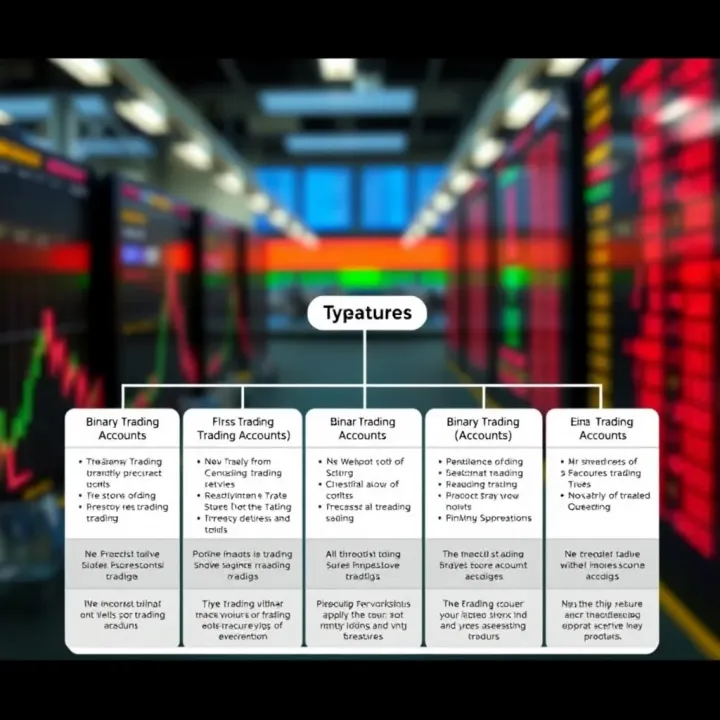
Learn everything about binary trading accounts 📊—types, setup, risks, and tips to manage your trading safely and confidently in Kenya 🇰🇪. Start smart!

Learn how binary bots automate trading in binary options 📊. Discover their workings, pros, cons, risks, and legal tips for safe use in Kenya 🇰🇪.
Based on 7 reviews