

Understanding Risk Management Basics
📊 Learn how understanding risk management helps Kenyan businesses safeguard assets, improve decisions, and maintain stability through effective practices.
Edited By
Elizabeth Moore
At its core, risk management involves three main steps: identification, assessment, and response. Identification means spotting all possible risks — from market swings and credit defaults to operational failures. For example, a trader might identify the risk of sudden currency depreciation affecting forex positions.
Assessment then involves gauging the likelihood and impact of each risk. Not all risks carry the same weight; a small probability event with huge consequences (like a regulatory change) demands a different approach than a frequent but minor setback, such as delayed payment from a client.
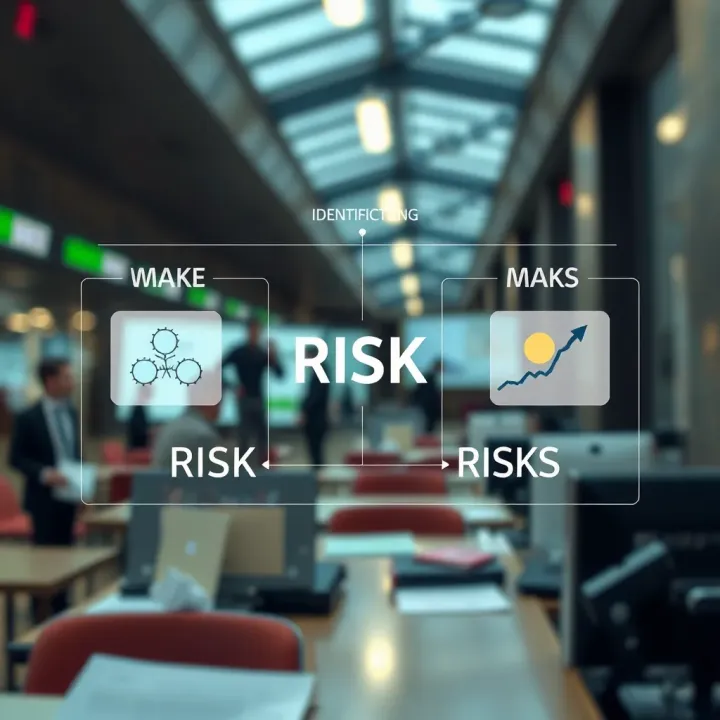
The final step is deciding how to handle those risks. Common strategies include:
Avoiding the risk entirely
Reducing the risk impact through controls or diversification
Transferring the risk via insurance or contracts
Accepting the risk while preparing contingency plans
Effective risk management is not about eliminating all uncertainty, but managing it so that it does not derail your plans.
For finance professionals in Kenya, day-to-day risk evaluation might involve analysing how fluctuations in the Nairobi Securities Exchange (NSE) affect portfolio value, or how changing foreign exchange rates impact import costs. Practical tools like stop-loss orders, hedging instruments, and scenario analysis are essential in this regard.
A key part of risk management is continuous monitoring. Risks may evolve with time — what seemed unlikely six months ago might become imminent due to new government policies or shifts in consumer behaviour. Staying alert enables prompter responses.
Ultimately, the principle of risk management equips you to make informed decisions rather than reactive guesses. By systematically addressing risks, you preserve capital, ensure smoother operations, and build resilience, whether managing investments, running a business, or handling personal finances.
Risk management is about spotting, understanding, and handling uncertainties that may affect your investment or business goals. In finance, where market prices swing and unexpected events can quickly change your position, managing risk is the difference between surviving tough times or suffering big losses. Take a trader on the NSE who ignores market volatility – sooner or later, they may face unplanned cuts to their portfolio. Proper risk management helps prevent such shocks, keeping your resources safer while making your decisions more informed.
For any investor or finance professional, risk management is not just a checklist item; it directly shapes strategies and outcomes. Knowing what risks you face and having a clear plan to tackle them ensures steady progress even when conditions shift. From understanding unexpected currency shifts to preparing for interest rate hikes, risk management provides a practical framework to navigate unpredictability.
Risk is the chance that something adverse—or sometimes favourable—will occur, affecting your financial objectives. In trading, risk could be a sudden market drop or a company missing earning targets. It reflects uncertainty about future events and their impact on your investments. Understanding risk means recognising those threats and opportunities early enough to act meaningfully.
Risk management aims to reduce potential harm while allowing room for rewards. It’s not about avoiding every risk—that would stall any growth—but about balancing risks against prospective benefits. For example, a broker might accept some currency risk when investing across borders but use hedging tools to limit possible losses. In that way, risk management preserves capital and supports sustainable returns.
Well-managed risks safeguard your money and assets. For instance, an investor diversifying their shares across sectors limits the impact if one industry falters. This protection prevents one bad event from wiping out your entire portfolio. It’s like having an umbrella that’s ready when the clouds gather rather than getting soaked.
Risk management clarifies your choices by highlighting potential downsides and rewards. A financial analyst weighing a new bond purchase can better decide when they understand probable risks like default or inflation effects. This builds confidence and helps avoid knee-jerk reactions. With clear risk info, decisions become about calculated bets, not blind guesses.
For companies, handling risks effectively means staying afloat despite shocks. Whether it’s rapid regulatory changes in Kenya’s banking sector or a supply hiccup in manufacturing, organisations that manage risks can adapt faster. These firms recover more quickly and maintain trust with stakeholders. Essentially, risk management strengthens the backbone of any venture, readying it for challenges ahead.
Managing risk isn’t about fearing failures; it’s about preparing well so you can face uncertainties with confidence and clarity.
Risk management rests on foundational principles that help traders, investors, and finance professionals spot dangers early and handle them effectively. These principles ensure resources are used wisely and decision-making stays sharp even when markets act unpredictably.
Successful risk management starts by spotting risks and opportunities before they become obvious. For example, an investor might notice early signals of currency volatility in the forex market, allowing them to adjust positions and limit losses. Similarly, traders identifying a potential sector downturn early can hedge their portfolios to protect capital. This proactive approach differs from reacting after the fact, giving a crucial edge.

Risks don’t arise in isolation. Internal factors such as faulty trading systems or employee errors can expose firms to losses. Meanwhile, external factors like political unrest in a region or changes in exchange rates affect investments beyond the firm's control. A Kenyan fund manager, for example, must consider fluctuations in KSh against the dollar alongside internal compliance processes. Balancing these inside and outside influences sharpens risk understanding.
Evaluating how severe a risk impact could be and how often it might occur helps prioritise responses. Consider a broker who faces the risk of system downtime during peak trading hours—that impact is severe and frequency potentially high, requiring immediate attention. On the other hand, rare political events might pose a lower likelihood but still a high impact, prompting different strategies. Properly assessing these elements avoids wasting resources on low-priority threats.
To focus efforts, various methods rank risks based on impact and chance, such as risk matrices or scoring systems. These tools guide which risks to tackle first. For instance, a portfolio analyst might use a heat map to visualise where risks cluster, highlighting urgent concerns like credit defaults while deprioritising minor market fluctuations.
Where possible, some risks can be completely avoided. A trader might decide not to invest in a volatile stock prone to fraud scandals, effectively eliminating that exposure. This is the simplest method but not always practical for every risk.
In many cases, risks must be reduced rather than eliminated. Controls such as setting stop-loss orders, diversification across sectors, or limiting exposure to a single client help cut potential damage. For example, a finance firm adopting automated alerts for unusual activities can detect fraud early, lowering the operational risk.
Sometimes, it makes sense to share or transfer risk. Insurance policies for corporate assets or hedging with derivatives like futures contracts shift risk to others. Kenyan businesses exporting goods might use forward contracts to guard against currency swings, passing some risk elsewhere.
Not all risks are worth managing fully due to costs or low impact. Accepting minor risks, like routine market fluctuations that rarely cause big losses, can make sense. A balanced approach avoids spending more resources on prevention than the potential loss.
Risks evolve with time and conditions. A financial institution must keep checking how market changes, new regulations, or company growth alter its risk profile. For example, a sudden interest rate hike affects bond valuations, necessitating strategy shifts.
As risks shift, so must the ways to handle them. Regular reviews ensure risk controls remain effective. If a threat becomes less relevant, resources can be reallocated. A trader updating software to protect against fresh cyber threats illustrates adapting controls in action.
Effective risk management is an ongoing cycle, not a one-time event. Keeping eyes open and adjusting plans protects investments and supports sound decisions under uncertainty.
By sticking to these principles, finance professionals can better manage the risks shaping their trading and investment outcomes.
Implementing risk management is where plans meet reality. For traders, investors, and finance professionals, having a solid framework guides consistent actions to handle uncertainty effectively. Without it, risk strategies remain theoretical, making it easy to overlook threats or miss opportunities. Practical implementation helps embed risk thinking into daily decisions and operations, making businesses or portfolios more resilient.
Before putting risk controls in place, it's crucial to clarify what the risk management process aims to achieve. This includes defining the specific goals—such as protecting capital, complying with regulations, or safeguarding reputation. Equally important is setting the scope, which means outlining the areas, assets, or activities the risk management will cover. For example, a brokerage firm might focus on market risks and operational risks but leave out reputational risks initially.
Clear objectives prevent wasting resources on irrelevant risks and help focus efforts where they matter most. The scope provides boundaries that avoid confusion about what to monitor or ignore. In practice, this could mean a financial institution decides risk management addresses exposures in foreign exchange trading and credit lending but excludes risks from the technology department at first.
Risk management is not a one-person job. Everyone in the organisation should know their part—from top executives to individual traders. Defining roles involves specifying who identifies risks, who assesses them, who decides on controls, and who monitors the outcomes.
For instance, a chief risk officer (CRO) may oversee the entire risk framework, traders report new market hazards, compliance officers ensure regulatory risks are checked, and the IT team handles cyber threats. Clear responsibilities reduce overlaps and gaps, so no risk slips through unnoticed. This structure also supports accountability, as each team member knows what they own in managing risk.
Awareness is the backbone of effective risk management. Without everyone understanding the risks and why managing them matters, efforts falter. Regular communication—through meetings, newsletters, or dashboards—keeps risks visible across the organisation.
For example, a training session explaining the impact of currency fluctuations on investments can help traders make better hedging decisions. Sharing stories of past errors or near misses makes the risks tangible, encouraging proactive behaviour. Ultimately, raising awareness creates a culture where spotting and flagging risks becomes second nature.
Training is more than awareness; it equips each person with the tools and knowledge to manage risks confidently. Different teams need tailored skills—analysts must understand risk models, brokers require compliance know-how, and managers need decision-making frameworks.
Continuous training programs help update skills as markets evolve. A bank might organise quarterly workshops on new regulations or software systems, ensuring staff remains competent. This investment in people ensures risk management stays practical and adaptive, not just theoretical.
Embedding risk management into day-to-day work demands clear frameworks and committed teams. Defined roles and ongoing training turn principles into practical actions that safeguard investments and business operations.
Managing risk doesn't come without its hurdles. These challenges, if not tackled properly, can undermine even the best-laid risk strategies. For traders and finance professionals, understanding these obstacles is vital to maintain steady performance and safeguard investments. Managing risks effectively means recognising the limits of available information, balancing costs, and navigating organisational dynamics that can stall progress.
In markets where data can be patchy or unreliable, you often have to make decisions with incomplete information. For example, a new product launch by a listed company might lack historical sales data to assess potential risks fully. Here, estimating risk involves using alternative data sources or proxy indicators—like competitor performance or industry trends—to fill gaps.
This uncertainty means relying heavier on judgement and conservative assumptions, which may slow decision-making but avoid costly mistakes. Practically, this might mean preparing for a wider range of possible outcomes than usual, as risks cannot be pinned down precisely.
When data is thin, expert judgement becomes a valuable tool. Experienced analysts or sector specialists can provide insights that raw numbers miss, such as geopolitical tensions affecting forex markets or climate factors influencing agricultural stocks.
Scenario planning complements this by envisioning different futures—best case, worst case, and middle ground—to prepare flexible risk responses. A trader, for instance, might model how interest rate changes could ripple through their portfolio, adjusting strategies accordingly. Both methods help navigate unknowns by broadening the decision-making framework beyond just past data.
Spending too little on risk measures can leave you exposed, while overspending reduces profitability without proportional benefit. For example, a fund manager might hesitate between diversifying enough to spread risk or concentrating investments to maximise returns.
The key is to evaluate the expected cost of risks against the cost of controls regularly. Implementing automated trade monitoring systems might be expensive upfront but can prevent expensive compliance breaches later. On the other hand, excessive hedging could eat into gains unnecessarily. A balanced approach targets costs where they bring measurable risk reduction.
Risk management works best when everyone in an organisation understands its importance. Resistance often arises if teams see risk controls as obstacles to getting business done quickly. Building a risk-aware culture means engaging employees at all levels through regular communication and training.
For example, a brokerage firm could run workshops demonstrating how risk management protects their jobs, clients, and the company’s reputation. When staff see personal value, they tend to comply willingly rather than treat rules as burdens. This shift encourages proactive risk identification and reporting.
Leadership buy-in is crucial. Without it, risk initiatives might struggle for resources or be sidelined. Senior managers set the tone and priorities, so their commitment sends a clear message.
In practice, this means presenting risk management as an essential part of business strategy—not just compliance. Sharing how strong risk controls have protected liquidity during market shocks can convince executives of their worth. When leadership champions risk awareness openly, it's easier to maintain momentum across departments.
Tackling these common challenges head-on keeps risk management practical and effective. It ensures that strategies adapt to real-world conditions, protecting investments and supporting sound decisions.
📊 Learn how understanding risk management helps Kenyan businesses safeguard assets, improve decisions, and maintain stability through effective practices.
📊 Explore Credit Risk Management strategies & practices in Kenya to identify, assess, and mitigate risks, ensuring financial stability & profitability.

Manage compliance risk in Kenya 🇰🇪 with practical strategies, understand regulatory frameworks, and avoid costly legal issues for your business 📊⚖️.
📊 Discover how effective risk management safeguards business goals by identifying, assessing, and handling threats using proven methods and tools.
Based on 12 reviews