
Forex Trading Brokers in Kenya: A Practical Guide
Explore how Kenyan traders can choose reliable forex brokers with our detailed guide covering types, regulations, and crucial factors 🤑📊🇰🇪
Edited By
Benjamin Clarke
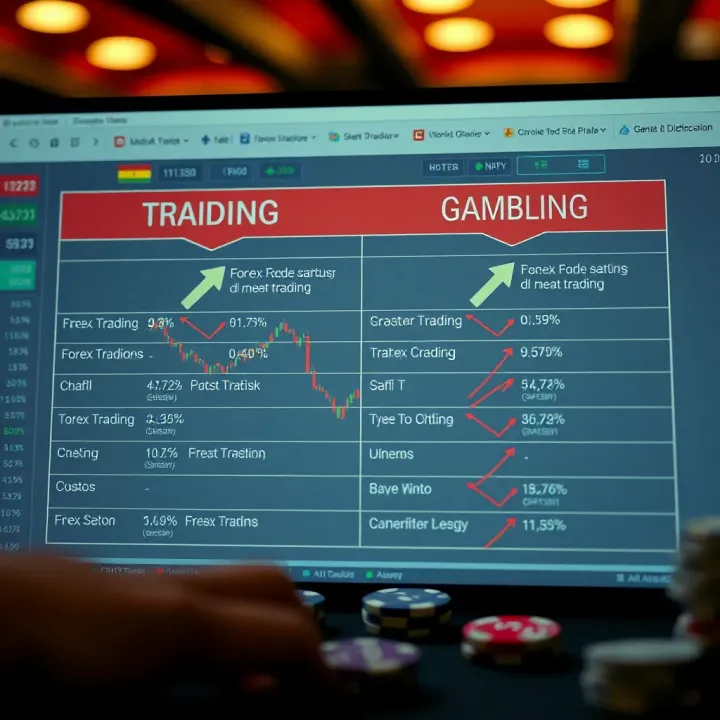
Forex trading and gambling often get lumped together because both involve taking risks and hoping for a payout. However, treating forex trading purely as gambling misses some key points. While gambling largely depends on chance, forex trading can be approached with knowledge, strategy, and risk management.
Trading currencies involves analysing economic indicators, political events, and market trends. For example, when the Central Bank of Kenya (CBK) adjusts interest rates, forex traders assess the impact on the Kenyan shilling’s value. This analytical side sets forex apart from a game of chance like betting on a horse race or a roll of dice.
That said, forex markets do move unpredictably, and losses are common. Many traders jumped in during boom times hoping to make quick profits, only to lose their capital. Such outcomes often come from inadequate knowledge or poor money management rather than pure bad luck.
Successful forex trading depends more on preparation and discipline than on luck — recognising this difference helps you avoid common pitfalls.
When dealing with forex in Kenya, you also have government and regulatory bodies like the Capital Markets Authority (CMA) offering oversight. This reduces scams and ensures brokers operate fairly, which is not the case with informal gambling.
Here are a few practical differences:
Knowledge: Forex trading rewards study of economic data and trends; gambling typically does not.
Strategy: Traders follow defined plans and risk limits; gamblers often rely on gut feel.
Regulation: Licensed brokers work under legal frameworks; most gambling, especially informal betting, is not regulated.
Risk Management: Traders set stop-loss limits and trade sizes; gamblers’ stakes are often all-or-nothing.
Understanding these distinctions gives you a clearer view of what forex trading entails. It remains a high-risk activity, but an informed approach can tip the odds more in your favour than pure gambling allows.
Forex trading is all about buying and selling currencies in pairs, with the goal of profiting from changes in exchange rates. This activity takes place on a global market that never really sleeps, allowing traders to operate almost 24 hours from Monday to Friday. Understanding what forex trading involves is key to distinguishing it from simple gambling because it centres on how currencies are exchanged, who participates, and the tools used to make trades.
Currencies are traded in pairs, such as USD/KES (US dollar to Kenyan shilling) or EUR/USD (Euro to US dollar). When you buy one currency, you are simultaneously selling another. The price you see, called the exchange rate, shows how much one unit of the base currency costs in the quote currency. For example, if USD/KES is 110, it means one US dollar costs 110 Kenyan shillings. Traders aim to buy low and sell high or sell high and buy low, depending on their market view.
The forex market brings together diverse players. Commercial banks and central banks dominate, influencing market liquidity and stability. Hedge funds and investment firms trade large volumes seeking profits or to hedge other investments. Individual traders, like you or me, operate on smaller scales but still participate actively, often through brokers. Other participants include importers and exporters who use forex to manage currency risks tied to their business.
Besides direct currency pairs, traders use instruments like contracts for difference (CFDs), futures, and options to speculate or hedge without owning the actual currencies. Forex brokers provide platforms—such as MetaTrader 4 or 5, and proprietary apps—where traders can execute orders, analyse market data, and manage risk. These platforms also often link to real-time news and economic calendars vital for making informed decisions.
Forex trading serves two principal purposes: speculation and hedging. Speculators seek to profit from price changes by predicting market movements. For instance, a trader might buy EUR/USD expecting the euro to strengthen against the dollar, hoping to sell later at a profit. Hedgers, such as exporters or importers in Kenya dealing with foreign payments, use forex trading to protect their business from adverse currency moves, locking in costs or revenues ahead of time.
In forex, leverage lets traders control larger positions with a smaller capital amount, amplifying both potential profits and losses. For example, with 100:1 leverage, a KSh 1,000 deposit lets you manage KSh 100,000 worth of currency. While this boosts opportunity, misuse can wipe out accounts quickly. That’s why margin—the collateral you provide—is closely monitored by brokers to manage risk.
Currency prices reflect supply and demand influenced by factors like interest rates, inflation, political stability, and economic reports. For example, if Kenya’s Central Bank raises interest rates, the Kenyan shilling may strengthen due to higher yields attracting investors. Similarly, global events such as geopolitical unrest or trade negotiations cause fluctuations. Market makers and electronic trading systems match buyers and sellers continuously, ensuring prices reflect current market sentiment.
Realising these forex trading fundamentals helps you appreciate how the activity relies on analysis, market knowledge, and risk management rather than sheer chance, which sets it apart from gambling.
Before comparing forex trading to gambling, it's helpful to understand what gambling truly involves. This section sheds light on gambling's nature by examining its basic elements, so you can better grasp how it differs from other types of risk-taking activities, including trading.
Chance and randomness are at the heart of gambling. Unlike activities guided by skill or analysis, gambling results primarily depend on unpredictable outcomes. For instance, when you play a game like roulette or buy a lottery ticket in Kenya, the result is random and outside your control. The house or organiser relies on this uncertainty to make a profit. The practical relevance here is that gamblers can only hope for luck, not apply a reliable system to guarantee success.
House edge and odds define the built-in advantage that gambling operators maintain over time. This means the odds are set so that the house will earn profits, regardless of individual wins or losses. For example, in Kenyan casinos or online betting platforms, outcomes might be fair in the short run but favour the house over time. Understanding house edge helps potential players realise that gambling is less about skill and more about chance weighted against them.
Common gambling activities include betting on sports, playing casino games, lottery tickets, and betting on horse races or events. These activities share a feature: participants exchange money for a chance to win more, but with uncertainty about results. For example, many Kenyans participate in sports betting through licensed firms like SportPesa or Betway. While these activities can offer entertainment, they come with high risk and a low probability of consistent profits.
How outcomes are decided varies from one gambling activity to another, but it always centres on chance. Whether you spin the roulette wheel, roll dice, or pick numbers in a lottery, outcomes are random and cannot be influenced meaningfully by the player. This contrasts with forex trading, where decisions can be based on analysis or market signals.
Expected returns for players generally tend to be negative because of the house edge. In the long run, gamblers are more likely to lose than win, as the odds are designed to favour the operator. For example, a slot machine might show occasional wins to keep players engaged, but over months or years it yields steady profits for the casino. This understanding helps highlight why gambling should not be seen as a reliable way to make money.
Recognising the randomness and disadvantage baked into gambling outcomes helps traders distinguish speculative plays from informed investments.
By peeling back these layers of gambling's nature—chance, odds weighted for the house, and outcomes beyond control—you can better appreciate the differences when later looking at forex trading, where knowledge and strategy play bigger roles.
Understanding how forex trading compares to gambling sheds light on their similarities and crucial differences. This comparison helps investors and traders in Kenya separate speculation from skill-based investing and avoid risky behaviour that resembles gambling. It also guides newcomers on what to expect and how to approach the market responsibly.
Both forex trading and gambling involve unpredictable outcomes. For example, a forex trader predicting currency price moves faces uncertainty just like a gambler in a betting game doesn’t know the result upfront. This uncertainty is natural because both depend on factors outside immediate control — like economic news for forex or dice rolls in gambling.
Because outcomes cannot be guaranteed, traders and gamblers must be prepared for losses. A forex trader might enter a trade expecting profit, but sudden market moves triggered by geopolitical events can cause loss. Similarly, a bettor on a football match can lose if the underdog surprises everyone.
In both activities, participants accept the chance to either win or lose money. Forex traders risk their capital on currency fluctuations, aiming for profit from favourable movements. Meanwhile, gamblers stake their money hoping to win more from bets. The presence of possible loss and gain makes both activities attractive but risky.
However, the scale and nature of risk differ widely. Forex trading allows setting stop-loss orders to limit losses, a tool not available in most gambling. Still, many first-time traders experience harsh losses if they treat the market like a gambling game.
Risk-taking is a shared trait in forex trading and gambling. Both require managing moods such as excitement, fear, and greed. For instance, after a losing streak, a forex trader might impulsively increase trade size, similar to a gambler chasing losses in a casino.
Overconfidence or emotional decisions can lead to poor outcomes in both cases. Developing self-discipline and sticking to a trading plan can help, just like disciplined betting strategies reduce reckless gambling.
Forex trading is guided by analysis — fundamental factors like interest rates, political stability and economic data, or technical charts showing historical price patterns. Traders use these insights to make educated decisions rather than leaving it to pure chance.
On the other hand, most gambling games have predetermined odds or completely random outcomes. For example, a roulette wheel’s results can't be predicted by studying past spins. This key difference means forex trading rewards research and knowledge.
Successful forex trading leans heavily on skills and strategies developed over time. Traders learn to interpret market signals, manage risk, and adapt their tactics to changing conditions. These elements increase chances of consistent gains.
In contrast, many gambling games rely primarily on luck, with limited room for skillful play. Poker is an exception where strategy matters, but games like slots or lotteries offer no skill advantage. Thus, skills in forex can tilt the odds, unlike typical gambling.
Forex markets operate under strict regulation in Kenya via the Capital Markets Authority (CMA) and are subject to disclosure and compliance rules. Recognised brokers must be licensed and follow ethical practices. This transparency provides safeguards against fraud.
Gambling, while regulated under different laws, often involves inherently skewed odds benefiting the house. The fairness and transparency are not the same as forex markets where price discovery is public and market participants influence prices. This distinction matters a lot when assessing trust and risk.
Comparing forex trading to gambling clarifies how the market blends risks with opportunities and why it demands skill, discipline, and credible regulation to be a viable investment avenue rather than a mere game of chance.
Forex trading in Kenya comes with particular risks and realities that every trader must understand to avoid pitfalls and protect their capital. The market’s high volatility, coupled with widespread scams and emotional traps, can easily catch newcomers off guard. Being aware of these factors is essential for anyone aiming to trade responsibly and sustainably.
The forex market is known for its rapid price movements, with currency values shifting sharply within minutes or even seconds. This volatility can work for or against traders. For instance, a trader might open a position expecting the dollar to strengthen against the shilling, but unexpected news can suddenly reverse that trend, resulting in losses.
Leverage, which allows traders to control larger positions with smaller capital, magnifies both profits and losses. In Kenya, brokers often offer high leverage ratios (sometimes up to 1:500), but this can quickly wipe out an account if the market moves unfavourably. For example, a KSh 10,000 deposit with 1:100 leverage controls KSh 1,000,000 worth of currency; a 1% adverse move means a KSh 10,000 loss—your entire deposit gone. Therefore, it's crucial to manage leverage carefully and avoid overexposure.
Kenya’s growing interest in forex trading has attracted unscrupulous actors who run fake investment platforms and signal providers promising guaranteed returns. Unregulated offshore brokers often lure Kenyans through social media ads or WhatsApp groups, requesting upfront payments but disappearing with clients' money.
Some scams mimic genuine brokers but delay withdrawals or manipulate prices. A typical example involves a trader depositing funds, making profits on paper, but facing endless excuses when requesting to withdraw. This harms Kenya's forex market reputation and traps inexperienced traders.
Trading forex tests not only financial skills but also mental strength. Emotions like fear, greed, and impatience frequently cloud judgement. For example, after a losing trade, a trader might chase losses by increasing stake sizes, leading to a spiral of heavy losses.
In Kenya, where many start trading with modest savings, the pressure to recover quickly can push traders to take reckless steps. Maintaining discipline, sticking to a trading plan, and recognising when to step back are key to surviving the psychological challenges. Taking advantage of demo accounts before going live can help build this resilience.
The Capital Markets Authority (CMA) regulates forex trading in Kenya to protect investors and ensure market integrity. They license brokers who must meet capital requirements, demonstrate operational transparency, and adhere to fair trading practices.
CMA oversight means traders should look for brokers listed on its register. This helps avoid illicit operators. For instance, brokers approved by CMA must comply with client fund segregation rules, reducing risk if the broker faces financial difficulties.
Several global and local brokers operate legally in Kenya under CMA regulation. These brokers provide transparent platforms, competitive spreads, and customer support tailored to Kenyan traders. Examples include reputable names like FXPesa, and some international brokers with local offices or partners.
Trading with these brokers assures users of real compliance and access to local dispute resolution channels. It also helps Kenyans benefit from services adjusting to local payment methods like M-Pesa and KCB M-Pesa.
CMA enforces consumer protection by requiring brokers to provide clear information on risks, execute clients’ orders fairly, and handle complaints efficiently. Traders also enjoy access to educational resources and warnings about common scams.
Beyond regulation, traders need to verify broker licences independently and stay cautious of offers promising unrealistic gains. Protecting your trading capital starts with choosing trustworthy brokers and approaching forex with a clear understanding of risks.
To succeed in forex trading Kenya, recognising market realities and trading within a regulated, transparent environment is key. This helps separate trading from gambling and builds a foundation for sustainable participation in forex markets.
Taking a responsible approach to forex trading is essential for anyone interested in this market. While forex offers opportunities for profit, it also carries significant risks, especially for traders lacking experience or proper preparation. Understanding how to build skills, manage risks, and avoid scams will help you navigate the market more safely and effectively in Kenya’s trading environment.
Learning about market analysis is a cornerstone of successful trading. It means studying how economic events, interest rates, and geopolitical developments affect currency prices. For example, understanding the impact of Kenya’s Central Bank monetary policy on the shilling can help predict short-term currency movements. Learning technical analysis—such as chart patterns and key support or resistance levels—is equally useful for timing trades. This foundation helps you switch from guesswork to informed decisions.
Using demo accounts for practice allows you to experience real market conditions without risking actual money. Most brokers approved by the Capital Markets Authority (CMA) provide demo platforms that mimic live trading environments. Practising on a demo account helps you familiarise yourself with order types, leverage levels, and platform navigation. Many new traders skip this step and jump straight into live trading, which often leads to costly mistakes. Treat your demo phase as training on a matatu route before driving on busy Nairobi roads.
Developing and testing trading strategies involves creating specific rules for when to enter or exit trades. For example, you might decide to buy the USD/KES pair only after a certain technical indicator confirms an upward trend combined with positive economic news. Backtesting these strategies against historical data helps assess their past performance, although it doesn’t guarantee future success. Continually refining your approach reduces reliance on luck and helps develop steady trading habits.
Setting stop-loss and take-profit levels means deciding in advance the amount you’re willing to lose and the target profit for each trade. This practice protects your capital from heavy losses, especially in volatile markets. For instance, you might set a stop-loss at 1% below your entry price and a take-profit at 2% above. This clear exit plan limits emotional decision-making when the market swings unexpectedly.
Managing leverage carefully is critical in forex trading. Leverage lets you control larger positions with a small amount of capital, but it can also magnify losses quickly. Kenyan traders often have access to leverage ratios like 1:50 or 1:100, which require caution. Using excessive leverage without proper risk controls is like driving a boda boda at high speed on rough roads—dangerous and reckless. Keep your leverage within levels you can manage comfortably.
Keeping trading capital separate from your personal or business savings helps avoid financial strain. Use a dedicated trading account with funds you can afford to lose. Mixing trading funds with money meant for rent, school fees, or groceries can lead to desperate decisions if the market turns against you. Clear boundaries encourage disciplined money management.
Identifying red flags in forex offers is vital, especially with the rise of unsolicited trading schemes in Kenya. Promises of guaranteed high returns with little or no risk, pressure to invest quickly, or demands for large upfront deposits should raise suspicion. If an offer sounds too good to be true, it usually is. Legitimate brokers provide clear terms, allow withdrawals, and do not push aggressive sales tactics.
Verifying broker licences means checking if the broker is registered with Kenya’s Capital Markets Authority (CMA). Operating without CMA approval is illegal and often linked to fraudulent activities. You can confirm licensed brokers on the CMA website or through trusted financial news sources. Trading with unlicensed firms risks losing your entire investment.
Relying on reputable sources and advice helps prevent misinformation. Trusted websites, forums, and licensed financial advisors offer balanced insights. Avoid blindly following tips from social media or unknown online personalities. A well-informed trader attracts better opportunities and avoids costly errors.
Responsible forex trading blends education, prudence, and vigilance. By building skills, managing risks, and steering clear of scams, traders in Kenya can protect their investments and trade with greater confidence.
Explore how Kenyan traders can choose reliable forex brokers with our detailed guide covering types, regulations, and crucial factors 🤑📊🇰🇪
📚 Discover the best forex trading books tailored for Kenyan traders. Learn how to pick resources that match your style and boost your market skills! 🇰🇪
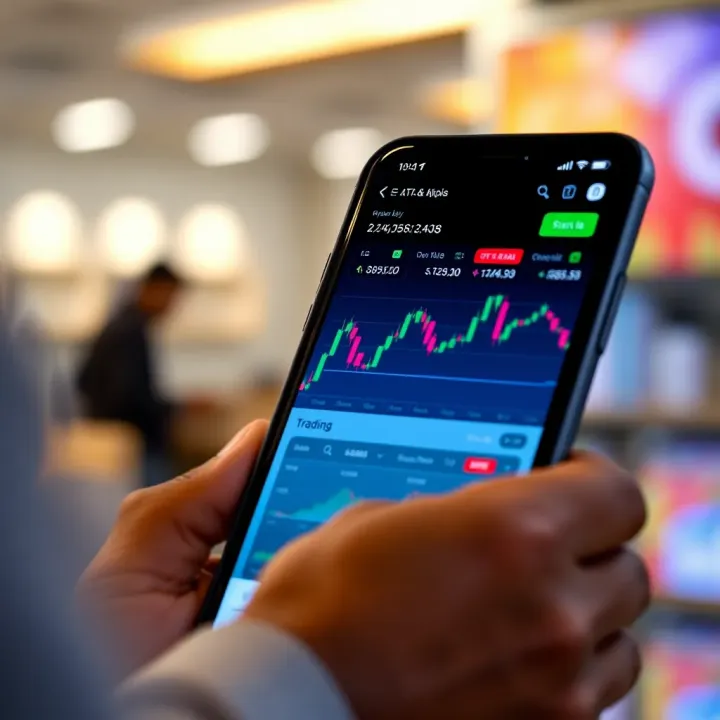
📱 Discover the best forex trading apps for Kenyan traders! Learn how they work, find trusted providers, spot key features, stay secure, and trade smarter today.
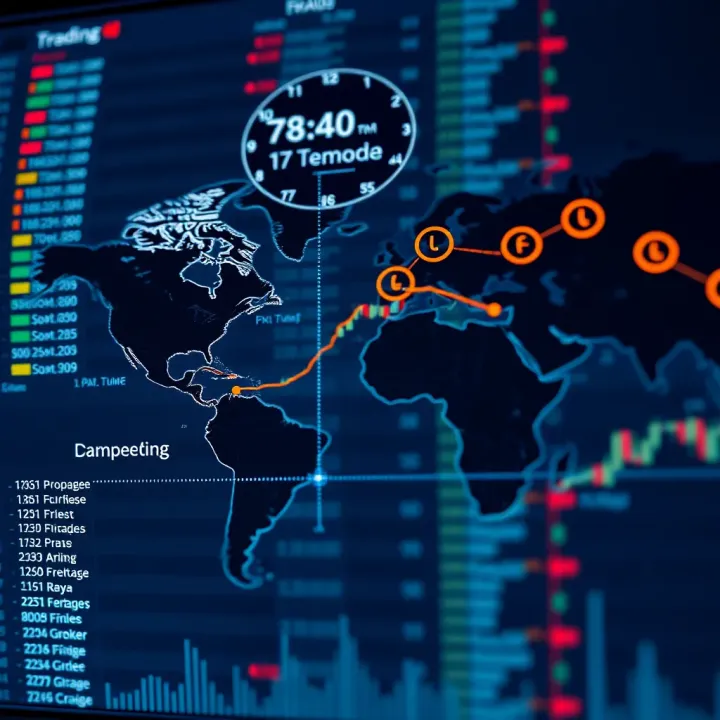
🔍 Learn the best times for forex trading in Kenya 🇰🇪! Explore global sessions, peak volatility, and smart timing strategies to boost your trading success 📈.
Based on 15 reviews