
Understanding Binary Options for Kenyan Traders
Learn how binary options trading works in Kenya 🇰🇪⚖️, explore risks, strategies, and key facts to trade smarter and stay regulated with our clear guide.
Edited By
Michael Lowry
Binary trading is a straightforward financial activity where you predict if an asset’s price will go up or down within a specific timeframe. Unlike traditional trading where you buy or sell assets directly, in binary trade you bet on the direction the price will take. This is why it’s often called "all-or-nothing" trading: you either win a fixed payout or lose your investment.
For Kenyan traders, binary trading has become a topic of interest because it offers a chance to make quick decisions based on short-term price movements in currencies, indices, commodities, or stocks. For example, you might predict whether the price of the Nairobi Securities Exchange (NSE) 20 Share Index will rise or fall in the next 30 minutes.

Binary trades are built around simple "yes" or "no" propositions. A typical trade might ask: "Will the price of USD/KES be above 110.50 at 4 pm?" If you answer ‘yes’ and the price is indeed above that level at the set time, you get a predetermined payout, say 80% of your stake. If wrong, you lose what you risked.
Trades usually have short timeframes, from as brief as 60 seconds to several hours, making the market very fast-paced. Kenyan traders can use platforms that accept M-Pesa payments or bank transfers, making access easy and familiar.
Before entering binary trading, understand the risks clearly. It is highly speculative, and losses can pile up quickly if you don’t manage your trades wisely.
Start small: Use modest amounts to learn the market without risking big sums.
Choose regulated platforms: Always verify whether the broker is licensed by bodies like the Capital Markets Authority (CMA) Kenya to avoid fraud.
Set limits: Decide your maximum loss beforehand to avoid chasing losses.
Keep informed: Follow economic news affecting commodities and currencies relevant to Kenya, such as oil prices or USD/KES exchange rate trends.
Understanding binary trading’s simpler structure can help you decide if it fits your trading style. However, it is no substitute for solid market knowledge and risk management. Approached carefully, it can add to your trading toolkit.
Binary trade boils down to a simple prediction: will the price of an asset go up or down within a predetermined time? For Kenyan traders, understanding this basic idea is key before diving into any platform or risking capital. Unlike other markets where profits depend on how much the price moves, binary trade offers fixed payments decided before you enter the trade. This clarity in outcomes makes it appealing but also calls for careful judgement.
At its core, binary trading involves choosing between two outcomes — a rise or fall in the price of an asset, such as a share, currency pair, or commodity. Suppose you bet on the price of Safaricom shares rising within the next hour. If that’s correct at the expiry time, you earn a fixed gain, say 80% of your stake. If not, you lose the money you put in. This all-or-nothing scenario fits the idea of "binary" — two possible results, one clear win or loss.
The practical benefit of binary trade lies in its straightforward nature. Kenyan traders can quickly grasp the possible reward and risk before entering the trade. There’s no guessing on by how much the price will change, only the direction matters. This makes it easier for those new to trading to try their strategies without navigating complicated calculations.
In binary trading, each contract has a set payout and risk known upfront. If your guess is right, you win a fixed amount. If wrong, you lose your initial stake. For instance, if you put KSh 1,000 on Euro/USD exchange rate rising and the payout is 75%, a correct prediction earns you KSh 1,750 total (your stake plus KSh 750 profit). If the market moves against you, you forfeit the KSh 1,000.
This all-or-nothing structure limits surprises. Unlike forex or stock markets, you won’t face partial wins or losses. While this makes risk clearer, it also means you must be confident in your predictions. The fixed return means the stakes and rewards are usually smaller compared to traditional trading, suiting traders who prefer clear outcomes and limited complexity.
Binary trade differs notably from forex and stock trading where profits stem from price movement size. Forex trading calculates profit or loss depending on how far rates move after your trade opens, making it more complex and variable. Stock investors benefit when share prices rise but lose money if prices decline. Unlike these, binary trading ignores the price magnitude, focusing strictly on direction within timing limits.
For example, if the Nairobi Securities Exchange (NSE) index rises or falls by a large margin, forex and stock investors could see gains or losses that fluctuate widely. Binary traders on the other hand just need the final direction at expiry, zeroing in on one clear decision.
The simplicity of binary trade lies in limited decision points — choose an asset, guess the direction, and pick an expiry time.
This sharp focus on "win or lose" appeals to many Kenyans who want to trade without the learning curve associated with understanding candlestick charts or complex indicators. The fixed return also means exposure is known upfront, helping with budgeted risk management, especially for those testing trading waters with small sums.
That said, the straightforward appeal can be deceptive. Because you either win or lose, repeated losses can quickly drain funds if strategies are weak. So, binary trading can work well as a small part of a broader trading plan but calls for discipline and solid market knowledge to do well.
Understanding the basics of binary trade — simple predictions and fixed outcomes — sets the foundation for any Kenyan trader keen to participate with full awareness of what they face.

Understanding how binary trade functions day-to-day is vital for anyone wanting to participate, especially Kenyan traders navigating local markets and payment systems. This section breaks down the mechanics, practical steps, and considerations involved in placing binary trades, making it easier to grasp the layout and timing of trades, asset choice, and how payouts come about.
Binary trading usually revolves around a variety of assets such as currencies (forex pairs), stocks, commodities like gold or oil, and even indices tracking market performance. These assets represent the base you predict on regarding whether their prices will rise or fall within a set period.
For Kenyan traders, certain assets might be more accessible or familiar due to platform offerings and local interest. Forex pairs like USD/KES are popular, reflecting Kenya's active foreign exchange market. Also, commodities such as tea and coffee, crucial exports for Kenya, occasionally feature on global platforms and may align well with traders keen on local economic sectors.
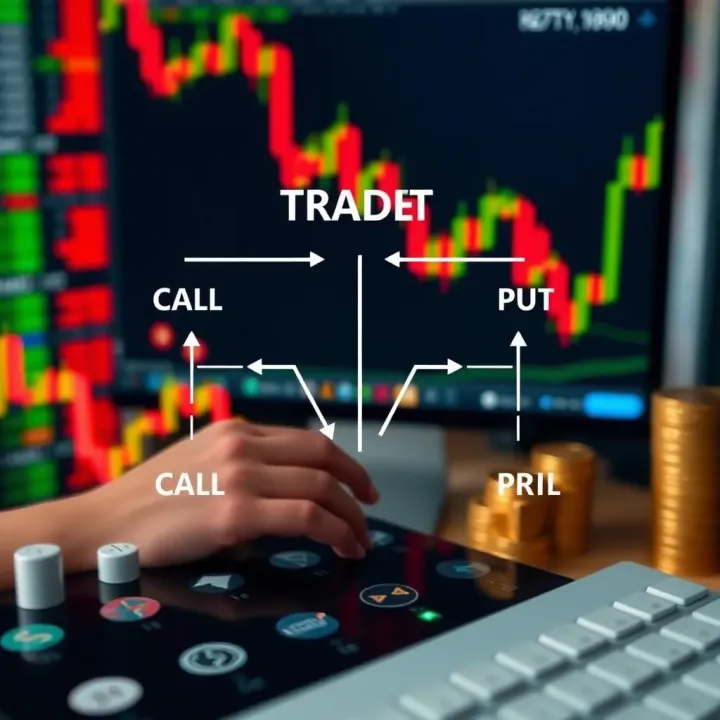
Binary trading depends on two main choices: a 'call' option or a 'put' option. Selecting a call option means you predict the asset's price will go up by the expiry time. Conversely, choosing a put option means you expect the price to go down.
Expiry times define when your prediction will be judged and can range from very short (60 seconds) to several days. The expiry you select should match your market understanding and risk appetite. For example, a trader expecting volatility around a company’s earnings report might pick a short expiry to capitalise on immediate price movements.
At expiry, the asset price is compared to the price at your trade's start. If your call or put option aligns with the actual movement — say you predicted a price rise, and the price has indeed risen — you win a fixed payout. If not, your initial stake is lost.
Payout structures often hover between 70% and 90% of your stake, depending on the broker and asset. For instance, if you wager KSh 1,000 with an 80% payout, a successful trade pays back KSh 1,800 (your KSh 1,000 stake plus KSh 800 profit). This all-or-nothing feature means each trade’s outcome is clear-cut, though it also brings heightened risk.
Grasping these practical elements of binary trade prepares you better to choose assets wisely, make informed predictions, and manage outcomes in line with your trading goals.
Understanding the risks involved in binary trade is vital before committing your hard-earned KSh. Binary options carry a high risk of loss, and the all-or-nothing nature of trades means you either win a fixed payout or lose the entire stake. For instance, if you predict the price of Safaricom shares will rise within an hour and it doesn’t, you lose the full amount invested in that trade.
This unforgiving structure highlights why managing risk carefully is essential. Unlike forex or stock trading, where partial gains or losses can occur, binary trading’s outcome is straightforward but harsh. Kenyan traders must acknowledge this to avoid surprises when trades don’t go their way.
The key feature here is the fixed outcome: either you earn a predetermined sum or lose your initial investment entirely. This simplicity might sound appealing, but practically it means a string of losses can rapidly deplete your capital. For example, putting KS,000 on several trades in a day without a solid strategy can wipe out your trading balance fast.
To protect yourself, applying risk management strategies is crucial. This includes setting clear limits on how much you are willing to lose per trade or per day. Many experienced traders recommend risking no more than 2–5% of your total capital on any single trade. This way, even a few losses won’t drain your account entirely, allowing you to learn and improve without severe financial damage.
Besides limiting bet sizes, diversification helps manage risk. Instead of putting all money on one asset, you can spread trades across different assets like equities, commodities, or indices. Although results are all-or-nothing, spreading exposure reduces the chance of total loss from a single market event.
Also, use demo accounts to practise and test different strategies before trading real money. Kenyan platforms often offer demos so you can familiarise yourself with expiry times, asset behaviour, and payout calculations without risking KSh.
Unfortunately, the rise of binary trade has attracted unreliable platforms promising easy profits. Many of these are scams designed to lure traders in before freezing accounts or denying withdrawals. Kenyan traders must learn to spot these platforms early.
Red flags include lack of proper licensing, no physical office address, or aggressive marketing promising guaranteed wins. For example, a platform demanding large upfront deposits without clear terms might be risky.
Another sign is poor customer support or refusal to process withdrawal requests. Test platforms with small amounts or use demos whenever possible before committing.
Choosing a licensed and reputable broker is your best defence. Kenya’s Capital Markets Authority (CMA) oversees some brokers, so cross-check the platform’s status with CMA to ensure it’s authorised.
Also, look for user reviews and community feedback from Kenyan traders. Platforms integrating trusted payment methods like M-Pesa and offering transparent terms usually have better credibility.
Always verify a binary trade platform’s credentials before trading. Your financial safety depends on proper checks and sensible choices.
By understanding and preparing for the risks and pitfalls, Kenyan traders can approach binary trade with clearer eyes and better chances of protecting their capital.
Understanding the regulatory landscape is critical for anyone considering binary trading in Kenya. Regulations help ensure that trading activities are conducted fairly and transparently, protecting you from unscrupulous operators and reducing the risk of fraud. Knowing the rules can also steer you toward credible platforms and licensed brokers, which is essential if you want to trade safely.
The Capital Markets Authority (CMA) plays a central role in overseeing financial markets and investments in Kenya. Its mandate includes licensing brokers, monitoring trading platforms, and ensuring compliance with the law. For binary trading, CMA’s involvement means that only authorised players can legally offer trading services in Kenya. This helps filter out suspicious operators who might not act in traders’ best interests.
Regarding the legal status of binary trading, Kenya does not currently have specific regulations solely for it. However, the activity falls under the broader umbrella of financial trading and investments regulated by the CMA. This means binary trading platforms must operate within existing securities and investment laws. Traders should verify whether a platform is CMA-registered or has local authorisation. Using an unregulated platform may expose you to legal and financial risks because there’s no official body overseeing its practices.
Choosing licensed brokers and authorised platforms is your first line of defence against scams. Licensed brokers have met CMA’s criteria for capital adequacy, transparency, and ethical conduct. This translates to better protection of your funds and fairer trade execution. Some platforms also integrate well-known payment methods such as M-Pesa, making deposits and withdrawals more secure and convenient.
Consumer protection mechanisms also come into play when dealing with legitimate providers. For example, the CMA requires brokers to maintain segregated client accounts, which means your money is kept separate from the company’s operational funds. If the broker faces financial trouble, your funds should remain safe. Moreover, the CMA can investigate complaints and take enforcement actions against brokers or platforms that violate regulations. While this doesn’t eliminate all risks, it offers a formal avenue for recourse if something goes wrong.
Always double-check that your chosen binary trading platform is licensed by the Capital Markets Authority and uses trusted payment channels such as M-Pesa. This approach lowers your risk and helps you trade with greater peace of mind.
In summary, while binary trading is available to Kenyan traders, doing so within the framework set by the CMA is vital. It improves your chances of a fair and secure trading experience. Stay informed about your rights and always keep your safety front of mind whenever you engage in financial trading activities.
Navigating binary trading in Kenya requires more than just understanding concepts; it calls for practical steps to protect your funds and sharpen your trading skills. This section highlights important tips and best practices that Kenyan traders should keep in mind to improve their chances and avoid common pitfalls.
Demo accounts and practice trades offer a risk-free way to get used to binary trading platforms. Many brokers permit you to open demo accounts where you can practice strategies using virtual money. This helps to familiarise yourself with how call and put options work, expiry timings, and payout structures, before risking real KSh. For example, a trader new to the market might use demo accounts offered by platforms like IQ Option or Olymp Trade to experiment with asset price predictions without pressure.
Managing your betting size is crucial for long-term survival in binary trading. Even if a strategy looks promising, putting all your money in one trade can wipe your account quickly. A practical approach is to limit each trade to a small percentage of your total capital, say 2–5%. This method prevents heavy losses when markets behave unpredictably. In Kenya, where traders often start with limited capital, cautious stake management keeps the door open for steady growth instead of quick depletion.
M-Pesa integration simplifies deposits and withdrawals for Kenyan traders, offering a secure and convenient payment channel. Since M-Pesa is widely accepted by many binary trading platforms, you can easily fund your account without relying on credit cards or international bank transfers, which may incur extra charges or delays. Moreover, M-Pesa’s familiarity among Kenyans provides added confidence, reducing the risks of payment errors or delays.
Avoiding risky deposit options means steering clear of unverified payment methods or platforms with unclear withdrawal terms. Some platforms might advertise easy deposits but complicate withdrawals or ask for unusual verification processes. It’s wise to stick to brokers authorised by the Capital Markets Authority or those with transparent terms. For instance, avoid e-wallets or crypto payments if you are unsure about the platform’s credibility, as disputes can be hard to resolve.
Educational materials are an invaluable resource, especially when you’re starting out. Look for guides, tutorials, and webinars provided by trusted Kenyan financial websites or experienced traders sharing their insights. These materials help clarify complex terms and offer examples relevant to our markets. For example, KRA PIN registration and tax implications of trading can be explained in such resources to keep you compliant.
Community experiences and reviews offer real-world feedback from other Kenyan traders. Joining forums or social media groups where traders share wins and losses can prepare you for the realities of binary trading. You learn which platforms pay out reliably and which ones attract complaints. Such peer feedback is often more honest and practical than marketing from brokers. Always cross-check reviews to avoid falling for paid or fake testimonials.
By starting small, using trusted payment methods like M-Pesa, and relying on verified information, Kenyan traders can navigate binary trading with greater confidence and reduce the risks involved.
Learn how binary options trading works in Kenya 🇰🇪⚖️, explore risks, strategies, and key facts to trade smarter and stay regulated with our clear guide.

🔍 A detailed guide for Kenyan users on Binary Cashier: setup steps, key features, security tips, and solutions to common issues for safe transactions.
Learn everything about binary trading accounts 📊—types, setup, risks, and tips to manage your trading safely and confidently in Kenya 🇰🇪. Start smart!

📈 Explore binary trade in Kenya with our practical guide. Learn how to predict price moves, key strategies, risks, and local regulations effectively.
Based on 10 reviews