
Risk Management Strategies for Kenyan Forex Traders
📉 Learn smart risk management tactics tailored for Kenyan forex traders. Understand local rules, control losses smartly, and trade with discipline in volatile forex markets.
Edited By
Thomas Edwards
Managing risk effectively in forex trading is not just a good practice; it’s what often separates profitable traders from the rest. In the volatile forex market, where currencies fluctuate constantly due to political events, economic data releases, or unexpected news, a solid risk management plan is essential to protect your capital.
Many traders, especially beginners in Kenya’s growing forex scene, tend to focus on potential profits but overlook how quick losses can wipe out their accounts. That is why having well-defined strategies to control losses and manage exposure is key.
A practical risk management approach starts with knowing how much of your trading capital you can afford to lose in a single trade. For instance, professional traders often risk only 1% to 2% of their capital per trade. This means if you have KSh 100,000 in your account, you shouldn’t lose more than KSh 1,000 to 2,000 on a single bet. This method preserves your funds even when several trades don’t go your way.
In addition, setting stop-loss orders is a crucial tool. A stop-loss automatically closes your position when the market moves against you by a certain amount, limiting potential losses. For example, if you buy the US dollar against the Kenyan shilling (USD/KES) at 110.00 and place a stop-loss at 109.50, your trade will exit if the price dips to that level, preventing bigger losses.
Discipline plays a huge role too. Sticking to your risk limits and avoiding emotional decisions during sudden market swings can save you from blowing up your account. Keeping a trading journal to track your wins, losses, and behaviour can help spot mistakes faster.
Another practical tip is to diversify your trades across different currency pairs. Relying on a single market increases your vulnerability. By carefully choosing pairs with lower correlation, you reduce the risk of being overexposed when one market jolts unexpectedly.
Successful forex trading depends less on guessing the market right every time and more on how well you manage your risks. Protecting your capital means staying longer in the game to seize profitable opportunities.
Throughout this guide, you’ll find straightforward techniques suitable for traders at various levels. Whether you are just starting your forex journey or managing a sizeable portfolio, these strategies will help you make informed decisions while safeguarding your investments.
Understanding risk is the cornerstone of success in forex trading. Knowing what risk entails helps traders protect their capital and make decisions that balance chance and reward effectively. Without appreciating the nature of risk, even skilled traders may expose themselves to losses that could have been avoided.
Risk in the forex market refers to the possibility of losing money due to adverse price movements of currency pairs. For instance, if you buy USD/KES expecting the dollar to strengthen, but the shilling gains instead, your position loses value. Every trade carries an inherent risk, meaning there is no guaranteed profit, only probabilities.
It's essential to realise that risk is measurable—you can estimate potential losses based on trade size and stop-loss settings. This differs from uncertainty, where outcomes are unknown or unpredictable. Precise risk assessment allows traders to manage their exposure by setting limits on how much they are willing to lose per trade or overall.
The difference between risk and uncertainty lies mainly in predictability. Risk deals with known probabilities, enabling strategies like setting stop losses or adjusting position sizes. Uncertainty involves unknowns, like unexpected political upheavals or market crashes, where traders cannot assign clear odds. Forewarned traders will factor this uncertainty into their risk management plans, often by reducing exposure during volatile times.
Market volatility is a primary source of risk. Forex prices can move sharply within minutes due to news releases, economic reports, or market sentiment shifts. For example, the release of Kenya’s GDP figures might cause the shilling to fluctuate sharply against the dollar. High volatility can increase profits but also losses if unmanaged.
Leverage effects amplify both gains and losses. While trading with leverage lets you control larger positions with less capital, it means small price moves can wipe out a significant portion of your account. For example, using 50:1 leverage, a 2% adverse move can lead to a 100% loss on your invested margin. Traders must handle leverage carefully to avoid blowing up their accounts.
Geopolitical events and economic data introduce sudden risk factors that may disrupt markets. Events such as elections, central bank policy decisions, or conflicts can trigger swift currency moves. Suppose Kenya announces unexpected changes to interest rates or political tensions rise; this could weaken the shilling, catching unprepared traders off guard. Staying informed about such developments and adjusting trades accordingly reduces risk.
Effective risk management in forex requires understanding these factors clearly. Traders who recognise the sources of risk stand a better chance of controlling losses and navigating the market with confidence.
Controlling your exposure in forex trading means managing how much of your money is at risk on any single trade. Without clear financial limits, traders can quickly lose more than they can afford. This section discusses practical ways to set boundaries on your trading activities to safeguard your investment capital.
Calculating the right trade size based on your account balance is a wise first step. For instance, if you have a trading account with KSh 100,000 and decide to risk only 2% per trade, the maximum you should put at risk is KSh 2,000. The trade size then has to be adjusted so that if your stop loss triggers, you don't lose more than that limit.
Avoiding overexposure is equally important. Overexposure happens when you take multiple trades or larger positions that together risk a large portion of your account. For example, if you open three trades, each risking 5% of your balance, you are risking 15% in total — which could drain your funds fast if the market moves unfavourably. To avoid this, many traders set a total daily or weekly risk cap, say 5-6%, to keep losses manageable.
Stop loss orders are essential tools for protecting your capital. They automatically close your position once the price reaches a certain level, limiting losses to a predefined amount. For example, if you buy EUR/USD at 1.1000 and set a stop loss at 1.0950, your loss is capped to 50 pips. This coaching discipline helps prevent emotional decision-making when the market turns against you.
Take profit orders work the other way by locking in gains when the price hits a set level. Suppose you aim for a profit of 100 pips on the same EUR/USD trade; setting the take profit order at 1.1100 ensures your earnings get secured without having to constantly watch the market. This is especially helpful when managing multiple trades or when you cannot monitor the screen closely.
Setting clear financial limits through position sizing and disciplined use of stop loss and take profit orders helps you trade forex sustainably. It controls potential losses while securing profits, which is the core of successful risk management.
By applying these practices consistently, traders avoid the common pitfall of letting emotions drive bigger and riskier bets. Instead, they trade in a way that manages exposure carefully and respects their financial boundaries.
Understanding how to calculate the risk-reward ratio is key for any forex trader. Simply put, this ratio measures how much you stand to gain compared to what you might lose on a trade. To calculate it, divide the difference between the entry price and your take profit level by the difference between the entry price and stop loss level. For example, if you enter a trade on USD/KES at 110.00, set a stop loss at 109.50 (risking 50 pips), and a take profit at 111.00 (targeting 100 pips), your risk-reward ratio is 2:1. This means you expect to earn twice the amount you risk, helping balance your losses when the market moves against you.
Choosing trades with favourable setups means seeking opportunities where potential rewards outweigh the risks substantially. This often involves analysing chart patterns, price action, and economic indicators to spot entry points that align with your predefined risk-reward targets. For instance, if a currency pair shows strong support at a certain level, a trader might enter near that point with a tight stop loss, aiming for a larger move upwards to justify the trade. Picking such setups reduces the chances of frequent small losses and increases the probability of net gains over time.
Including risk parameters in your trading plan is about clearly defining how much you are willing to risk per trade and stick to it. Many traders limit risk to 1-2% of their trading capital per position. So, with a KSh 100,000 account balance, risking KSh 1,000 to KSh 2,000 per trade is sensible. This way, even a string of losses won't wipe out your entire investment. Incorporating these limits into your plan ensures disciplined, consistent risk control rather than spontaneous decision-making.
Adhering to predefined rules is just as important as setting them. A trading plan should act like a rulebook you follow—no matter how tempting it might be to chase the market or double down on losses. Discipline in following your entry and exit points, stop loss placement, and risk-reward criteria protects you from emotional trading mistakes. For example, if your plan says to exit when a trade hits your stop loss, closing it quickly prevents small losses from snowballing. Sticking to your rules builds trading confidence and long-term survival.
A solid risk-reward ratio combined with a strict trading plan helps you trade smart, protecting your capital while maximising chances to grow your investments steadily.
Overall, blending well-calculated risk-reward assessments with a disciplined plan arms you better against the unpredictable twists of the forex markets. It moves trading from guesswork to a thoughtful, calculated exercise suitable for both new and experienced Kenyan traders.
Managing risk doesn’t rely only on setting limits or following gut feelings. Traders need concrete techniques and tools to make smart moves and reduce losses. This section looks at practical ways to manage forex risk using technical analysis and diversification, which help you protect your capital and increase your chances of steady profit.
Support and resistance levels act like invisible walls in forex charts. Support is where the price tends to stop falling and bounce back up, while resistance is where it usually hits a ceiling and retreats. Spotting these levels helps traders decide where to enter or exit trades. For example, if the USD/KES pair approaches a known support level around 110.00, a trader might decide to buy, expecting the price to rebound. On the flip side, seeing resistance near 112.00 could signal a good point to sell or tighten stop losses.
These levels aren’t exact numbers but zones where price reacts frequently. Regularly checking historical price action on daily or hourly charts gives you an idea of where these barriers lie. This technique can help avoid chasing trades blindly and reduce unexpected losses.
Beyond support and resistance, indicators like the Relative Strength Index (RSI) or Moving Averages can guide you on when to enter or exit trades. RSI can show if a currency pair is overbought or oversold—signalling a possible reversal. For example, an RSI above 70 may suggest selling USD/EUR as it is overbought, while below 30 might mean it’s time to buy.
Moving Averages smooth out price fluctuations, helping spot trends. A simple strategy is to watch for a short-term moving average crossing above a long-term one, signalling a buy. Combining indicators with price levels makes trading decisions more disciplined rather than emotional.
Spreading your capital across different currency pairs can protect you from severe losses. If you only trade USD/KES and the pair suddenly drops due to a local event like a political change, your whole portfolio suffers. But trading also EUR/USD or GBP/USD spreads out your exposure.
That said, diversification requires careful balancing. Trading too many pairs without understanding their movement may dilute focus and increase fees. A good trader starts with two or three pairs, observing how they move around economic reports or market news.
Many currency pairs move in tandem because they share common factors. For instance, USD/CHF and EUR/USD often move oppositely (negative correlation), while USD/CAD and oil prices generally rise and fall together (positive correlation). Holding multiple positions that are highly correlated can expose you to double risk instead of spreading it.
To avoid this, check correlation matrices that show how pairs behave relative to each other. If you’re long on USD/CHF and also long on EUR/USD, a sudden USD strength can hit both positions negatively. Balancing your trades to cover different market drivers lessens risk of a big blow.
Smart use of technical analysis and diversification tools empowers forex traders to make measured bets and weather unexpected market swings with confidence.
Using these approaches systematically strengthens your overall risk management and helps keep losses within tolerable limits. The more you practice, the better you get at reading the market’s signals and adjusting your positions accordingly.
Psychological factors play a significant role in how traders manage risk in forex markets. Trading is not only about charts and numbers but also about handling the emotional rollercoaster that can easily sway decisions. A trader’s mindset affects judgement, discipline, and the ability to stick to a risk management plan. Without addressing psychological challenges, even the most sophisticated strategies can fail.
Recognising fear and greed is vital for managing emotional influences in trading. Fear can cause hesitation or premature exits, often leaving traders out of profitable moves. For example, a trader might close a position early during a small dip fearing further losses, only to miss the eventual upward trend. On the flip side, greed can push traders to take unnecessary risks, holding onto losing trades hoping for a turnaround, which can wipe out gains or even the entire account.
By identifying these emotions, traders can pause and assess decisions more rationally. Some implement rules like never trading emotionally or relying on pre-set stop losses to prevent letting fear or greed dictate actions. This practical awareness keeps the focus on the market’s behaviour rather than gut feelings.
Maintaining discipline and patience is another cornerstone of psychological risk management. A disciplined trader follows the plan, respects loss limits, and waits for high-probability trading setups rather than chasing fast profits. For instance, patience might mean sitting on the sidelines during choppy markets instead of forcing trades that violate risk rules. This discipline ensures consistent application of strategies, avoiding impulsive decisions.
Being patient also helps traders ride favourable trends without premature exits. Discipline and patience work hand in hand to protect capital and compound gains over time.
Reviewing trades systematically is essential for improving both strategy and emotional control. Keeping a trade journal with details like entry and exit points, reasons for the trade, and emotional state during execution allows traders to spot patterns. For example, noticing that impulsive trades occurred after a long losing streak can highlight the need for better stress management.
This review process transforms mistakes into lessons, turning losses into opportunities for growth. Regular trade analysis can sharpen risk management by showing where adjustments are needed.
Adjusting strategy based on outcomes means a trader remains flexible and responsive. If a trader sees that certain setups consistently lead to losses, they must refine or avoid them. Similarly, if emotional patterns like impatience cause premature exits, the trader can consciously work on those habits.
Such adjustments prevent repeated errors and improve win rates. It’s about evolving with the market and oneself, rather than stubbornly sticking to a plan that no longer works effectively.
Successful forex trading hinges not only on numbers but on mastering the emotional and psychological aspects that influence risk management. Staying calm, disciplined, and adaptable is as important as analysing charts.
In short, managing psychological factors helps traders to act wisely under pressure, maintain control, and continuously improve — all crucial for sustainable success in forex trading.
📉 Learn smart risk management tactics tailored for Kenyan forex traders. Understand local rules, control losses smartly, and trade with discipline in volatile forex markets.
Master forex risk management in Kenya 🇰🇪 with tips on setting limits, stop-loss orders, and position sizing to protect your investments confidently 💹.
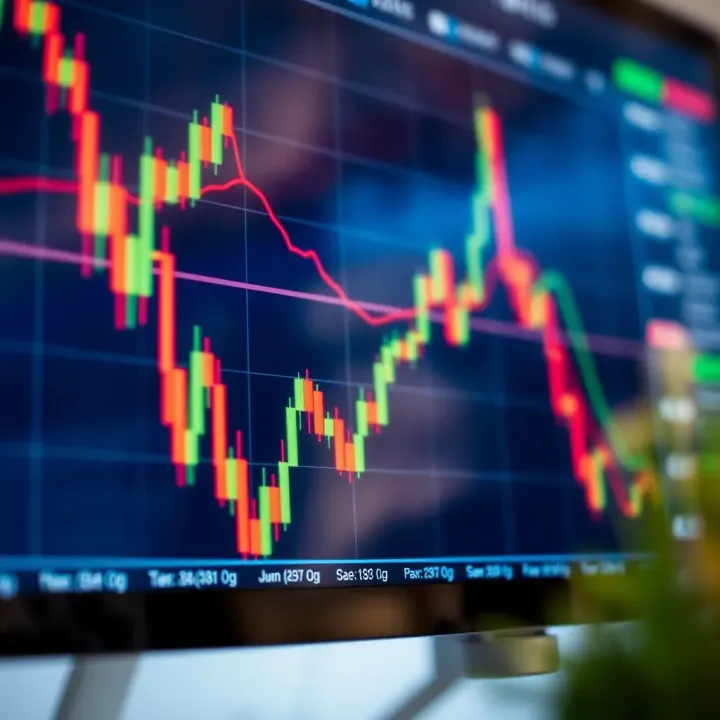
Discover effective forex trading strategies🇰🇪 focused on risk management, analysis📊, trading plans📈, and mastering psychology for better results in Kenya's market.
📋 Discover how to create and use a risk management policy in your Kenyan business. Learn to identify, assess, handle risks, and ensure ongoing oversight effectively.
Based on 9 reviews