
How Forex Trading Works for Kenyan Traders
📊 Understand how forex trading works in Kenya ⚖️ Learn market basics, trading tools, and risk management to trade confidently and grow your Kenyan Shilling portfolio 📈
Edited By
George Mitchell
Forex trading involves buying and selling currencies on the global market. It offers opportunities for profit but demands solid knowledge and discipline, especially for traders in Kenya navigating currency fluctuations and global events.
Before you start trading real money, it’s key to grasp basic terms such as 'pip' (the smallest price movement), 'spread' (the difference between buying and selling price), and 'leverage' (using borrowed funds to increase exposure). Many newcomers underestimate how these affect profit and loss.
Practising with a demo account is the safest way to apply these ideas without financial risk. Most brokers in Kenya, including those regulated by the Capital Markets Authority (CMA), offer demo accounts with virtual funds. This environment lets you test strategies and understand market behaviour before committing KSh to trading.
Mastering risk management is non-negotiable. Always decide beforehand how much you are ready to lose on a single trade to avoid wiping out your capital. Using stop-loss orders is a practical way to protect your investments against sudden market moves.
Start with major currency pairs like EUR/USD or USD/JPY, which tend to have tighter spreads and better liquidity than exotic pairs. This choice can reduce trading costs and slippage, improving your chances of consistent returns.
Building your trading skills also means keeping an eye on Kenyan economic indicators such as inflation rates, Central Bank of Kenya policy changes, and shilling performance on the foreign exchange market. These often influence currency trends and create trading opportunities.
To sum up:
Understand core forex concepts and trading terms.
Use demo accounts to practise without risking money.
Focus on risk management to protect your capital.
Start trading stable, major currency pairs.
Follow Kenyan and global economic news to inform trades.
By following these steps, you lay down a solid foundation to trade forex confidently, whether from Nairobi or any other Kenyan town. Trading forex is not a sprint but a marathon that rewards patience, knowledge, and steady practice.
Understanding the fundamentals of forex trading lays the groundwork for anyone serious about entering the currency market. This section helps you make sense of how the forex market operates, what drives currency prices, and the key terms every trader must know to trade confidently.
Forex trading involves buying one currency while simultaneously selling another, making it a market of currency pairs. It is the largest financial market globally, with daily transactions exceeding $6 trillion. For example, when a Kenyan trader buys the EUR/USD pair, they're effectively swapping Kenyan shillings for euros through the dollar's price movement.
Traders watch price changes in currency pairs caused by economic data, political events, or market sentiment. Unlike stocks, the forex market runs 24 hours from Monday to Friday, passing through major financial centres like London, New York, Tokyo, and Sydney. This continuous flow means there’s always an opportunity to trade — whether Nairobi traders are catching the London session in the afternoon or the New York session in the evening.
A pip is the smallest price change in a currency pair, often the fourth decimal place (e.g., 0.0001), crucial for calculating profits or losses. Lots represent the size of your trade; a standard lot equals 100,000 units of the base currency, but smaller lot sizes are common for beginners. Leverage lets you control a bigger position than your actual capital, but it magnifies gains and losses — so caution is vital. Lastly, the spread is the difference between the buying (ask) and selling (bid) price, effectively the broker’s fee embedded in the trade.
Major pairs involve the most traded currencies globally, like EUR/USD or USD/JPY, offering high liquidity and tighter spreads. Minor pairs combine majors but exclude the US dollar, for example EUR/GBP. Exotic pairs mix a major currency with one from an emerging or smaller economy, such as USD/KES. Though exotics can offer bigger moves, they often come with wider spreads and higher risks.
The forex market operates through overlapping sessions — London and New York overlap creates the most active trading hours, often presenting the best opportunities due to higher volume and volatility. Nairobi traders should note that local time aligns closely with London session hours, meaning afternoons are usually good for active trading.
Currencies react sharply to economic reports such as inflation rates, interest rate decisions from central banks like the Central Bank of Kenya or the US Federal Reserve, and geopolitical events. For instance, a change in Kenya’s inflation figures or an announcement from Safaricom affecting investor confidence can affect the Kenyan shilling’s value against other currencies. Traders must follow such news closely to understand potential market swings.
Grasping these basics offers a strong foundation. Knowing how currencies move, what influences these movements, and the trading hours to watch prepares you for smarter decisions and better risk management in forex trading.
Picking the right forex broker is a big deal for anyone wanting to trade currencies seriously. A good broker acts as your guide and gateway into the forex market, while a poor choice can lead to trouble, including slow trades, high fees, or even fraud. For Kenyan traders, it matters even more because certain brokers align better with local requirements and payment methods.
A broker’s regulation status is a top priority. It shows whether the broker operates under set rules designed to protect traders. In Kenya, brokers regulated by the Capital Markets Authority (CMA) give you more confidence since the CMA monitors their activities closely. Some brokers might also be licensed by international bodies such as the Financial Conduct Authority (FCA) in the UK or the Cyprus Securities and Exchange Commission (CySEC). Kenyan traders should prefer brokers with transparent regulation to avoid scams and ensure fund safety.
The platform you trade on needs to be easy to navigate and reliable. Look out for brokers that offer platforms like MetaTrader 4 (MT4) or MetaTrader 5 (MT5), which are popular due to their wide range of tools and user-friendly interfaces. For example, if you’re a beginner, a platform providing clear charts, quick order execution, and simple deposit or withdrawal processes matters a lot. Also, check whether the platform works smoothly on mobile devices since many Kenyan traders rely on smartphones for trading.
Costs can eat into your profits if you’re not careful. Brokers usually make money through spreads—the difference between buying and selling prices—or through commissions per trade. Some brokers have fixed spreads, others variable; Kenyan traders often find variable spreads better during active market hours. Compare commissions and spreads carefully. For instance, if a broker charges very low spreads but high commissions, it might be expensive overall. Transparent fee structures mean you won’t get surprised by unexpected charges.
Opening an account requires proof of identity and address to meet regulations and prevent fraud. Normally, you’ll need a government-issued ID like a Kenyan National ID or passport, plus a recent utility bill or bank statement as proof of residence. This process might seem tedious, but it protects your account and ensures you’re dealing with a legit broker.
Good brokers support payment methods that are popular and convenient locally. M-Pesa, the mobile money service, is the go-to for many Kenyans. A broker allowing easy deposits and withdrawals through M-Pesa saves time and avoids costly bank fees. Other options like bank transfers or credit/debit cards might also be available. For example, a broker accepting M-Pesa deposits enables you to fund your trading account directly from your mobile wallet without hassle.
Different brokers offer various account types tailored for beginners or experienced traders. Some accounts require higher minimum deposits but offer tighter spreads and more features. Also, leverage options vary; leverage lets you control bigger positions with less capital but increases risk. Kenyan traders should start with low to moderate leverage, say 1:10 or 1:20, to avoid big losses while learning. Make sure the broker clearly states the leverage limits and the margin requirements.
Choosing the right broker can make or break your forex trading journey. Pay attention to regulation, platform usability, fees, and funding options that fit your local context. This way, you trade smarter and safer.
Mastering forex trading demands not just understanding the market but also applying strategies with discipline. Learning and practising trading strategies help you build confidence, manage risk, and spot market opportunities effectively, especially when you're new to the forex space. This step is essential before risking real money, as it allows you to test methods and adapt without financial loss.
Demo accounts closely mimic real trading environments by providing virtual funds for you to trade without risking actual money. These platforms simulate live price movements, spreads, and order executions, giving you a practical feel of the forex market’s ups and downs. Using a demo account is particularly useful for Kenyans aiming to understand how different currency pairs behave across trading sessions.
More importantly, demo accounts let you explore trading platforms at your own pace. You can practise placing orders, setting stop-loss levels, and monitoring trades, all without pressure. For example, you might try buying USD/KES on the demo to see how supply-demand shifts affect price, safely identifying what works best for your style.
However, many beginners fall into the trap of treating demo trading like a game since the stakes are no real money. This mindset can encourage overtrading or ignoring risk management. Another pitfall is sticking too long on demos without switching to live accounts once you grasp the basics. To avoid this, approach demo accounts seriously, track performance, and prepare to move on when ready.
Trend following and breakout trading are two fundamental strategies. Trend following means you buy when a currency pair shows a sustained upward movement or sell during a downward trend, like noticing the USD/EUR steadily rising. Breakout trading involves identifying price levels where a currency pair breaks through resistance or support, signalling potential big moves. For instance, if GBP/USD breaks above a recent high, that may offer a buying chance.
Range trading works in markets where prices bounce between clear support and resistance levels. Traders buy at the bottom of the range and sell near the top. This strategy suits times when forex pairs like USD/JPY trade sideways rather than trending strongly—perfect for traders patient enough to wait for setups.
Technical indicators also guide many traders. Moving averages smooth price data to identify trends, helping you spot entry and exit points objectively. The Relative Strength Index (RSI) measures momentum to highlight if a currency is overbought or oversold. For example, an RSI above 70 might warn the USD/ZAR is overbought, suggesting a pullback could follow.
Practising these strategies lets you blend technical skill with intuition. Demo trading helps sharpen them before real money is involved, and starting with simple approaches avoids confusion. Over time, you can combine these tools to fit your trading style and market conditions.
By focusing on these practical steps, you prepare yourself well for the challenges of live forex trading while protecting your capital and maintaining discipline.
Managing risks effectively is the backbone of successful forex trading. Without a clear plan to protect your capital, even the most promising trades can lead to heavy losses. In Kenya, where access to trading platforms is growing rapidly, understanding risk management becomes especially important to safeguard your funds and trade with confidence.
Setting stop-loss and take-profit orders helps you control losses and lock in profits automatically. For example, if you buy the USD/KES pair at KS10, a stop-loss order at KS08 limits your loss to 2 shillings per unit if the market moves against you. Likewise, placing a take-profit order at KS15 lets you exit the trade once you reach a desired gain, preventing you from holding on too long and risking reversal. This disciplined approach prevents emotional decisions during fast market swings.
Calculating position size to protect your capital ensures you don't risk more than you can afford to lose on one trade. Say you have a trading balance of KS0,000; risking 2% per trade means you shouldn’t lose more than KS,000 on any single trade. You adjust the number of lots or units accordingly. This careful sizing means even a string of losses won’t wipe out your account, giving you room to learn and grow.
Avoiding over-leverage and emotional trading is crucial. While brokers may offer leverage of up to 100:1 or more, using high leverage dramatically increases risk. For instance, trading with 50:1 leverage means a 2% market move wipes out your entire margin. This can lead to panic selling or doubling down on losing trades, a quick way to drain your account. Sticking to moderate leverage and a clear strategy helps keep emotions in check and trading sustainable.
Choosing strong passwords and enabling two-factor authentication (2FA) protects your account from hackers. A robust password combines upper and lower case letters, numbers, and symbols—for instance, “Tz7#Lp9MvOt!” Instead of relying solely on passwords, 2FA sends a one-time code to your mobile or email to confirm login attempts, adding an extra layer of security that many Kenyan traders overlook.
Kenyan traders should be alert to scams and frauds which often come disguised as amazing guarantees or insider tips. Always verify that your broker is regulated by bodies such as the Capital Markets Authority (CMA) Kenya. Avoid offers promising unrealistic profits or requiring payments outside official payment channels like M-Pesa or bank transfers. Scammers may also use fake websites mimicking legitimate firms; double-check website URLs and look for secure HTTPS protocols.
Keeping personal and financial information safe means never sharing sensitive data such as bank account numbers, KRA PINs, or login credentials publicly or through unsecured channels. Use trusted devices and avoid public Wi-Fi when making transactions. Kenyan traders frequently fall prey to phishing attempts posing as emails or SMS from brokers or payment services. Always verify communications independently before clicking links or providing details.
Risk management and security go hand in hand. Protect your capital like a matatu conductor guards the passenger list – carefully and without taking chances. This disciplined approach keeps you trading longer and safer.
By managing risks smartly and securing your trading setup, you build the foundation for consistent forex trading success, crucial for any serious trader in Kenya’s growing forex market.
Moving from demo trading to handling real money marks a significant step in your forex journey. This shift tests your skills in live market conditions where real risks and rewards exist. It’s where theory meets practice, demanding more discipline and emotional control. Kenyan traders, especially those starting with modest capital, need to prepare carefully to avoid common pitfalls that come with real-money trading.
Switching from a demo to a live account should be gradual and planned. After spending at least a few weeks, or even months, practising in a demo environment, assess your consistency and understanding of trading strategies. If your demo trading shows steady profits and solid risk management, it’s time to consider opening a live account. Start by trading small amounts to test your ability to manage emotions under real conditions.
The main difference is psychological; real money triggers fear and greed unlike the simulated funds in demo accounts. To keep grounded, record and review each trade to spot emotional decisions. For example, don’t chase losses by increasing stakes impulsively. Set clear rules for when to stop trading for the day to avoid fatigue-induced mistakes.
Starting with real money also requires managing expectations carefully. Losses are part of the game; don’t expect to make KSh 10,000 overnight on a KSh 1,000 capital. Instead, focus on steady improvement and learning from each trade. Many new traders make the mistake of overestimating short-term returns, leading to risky bets and burnout.
Scaling up your trading should be methodical. Once comfortable with small stakes, increase your position size slowly to match your growing confidence and capital. This approach safeguards you from big losses early on and builds a solid foundation for continued growth.
Keeping up with market news and trends is vital for successful forex trading. Currency values are influenced by economic reports, political events, and global developments daily. Kenyan traders should follow reliable sources such as the Central Bank of Kenya announcements and international economic news. This awareness helps anticipate major market moves and adjust your strategies accordingly.
Using analysis tools and educational resources both locally and online will enhance your decision-making. Platforms like MetaTrader offer technical indicators and charting tools that simplify market analysis. Meanwhile, websites like Investing.com provide real-time data and expert opinions. Utilizing these resources can help you identify trade opportunities and manage risks better.
Joining Kenyan forex communities and mentorship programmes adds value beyond theory. Interacting with fellow traders provides practical insights into market behaviour and local factors affecting Kenya’s forex scene. Mentorship offers personalised guidance, often accelerating learning by avoiding beginners’ mistakes. These communities also help maintain motivation and accountability.
Remember, forex trading is not a one-time learning event but a continuous process. Staying informed, practising regularly, and engaging with others will help you improve steadily and trade confidently in Kenya’s growing forex market.
📊 Understand how forex trading works in Kenya ⚖️ Learn market basics, trading tools, and risk management to trade confidently and grow your Kenyan Shilling portfolio 📈
Explore forex trading in Kenya with this beginner’s guide 📈 Learn how to start, manage risks, use M-Pesa for payments, and build strong trading skills confidently.
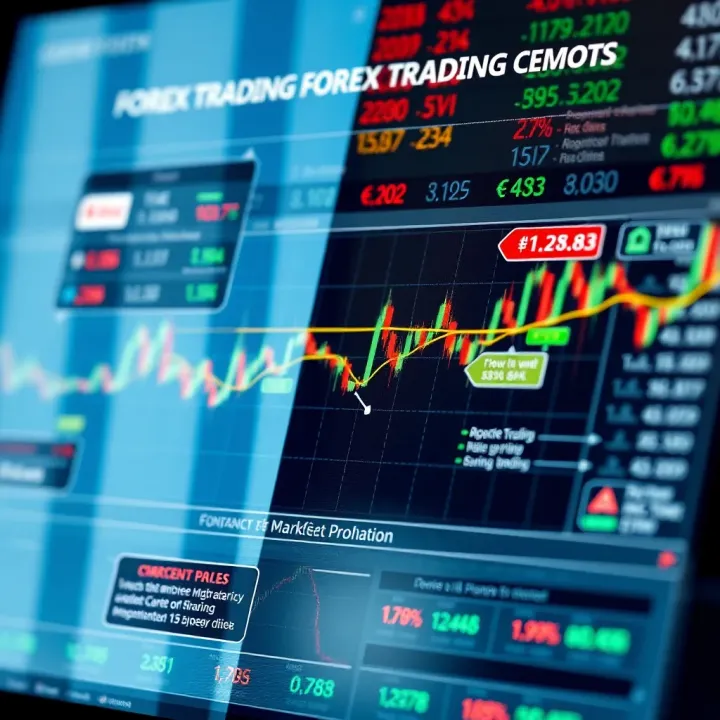
📈 Learn practical steps to start forex trading in Kenya. From opening accounts to choosing brokers and managing risks, gain confidence to trade smartly in KSh markets.
📈 Learn forex trading basics from a Kenyan view: currency pairs, market hours, participants, and risks. Get clear insights to start trading confidently today!
Based on 5 reviews