

Why Risk Management Matters for Kenyan Businesses
Discover how effective risk management shields Kenyan businesses from financial loss, ensures regulatory compliance, and strengthens operations against common threats 📊📉
Edited By
Emily Foster
Natural disasters such as floods, droughts, and earthquakes have far-reaching effects on communities and economic activities in Kenya. For traders, investors, and risk analysts, understanding how these events influence risk management is essential for safeguarding assets and ensuring business continuity.
Disasters disrupt supply chains, destroy infrastructure, and cause sudden market fluctuations. For example, the 2018 floods in western Kenya severely affected agricultural yields, pushing commodity prices up and forcing traders to rethink inventory strategies. This unpredictability means risk management must evolve to account for not only regular market risks but also environmental factors that can quickly escalate.

Effective risk management now involves:
Integrating disaster risk assessments into investment and lending decisions
Developing contingency plans that consider worst-case natural events
Engaging with insurance products tailored to cover natural disaster losses
Governments and businesses in Kenya have started adopting more dynamic models that factor in climate variability and urbanisation trends. For instance, some financial institutions use satellite data and weather forecasts to anticipate flood risks and adjust credit terms accordingly.
Organisations that ignore the shifting landscape of natural disaster risks may face severe financial setbacks, especially in sectors like agriculture, manufacturing, and real estate.
In addition, the role of technology and innovation has become noticeable. Mobile platforms like M-Pesa help maintain transactional flows even during crises, while data analytics improve the accuracy of risk predictions.
Ultimately, natural disasters push risk managers to be more agile, combining traditional financial risk tools with environmental intelligence. This shift safeguards businesses and contributes to overall economic resilience in regions prone to such events.
Natural disasters significantly reshape how organisations and governments manage risks. When floods, droughts, or earthquakes strike, they expose gaps in existing risk frameworks, pushing stakeholders to reassess priorities and focus on vulnerabilities they may have overlooked. The immediate aftermath often forces rapid adjustments, but these periods also provide valuable lessons for building resilience.
Disasters shift the risk landscape dramatically, making some threats suddenly urgent while reducing the focus on others. For instance, after the 2018 flooding in Western Kenya, many businesses and county governments prioritised water management and infrastructure reinforcements over long-standing concerns such as theft or market fluctuations. Similarly, drought-prone regions like Turkana have increasingly prioritised water scarcity and food security risks above others. This shift means risk managers must remain flexible, ready to respond to evolving conditions rather than relying solely on historical data.
Practical adjustments include reallocating budget resources, updating emergency response plans, and revisiting supply chain dependencies that may become vulnerable due to disrupted transport routes or damaged infrastructure. Traders and investors benefit by recalibrating portfolios to avoid overexposure to sectors that natural disasters heavily impact, such as agriculture or tourism.
Integrating plausible disaster scenarios into risk assessments is a vital step that many Kenyan organisations have begun adopting post-disaster. Instead of treating natural disasters as rare black swan events, firms are modelling their potential impacts with more regularity. For example, insurance companies now use detailed flood maps and historical rainfall data when calculating premiums for properties in Nairobi's flood-prone areas.
This approach encourages organisations to prepare better by identifying critical vulnerabilities early on. A manufacturer in Mombasa might analyse the risk of port closure due to a cyclone and devise contingency plans such as alternative transport routes or stockpiling certain inputs. By embedding disaster scenarios into risk frameworks, businesses and financial institutions can enhance decision-making, reduce surprises, and strengthen long-term stability.
Addressing natural disasters within risk management is not just about preventing loss; it’s about understanding shifting risk profiles and proactively preparing for them. This mindset helps organisations in Kenya navigate the unpredictable climate realities with greater confidence and resilience.
In practice, successful risk management after natural disasters requires:
Continuous updating of risk registers with recent event data
Scenario planning that includes worst-case but plausible disasters
Collaboration across sectors to share insights and resources
For finance professionals, this means understanding where natural hazards intersect with market, credit, and operational risks, ensuring investments consider both direct and indirect disaster effects. In Kenya’s context, combining local knowledge with technical risk assessments sharpens preparedness and helps safeguard livelihoods and capital alike.
Understanding various natural disasters and their particular risks is key for financial professionals and businesses managing exposure. Each type of disaster affects assets, supply chains, and markets in distinct ways. Knowing these differences helps tailor risk mitigation and investment strategies more effectively.
Flooding can severely damage infrastructure like roads, bridges, and energy supplies, disrupting business operations and trade routes. For instance, the 2018 floods in western Kenya damaged key highway sections, delaying deliveries and inflating costs. Residential and commercial properties suffer water damage, leading to property value depreciation and insurance claims rises.
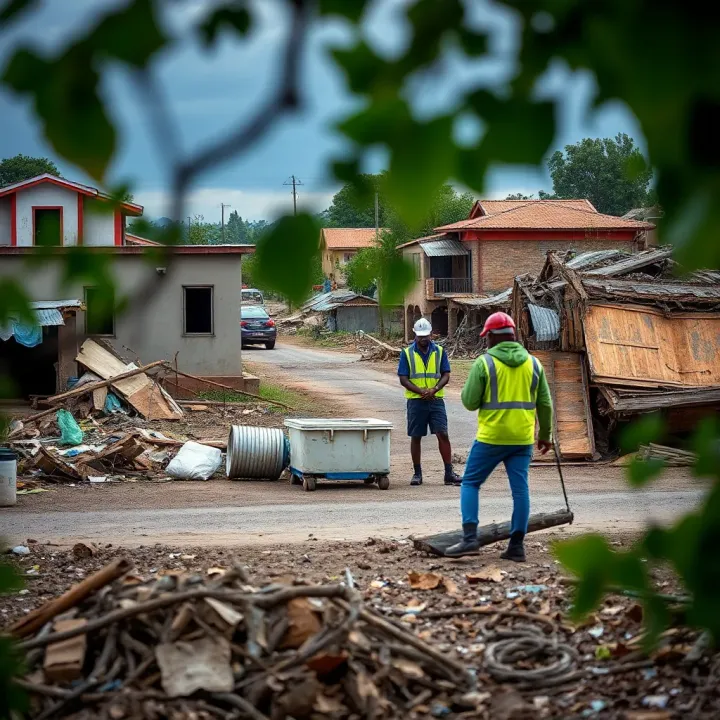
Floods also impact livelihoods, especially in rural areas reliant on agriculture. Prolonged waterlogging can destroy crops such as maize and sugarcane, affecting food supply and commodity prices. Traders and investors should watch flood warnings closely, considering how disruptions might affect sectors from transport to food retail.
Drought poses long-term challenges, particularly for agriculture-dependent economies like Kenya’s. Water scarcity hits both crops and livestock, leading to lower yields and higher food prices. The 2022 drought severely affected counties like Turkana and Kitui, forcing many to rely on emergency food aid.
Financially, drought strains cash flows for farmers and agribusinesses, increasing credit default risks for banks. It also triggers rural-to-urban migration, impacting workforce availability and demand patterns in towns. Investors should evaluate drought resilience in companies, especially those in agriculture, water management, and food processing.
Though less frequent than floods or droughts, earthquakes pose serious risks to property and urban infrastructure. Nairobi and parts of the Rift Valley lie close to fault lines with potential for moderate tremors. Earthquake damage can collapse buildings, disrupt utilities, and cause considerable insurance and reconstruction costs.
Risk managers must factor in seismic risks when evaluating real estate investments and infrastructure projects. Retrofitting older buildings to seismic standards, and enforcing strict construction codes, are practical steps that reduce vulnerability. For investors, awareness of earthquake exposure guides asset allocation and insurance requirements.
Different natural disasters demand distinct risk management responses. Recognising these specific threats allows businesses and investors to prepare better and build resilient portfolios that withstand Kenya’s varied climatic and geological challenges.
In summary, floods mainly disrupt infrastructure and livelihoods, droughts hit the economy through water scarcity and food insecurity, while earthquakes challenge structural stability. Financial professionals should integrate these insights into risk assessments and contingency planning to safeguard capital and operations effectively.
Managing risks associated with natural disasters presents a complex set of challenges that affect governments, businesses, and communities across Kenya and beyond. These challenges shape how risk managers prepare for, respond to, and recover from events such as floods, droughts, and earthquakes. Understanding these difficulties offers insights into why risk management strategies sometimes fall short and how they can be improved.
Natural disasters are inherently unpredictable in timing and scale, making it hard to forecast their exact impact with sufficient lead time. While meteorological advancements have improved early warnings for floods and storms, events like earthquakes remain difficult to predict with precision. This unpredictability leaves risk managers scrambling to allocate resources effectively.
Additionally, data on historical disaster occurrences and damage in many Kenyan regions is often incomplete or inconsistent. For example, some rural areas lack detailed records on flood magnitude or drought frequency, hindering risk modelling and disaster preparedness plans. Decision-makers therefore rely on approximate data or assumptions, which may not reflect local conditions accurately. Without reliable data, assessing vulnerabilities and identifying priority areas becomes guesswork rather than a robust process.
Limited financial and material resources constrain the ability to prepare for and respond to natural disasters effectively. Even when risk assessments identify critical vulnerabilities, funding shortfalls delay infrastructure upgrades, early warning system coverage, and community preparedness initiatives.
Take the case of flood defences along the Tana River, where many communities know the risks but lack sufficient funds for protective embankments or relocation schemes. Similarly, county governments often juggle disaster-related expenditures alongside other pressing development needs, stretching budgets thin. This resource squeeze limits timely response efforts and prolongs recovery periods, increasing the economic burden on affected populations.
Effective disaster risk management requires smooth coordination among government agencies, non-governmental organisations, local communities, and private sector players. However, overlapping mandates and communication gaps sometimes lead to fragmented or duplicated efforts.
For instance, during the 2018 floods in Western Kenya, some counties struggled to align relief distribution with the Kenya Red Cross and community leaders. This caused delays in reaching vulnerable families and inconsistent messaging on safety measures. Without a unified approach, resources may be wasted, and trust between stakeholders erodes.
Clear, well-practised coordination protocols and designated disaster focal points can vastly improve response speed and effectiveness.
To address these challenges, investing in shared data systems, enhancing budget allocations for disaster risk reduction, and strengthening multi-stakeholder cooperation are crucial steps. Kenyan firms and investors monitoring risk should factor in these limitations when assessing project viability in disaster-prone areas.
Disaster unpredictability demands flexible, adaptive risk strategies.
Quality data is key for targeted risk reduction but remains patchy.
Funding gaps delay preventative measures and heighten economic loss.
Cross-sector coordination avoids duplication and boosts relief impact.
Understanding these hurdles prepares finance professionals and businesses to better navigate the uncertainties natural disasters introduce into the Kenyan risk environment.
Effective strategies are key to reducing the impact of natural disasters on communities and businesses. Without clear approaches, risk management remains reactive and costly. This section highlights practical measures that organisations in Kenya and similar contexts can adopt to strengthen resilience, minimise losses, and ensure swift recovery after disasters.
Early warning systems help detect threats like floods, droughts, or earthquakes before they cause major damage. These alerts allow timely action to protect lives and assets. For example, the Kenya Meteorological Department provides weather forecasts and flood warnings which counties can use to inform residents and mobilise resources. Preparedness plans complement warnings by outlining clear steps for emergency response, evacuation routes, and communication channels.
A well-prepared community or organisation has rehearsed protocols, emergency kits, and backup systems in place to cope when disaster strikes. In the financial sector, preparedness might involve ensuring data backups and alternative power supplies to maintain critical services during disruptions.
Local involvement is crucial in disaster risk management. Communities know their environments and vulnerabilities better than external actors, so engaging them leads to more effective solutions. Capacity building through training helps people respond confidently and organise themselves during emergencies. In Kenya’s coastal regions, for instance, fisherfolk trained on tsunami awareness and evacuation have helped reduce casualties.
Organisations should also collaborate with community leaders to spread information and coordinate support. This connection builds trust and ensures risk reduction measures are culturally appropriate and sustainable.
New technologies and data analytics offer valuable tools for improving disaster risk management. Satellite imagery, geographic information systems (GIS), and mobile apps help map hazard zones and track weather patterns in real time. Insurance companies use data analytics to assess exposure and price premiums fairly.
For example, Kenyan insurers offering microinsurance cover floods or drought effects in agriculture by analysing rainfall patterns and crop health via remote sensing. This approach enables timely payouts, helping farmers recover faster.
Combining traditional knowledge with modern technology and clear community engagement strategies creates a resilient system that can withstand natural disasters more effectively.
In short, adopting early warning systems, involving communities actively, and harnessing technology are practical strategies that help manage the complex risks posed by natural disasters. These efforts reduce uncertainty and boost confidence among traders, investors, and other stakeholders seeking stability in a changeable environment.
Insurance and financial instruments are key to reducing the economic impact of natural disasters. They offer businesses, individuals, and governments ways to spread risk and secure funds for recovery. In Kenya, where floods, droughts, and other calamities frequently hit, these tools provide a practical safety net that supports resilience at various levels.
Insurance protects against financial shocks caused by property damage, business interruptions, or crop failures following disasters. For example, crop insurance helps farmers in Kenya’s arid and semi-arid lands (ASALs) manage risks tied to droughts. By compensating for lost harvests, it encourages continued farming rather than abandoning land, which would worsen food security.
Similarly, businesses use property and business interruption insurance to continue operations or rebuild after floods or fires. For instance, Nairobi-based companies often combine insurance cover with M-Pesa as a payment channel for premiums and claims, making access efficient and timely.
These solutions reduce dependency on government aid and speed up recovery, even though uptake among SMEs remains low due to affordability and awareness challenges. Brokers and financial advisers should focus on tailoring affordable micro-insurance products and educating clients on benefits.
Governments play a crucial role by providing frameworks and funding for disaster risk financing. Kenya’s Disaster Risk Financing Strategy guides how public funds and insurance can cover disaster-related costs, minimising fiscal shocks.
Besides government efforts, international organisations such as the World Bank and African Development Bank offer catastrophe bonds and contingent credit facilities. These instruments release funds rapidly after a disaster, enabling swift humanitarian response. For example, Kenya secured a $150 million catastrophe bond in 2022 to address flood risks.
Besides loans and grants, technical support from international agencies helps strengthen Kenya’s risk assessment, financial planning, and insurance frameworks. Combined efforts from state agencies, donors, and private sector improve preparedness and reduce economic setbacks.
Insurance and financial tools don't eliminate disaster risks, but they provide a vital financial buffer that allows communities and businesses to stabilise and rebuild faster, making them indispensable for comprehensive risk management.
In summary, integrating insurance solutions with government and international support mechanisms enhances Kenya’s ability to handle natural disaster impacts. Investors and finance professionals should prioritise these instruments to build more resilient portfolios and safer economic landscapes.
Discover how effective risk management shields Kenyan businesses from financial loss, ensures regulatory compliance, and strengthens operations against common threats 📊📉

Manage risks to protect your Kenyan business assets, improve decision-making, and ensure continuity despite market challenges. Learn practical risk strategies today 📉📊
📊 Risk management helps Kenyan businesses spot and handle threats to operations, boosting resilience and informed decisions for smoother growth and success.
🔍 Learn how risk management sharpens project success in Kenya by spotting, analysing, and managing threats through practical tools across every project phase.
Based on 11 reviews