

Risk Management in Kenyan Businesses
Manage risks to protect your Kenyan business assets, improve decision-making, and ensure continuity despite market challenges. Learn practical risk strategies today 📉📊
Edited By
Emma Collins
Risk management frameworks provide a structured method for businesses to identify, evaluate, and control risks that may affect their day-to-day operations and long-term growth. For Kenyan businesses, especially those navigating the fast-changing economic and regulatory environment, having a clear framework is not just an option but a necessity.
A practical risk management framework helps organisations anticipate challenges such as currency fluctuations, supply chain disruptions, or compliance issues with bodies like the Capital Markets Authority (CMA) or Kenya Revenue Authority (KRA). For instance, a medium-sized exporter in Mombasa might adopt a framework that monitors forex risk alongside port delays to safeguard profit margins.

Systematic risk assessment that avoids oversight
Clear roles and responsibilities within the company
Informed decision-making backed by data and analysis
A good framework turns risk from a vague worry into a manageable and measurable part of business.
At its core, a framework outlines the processes for risk identification, risk analysis, risk evaluation, and treatment. These steps guide firms on when to accept risks, reduce them, transfer (such as through insurance), or avoid entirely.
For example, a Nairobi-based fintech startup might identify risks in IT security, assess the potential financial losses, and then decide to invest in robust cybersecurity measures rather than facing downtime or data breaches.
Local market peculiarities demand tailored approaches. Matatu strikes, changes in tax policy, or disruptions from climate events during the long rains can pose risks requiring practical, timely responses. Having a framework simplifies these responses by providing:
Preparation against volatile conditions
Consistency in handling risks
Compliance with government regulations
Also, many investors and financial institutions in Kenya increasingly require clear evidence of risk control before committing funds, making frameworks essential for business partnerships and funding.
Kenyan businesses aiming to sustain growth amid uncertainties need to embed risk management into their business culture. A practical, well-understood framework makes this possible, enabling operators and investors alike to navigate challenges confidently and take informed steps forward.
Risk management frameworks are vital tools for businesses looking to anticipate, deal with, and learn from risks. In essence, these frameworks provide a structured approach to identifying potential threats that could disrupt operations or hurt profitability. For Kenyan businesses, operating in environments marked by economic shifts, regulatory changes, and operational challenges, having a clear framework means they can act deliberately rather than reactively.
A risk management framework serves as a blueprint that guides an organisation through the entire process of risk handling. Its purpose is to ensure risks are spotted early, assessed objectively, and controlled appropriately. This is more than just a checklist; it’s a way of embedding risk thinking into everyday decisions. For example, a Nairobi-based exporter may use the framework to evaluate currency fluctuation risks and decide on hedging strategies through local banks or currency forwards.
It's worth clarifying the difference between a framework and a process. A framework lays out the overall structure and principles—think of it as the map and rules of the road. Processes, on the other hand, are the specific steps taken along the way, such as conducting risk assessments or reporting procedures. In practice, without the overarching framework, processes might become disjointed or inconsistent, especially across different departments or branches.
Managing financial and operational risks within Kenya's unique context takes more than generic solutions. For instance, many small and medium enterprises (SMEs) face cash flow uncertainties due to delayed payments via M-Pesa or informal credit systems. By having a risk management framework tailored to these realities, businesses can better plan for such cash flow lapses or supplier disruptions.
Moreover, the regulatory environment in Kenya has grown increasingly complex, with agencies like the Kenya Revenue Authority (KRA), Capital Markets Authority (CMA), and Central Bank of Kenya (CBK) enforcing stringent compliance. A risk management framework helps businesses stay ahead by systematically tracking these obligations and preparing for audits or legislative changes. For example, compliance with tax regulations through iTax can be factored into the framework to avoid penalties.
Finally, risk management supports decision-making and growth by giving business leaders clearer insights into the uncertainties involved in expansion or investment. Suppose a trader in Mombasa considers diversifying into electronic goods. A robust risk framework enables a full view of potential risks such as market demand shifts, supply chain bottlenecks, or foreign currency risks and helps in deciding whether or when to proceed.
Risk management frameworks turn uncertainty into manageable challenges, helping Kenyan businesses stay resilient and competitive.
By understanding what these frameworks are and why they matter, Kenyan businesses can not only avoid potential pitfalls but also seize opportunities with confidence.
Risk management frameworks guide Kenyan businesses in spotting, assessing, and handling risks in a structured way. Different frameworks offer various approaches, and choosing the right one depends on your business size, sector, and specific risks. Getting this right helps avoid costly mistakes and supports smoother operations, especially in an environment where regulatory and market conditions shift often.
ISO 31000 provides a flexible, standardised set of principles that apply across industries. It takes you through identifying risks, evaluating their impact, and deciding how to manage them. Unlike rigid rules, this framework adapts to your business context — whether you run a small kiosk in Mombasa or a mid-sized manufacturing firm in Nairobi.
The practical value lies in its simplicity and universality, allowing Kenyan firms to build risk processes that stay relevant as they grow or diversify. For instance, a tea exporter using ISO 31000 can assess climate risks affecting crop yields and set up strategies to cope with unpredictable weather.
For small and medium enterprises (SMEs), ISO 31000 doesn’t demand extensive resources but still provides structure that makes risks clear and manageable. Take a Nairobi-based digital startup: applying ISO 31000 helps it understand cyber risks alongside market competition without needing a whole risk department.
Larger firms benefit by embedding international best practice into their everyday operations, facilitating investor confidence and regulatory compliance. A bank or insurance firm operating in Kenya can align its risk management with ISO 31000 to satisfy the Capital Markets Authority (CMA) requirements and global investors.
COSO zeroes in on internal controls and governance structures. It links risk directly to an organisation’s objectives, ensuring management and boards keep risks under watch while making decisions. This framework helps businesses reduce fraud, ensure accuracy in financial reporting, and maintain operational integrity.
For firms grappling with governance issues or seeking clarity on accountability, adopting COSO improves transparency and trust internally and externally. This can be especially important when dealing with partners or regulators in Kenya's evolving business environment.
Kenyan banks, microfinance institutions, and government agencies find COSO particularly useful. It suits sectors where compliance, controls, and risk oversight must be tight. For example, the Central Bank of Kenya sets guidelines requiring banks to have strong risk and internal control systems — COSO fits well to ensure these demands are met.
Public sector entities managing public funds and service delivery also benefit, as COSO supports risk-aware governance that cuts misuse and inefficiencies.
Beyond general frameworks, sectors like banking and insurance use specialised models such as Basel III or Solvency II, adapted locally to Kenyan rules. These frameworks focus on capital adequacy, liquidity risks, and claims management, helping firms stay resilient during financial shocks.
For instance, Kenyan insurance companies applying these frameworks can better price their policies and maintain solvency, making them more reliable to clients.
Many Kenyan businesses operate in informal or jua kali settings where formal frameworks seem out of reach. However, simplified versions focusing on manageable practices can still help. For example, a matatu operator’s association could implement a basic risk register to track accidents or fuel price spikes.
Tailoring risk management to suit limited resources and informal structures builds safety nets in these vital sectors. Such adjustments create practical paths to protecting livelihoods and sustaining growth without the need for heavy bureaucracy.
Selecting the right risk framework is about matching your business realities — what works for a Nairobi fintech startup won't be the same for a Kisumu artisan group. Thinking practically ensures risk management adds value, not burdens, to your operations.
An effective risk management framework is built upon several key components that work together to help Kenyan businesses identify, evaluate, and address risks in a practical way. These components form the backbone of any strategy that aims to reduce potential losses and support steady growth. Without them, businesses risk facing surprises that could disrupt operations or harm reputation.
Spotting both internal and external risks is the first step. Internal risks might include staff turnover, outdated equipment, or cash flow issues, while external ones range from market fluctuations to political instability. For example, a Nairobi-based exporter must watch foreign exchange risks and changing customs regulations closely. Identifying these risks early allows businesses to prepare or respond effectively.
Tools like risk registers and SWOT (Strengths, Weaknesses, Opportunities, Threats) analysis help organise this information clearly. A risk register keeps track of potential threats, their likelihood, and impact, helping management prioritise. Meanwhile, SWOT analysis offers a broader view, showing where a business stands against competitors and market challenges. Using these tools regularly keeps the business alert and ready for changes.
Once identified and assessed, risks need a chosen response. There are four main ways:
Avoidance: Steering clear from activities that pose too much risk. For instance, a small retailer might avoid stocking perishable goods prone to spoilage.
Mitigation: Taking steps to reduce the impact. A construction firm could enforce safety training to lower accident rates.
Transfer: Shifting risk to another party, often through insurance or contracts. Many Kenyan businesses rely on insurance firms like Jubilee or Britam to cover theft or fire risks.
Acceptance: Acknowledging the risk and preparing to deal with consequences, typically when risk is low or costly to avoid.
Choosing the right strategy depends on how severe and likely the risk is. Resources are limited, so prioritising helps. For example, risks with a high impact but low likelihood might be monitored closely rather than immediately mitigated.
Risk management isn’t a one-off task. Continuous risk tracking means regularly checking if risks are changing or new ones are appearing. For instance, the rise of digital payments requires constant updates to cybersecurity measures. Businesses can use software or even simple spreadsheets for monitoring.
As Kenya’s business environment changes, so must the framework. Regulatory shifts, climate effects, or industry trends might require revisiting risk priorities. A tea exporter in Kericho, for example, must adjust for changing weather patterns affecting crops. Regular reviews ensure risk management stays relevant and effective.
A dynamic risk framework keeps Kenyan businesses resilient, helping them spot trouble early and respond smartly to stay ahead.
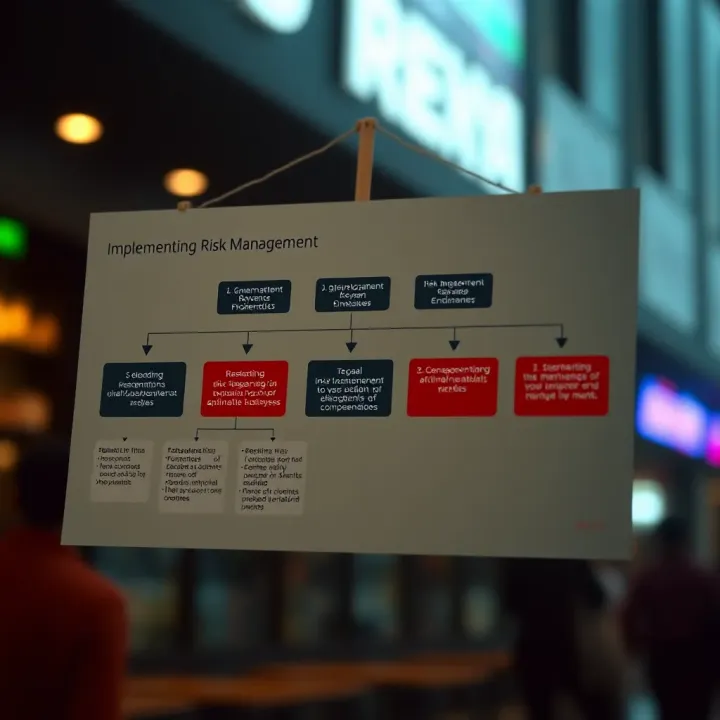
Implementing a risk management framework effectively is key to safeguarding Kenyan businesses against unexpected challenges. A structured approach helps organisations prepare for disruptions, comply with regulations, and make informed decisions. By following clear steps, companies from Nairobi's bustling markets to Kisumu's SME clusters can build resilience and support steady growth.
Communicating the benefits is crucial for securing management support. When leaders understand how risk management reduces losses, improves decision-making, and protects reputation, they are more likely to commit resources. For example, a medium-sized Nairobi trading firm highlighting reduced delays in supply chain disruptions can win the board’s backing. Presenting relevant case studies or financial impacts strengthens this message.
Assigning roles and responsibilities ensures everyone knows their part in managing risks. Leadership should designate clear owners for risk identification, assessment, mitigation, and monitoring. In a Kenyan bank, this might mean the compliance officer handles regulatory risks, while the operations manager focuses on service delivery risks. This clarity avoids overlaps and gaps, making risk management more efficient.
Considering industry and size is essential because risks vary widely. A jua kali workshop faces different challenges from a formal manufacturing firm. Tailoring the framework means selecting relevant risks, tools, and policies. For instance, a small retailer might prioritise cash management risks, while a large agribusiness focuses on climate impacts and export regulations.
Incorporating local regulatory requirements helps avoid penalties and legal issues. Kenyan businesses must align frameworks with bodies like the Kenya Revenue Authority (KRA), Capital Markets Authority (CMA), or the National Environment Management Authority (NEMA). Staying updated on new regulations and embedding them in the risk management process keeps companies compliant and credible.
Practical training methods such as workshops, simulations, and real-life scenario discussions equip employees with the skills to spot and report risks. A logistics firm in Mombasa might do regular safety drills and use mobile-based learning to reach field teams. Hands-on training works better than mere theory, helping staff feel confident and responsible.
Encouraging open communication about risks fosters transparency and early warning. Leaders should create safe channels where employees can share concerns without fear of blame. For example, a customer service centre may use anonymous digital feedback tools to flag emerging problems. Open dialogue helps detect risks early and promotes collective ownership of solutions.
Embedding these steps thoughtfully helps Kenyan businesses transform risk challenges into opportunities. A personalised, well-supported framework becomes a practical shield rather than a bureaucratic chore.
When Kenyan businesses try to implement risk management frameworks, several challenges often arise. Understanding these obstacles is key to adapting approaches that truly fit the local business environment. Addressing these challenges thoughtfully can transform risk management from a mere formality into a practical tool that enhances resilience and growth.
Many small businesses in Kenya struggle with limited financial and human resources, making complex risk frameworks seem out of reach. Simple, cost-effective risk management practices become essential here. For instance, a small kiosk in Eldoret might use a basic risk register—a simple spreadsheet—to track common threats like theft, stock shortages, or cash flow delays without the need for expensive software or consultants.
Technology like M-Pesa and digital record-keeping tools also offer affordable ways to manage risks. Instead of relying on physical cash that is vulnerable to theft or loss, entrepreneurs can use M-Pesa transactions to create digital trails, making audits and financial tracking easier. Additionally, cloud-based apps or even smartphones can help keep inventories and customer data organised, reducing operational risks without major costs.
Resistance to change is common, especially where established habits run deep. Some employees and managers may distrust new risk procedures, fearing increased workload or exposure of mistakes. This scepticism can stall implementation. To tackle this, leaders must communicate clearly how risk management protects jobs and strengthens the business rather than threatening it.
Sharing success stories from other Kenyan firms can also encourage buy-in. For example, how a textile manufacturer in Nairobi avoided a major loss through early risk detection might inspire others. Gradual implementation helps too — starting with small wins before moving to bigger changes reduces anxiety and builds confidence step by step.
Risk management isn’t a one-off task. Regular risk reviews are vital to keep pace with shifting circumstances. A real estate developer in Mombasa might revisit risks quarterly to reflect market changes, new building regulations, or unexpected events like weather disruptions during the long rains.
Adapting frameworks to emerging market trends, regulatory updates, and climate factors ensures they remain practical. For instance, with growing environmental concerns, businesses near Lake Victoria now include flooding and water pollution risks in their frameworks. Staying alert and flexible lets Kenyan businesses respond promptly and effectively as new challenges come up.
A risk management framework that stays static will soon lose value — continuous review and adaptation keep it useful and relevant to real-world business conditions.
By recognising these challenges and applying practical solutions, Kenyan businesses can make risk management frameworks work for them rather than against them.
Manage risks to protect your Kenyan business assets, improve decision-making, and ensure continuity despite market challenges. Learn practical risk strategies today 📉📊

📊 Master risk management with clear steps from identifying and assessing risks to planning and monitoring responses. Stay prepared and protect your Kenyan business today!
📊 Learn practical risk management techniques tailored for Kenyan businesses to handle financial and operational challenges, ensuring resilience and sustained growth.
📊 Learn how Kenyan businesses spot and manage operational risks to cut losses, boost compliance, and keep daily activities running smoothly with local strategies.
Based on 7 reviews